Ali Chehem Ali: 2018 Election Guide
Welcome to WCCO.com's 2018 political guide!
We reached out to all Minnesota candidates running for U.S Senate, Governor, U.S Congress, Attorney General, Secretary of State and State Auditor this fall. Candidates were asked to provide a two-minute video discussing their platform as well as answer a set of our viewer's questions.
Above is the video and below the answers they provided. This is not a paid advertisement nor does WCCO endorse any candidate.
Responses from Ali Chehem Ali, DFL candidate for U.S Senate:
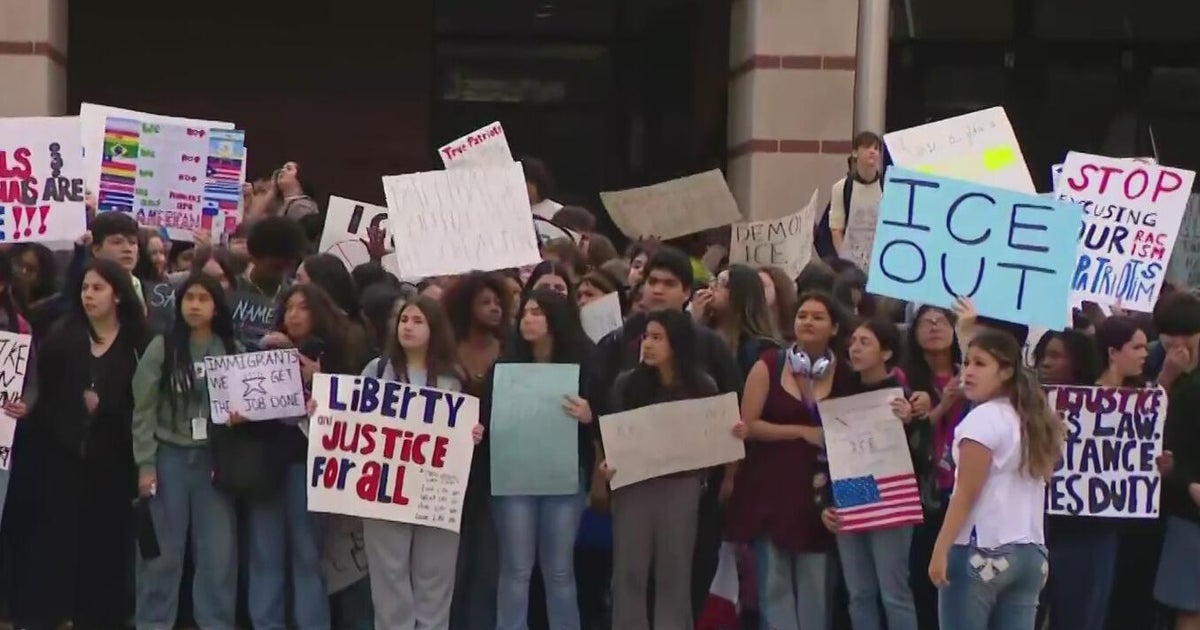
Should Immigration Customs Enforcement -- ICE -- be abolished, and replaced with a different agency to control immigration crimes?
ICE was a direct product of the post–September 11 panic culture. From the beginning, it was paired with the new Department of Homeland Security's to be use as intelligence gathering surveillance against American citizens of color, immigrants and refugees. The government portrayed immigration as a national security matter rather than an issue of public or social development, diversity or human rights. The agency has also clearly been targeting political opposition wit deporting individuals and breaking families apart. ICE has harassed and terrorized immigrants, refugees, asylum seekers and activists all with impunity. I believe these mass deportations are forcing immigrants to live in anxiety and terror, while making the rest of the citizenry less safe. Defunding ICE and returning to customs-enforcement rather than an unaccountable and above-the-law expulsion squad is a vital step to defending all Americans and civil liberties. Ensuing death, being deprived from your home, family, and community is the vilest fate that can be imposed on a human being, as many societies practicing deportation have recognized. It's time to bridle the highest threat we face: an unaccountable strike force implementing a campaign of ethnic cleansing.
When politicians refer to negative stories as "fake news", do you believe it?
In the mid-19th century, there was a period of the freest press in the United States. With the passing decades its declined. For two elementary reasons. One reason is the increased financial capital that was essential to run a competitive press. And as capital requirements increased, that of course lead to a more corporatization of the media. The second is advertisement. The United States has had something kind of resembling a market. Not like market taught in economics courses though. And one of the signs of the weakening or failure of the market is advertisement. So, a real market doesn't advertise: rather it gives information. For example, General Motors want to sell a car, they would put up a notice of information about our cars. Well, you've seen television ads, the idea is to mislead and con people with imagery that flatters their ego. It atomizes individuals and separates thoughts to keep people consumerized. The same has happened to the print media. When the editors lay out tomorrow's newspapers, the first thing they do is put the ads in. What left is called the news hole, and they stick anything there. Apart from that the media are just giant multinational corporations. They represent the interests of their owners, their markets, which are advertisers, and for the elite newspapers, more or less the managerial class, the educated population they deal with. The result is that you get a very fine view of what the world is like.
The same is true in politics. The news id political and corporate run. The owners tell the media what they want us the read or see on the television. To go contrary is to lose your job. The real issues of nuclear war, healthcare, gun control, fossil fuels and climate change are seldom if ever spoken of. Its look over here at the shiny things that distract from the real issues at hand. Such as Russia, tweets, celebrity news good-feel news coverage. I pay very little interest to the main-stream media. There are plenty of options over the net available for serious news people.
Should the President be permitted to unilaterally raise tariffs on US imports, or should Congress be required to vote before tariffs are imposed?
I believe we should amend the constitution to forbid the President that much power with tariffs. Congress be required to vote before tariffs are imposed?
Should able-bodied Medicaid recipients be required to work?
President Johnson's amendments to the Social Security Act on July 30, 1965 beagn coverage for the elderly and low-income. Medicaid, is a combined state and federal program, similar to medical, mental and emotional coverage for low-income individuals with limited financial assets, regardless of their age the primary, if not sole, purpose of the Medicaid program is to provide affordable access to healthcare, not other economic issues. The end result with a requirement to work is that people are going to lose their coverage, coverage they deserve and were promised It really does impact the Medicaid population as a whole. Medicaid is not a work program. It's intended and written to be a health program. Even those who are not defined as "unable to work," but who are unemployed, are at risk to be covered. It's these individuals who will probably be marked by new guidelines. Continuing medical conditions, working limitations, and higher age groups make it harder to find work. Punishing individuals with these issues further by restricting or removing their Medicaid coverage will not better their lives or make it more likely to find employment. It's not clear how many justified beneficiaries could lose coverage and experience losses because of intricacies in the program. It's not clear how much it would cost to execute such a program and whether that cost would surpass any savings. The result is they're experimenting with the health and well-being of American citizens and particularly the elderly and poor not the wealthy.
Do you believe North Korea will "denuclearize," as President Trump says it will?
I am for a nuclear free region in the Middle East and Korea. There's unequivocally no doubt in my mind that if North Korea hadn't developed nuclear weapons, it would've been attacked as was Libya, Iraq, Syria, Somalia and Afghanistan. Sanctions will not work on North Korea. North Korea has developed a way of life that is extremely demanding, and a way of developing its strategic nuclear weapons, all the while recognizing it will be in a permanent state of siege. The three-year Korean war in 1953 led to North Korea losing over eight million people, or about 30% of its total population during the 37-month long police action. General MacArthur said, "I shrink…at this continuous slaughter of men in Korea." Later, he was paraphrased as saying, 'I have seen as much blood and disaster as any man, and it just curdled my stomach.' MacArthur never mentioned the incinerated corpses of women, children, and infants from the exploded napalm. President Trump made his irresponsible, thoughtless and insensitive "fire and fury" threat on the eve of the seventy-second remembrance of the United States nuclear attack against Nagasaki on August 9, 1945, the sickening absurdity apparently un-noticed by him and the MAIN-STREAM MEDIA.
The countries ravaged by the United States military in recent decades are in part: Grenada, Panama, Iraq, Libya, Somalia, Yugoslavia, Afghanistan, then again Iraq. Countries that have been threatened for being "anti-American" (Iran, Cuba, South Yemen, Venezuela, Syria, North Korea, and others) have one thing in common: no one employed nuclear deterrence.
By 1993, North Korea had found itself isolated in the wake of the fall of the Soviet Union. North Korea reached out to Israel and proposed a stop of arms sales in return for financial aid. The North Korean regime was prepared to allow Israel to open a diplomatic mission in Pyongyang. the Clinton administration rejected it. They pressured Israel to pull out from it. North Korea responded by firing their first intermediate-range missiles.
In 1994, Clinton made the Framework Agreement which offered $4 billion worth of benign nuclear energy, economic and diplomatic benefits in exchange for the halting of North Korea's nuclear program. Execution of the agreement was distressed from the beginning; however, its key elements were being realized until it effectually fell apart in 2002 under President Bush.
On August 2003, a second diplomatic effort at the Six-Party Talks involved China, Japan, North Korea, Russia, South Korea, and the United States. Amid periods of stalemate and disaster, talks eventually arrived at a breakthrough in 2005. North Korea would disassemble its nuclear and missile systems in return for a nonaggression agreement from the United States, an end to United States threats and the allowance of a reactor to be used for peaceful intentions, research and medical purposes. North Korea vowed to abandon "all nuclear weapons and existing nuclear programs" and go back to the NPT, and in 2007, when the parties agreed on a series of steps to implement that 2005 agreement. The Bush administration instantly weakened it and dismantled the consortium that was to provide the reactor.
Those talks, however, broke down in 2009 under the Obama administration resulting from disagreements over verification. North Korea stated that it would not return to the meetings and is no longer bound by their arrangements. The other five parties remained committed to the talks.
The regime does want to survive—carry out economic development—which it cannot do in any significant way when it's pouring scarce resources, into weapons and missile production. So, they have substantial incentive, including survival. When the U.S. lowers tensions, they do. When we raise tensions, they go on with these plans.
After years of encirclement and repeated rebuffs from Washington, years of threat, isolation, and demonization, North Korean leaders are convinced that the best way to contest superpower attack and domination is by an emergent nuclear arsenal. It does not really sound so crazy. As already mentioned, the United States does not invade countries that are armed with long-range nuclear missiles (at least they haven't).
Do you believe in climate change, and should the U.S. rejoin the Paris climate accords?
Yes. We should rejoin. We have been put on alert to the impact of humankind on the planet, each other and all life. This dramatically confronts us with questions about 'who we are,' our relationship to nature as well as each other and what we are willing to ransom for a better future. We should confront this as a fundamental challenge to our ethical values. It is important to remember that an ethical argument will not change the world abruptly. Moral and ethical change is a shared rather than coercive act and as such movement will be somewhat slow but will nonetheless advance. If there is to be significant change that makes a difference, it must be meticulous and exhaustive. The fundamental issue is mounting a deeper understanding of ourselves and how such will escort change in beliefs, values and actions.
Our generation has clearly miscarried environmental justice in attempting to find a sustainable course that is internationally accepted. In large part, it is our shared absence of an internationally wide environmental ethic that has brought us to this state. We cannot be so cavalier to nature or our environment to think that whatever we do it will recover. We rely upon our environment for survival. We must remember that although we need it to survive it does not need us. If it dies we die along with it. Changing a person's behavior germane to the environment is an extremely convoluted and intricate process. It will entail consideration of an individual's socialization, essential values and beliefs with regard to the environment? The new paradigm, of environmental ethics, spoken of earlier, is categorically and undeniably necessary. Our connection to the environment will be strengthen by a more conscious, thoughtful, and philosophical approach to life that is not driven by impulsive reactions, instinctive habits and antisocial thoughts.
In addition, perhaps one more thing could be considered. Climate change postures some deep problematic ethical obstacles and impediments. The public deliberation regarding climate change is often one-dimensional, ambiguous, and chock-full with muddle, conceptual misunderstanding and in some cases manufactured fabrication. Ethical academics should view this as a challenge to action. We must be committed to work together to overwhelm this menacing malady. We must envision a virtue that we might called mindfulness. Behavior that is unthinking, as is the case with much of our environmentally destructive behavior, is the nemesis of mindfulness. A kind, considerate person with humility will appreciate the consequences of his/her actions even if remote in time and space. A person who has proper humility would be disturbed at the prospect of having a detrimental impact on changing Earth's climate system and would seek to minimize the impact of their behavior and foot prints.
In conclusion, climate change presents us with many challenges and many people are working hard to overcome them. They are important because conceding an issue as an ethical problem can afford the incentive for individual and community motivation and action. A strong environmental ethic will move us to care for the environmental world we have inherited from previous generations for ourselves and future generations and totally change our mindset to reject any abuse of it now that frighteningly threatens our very survival and perhaps their imminent existence. This crisis is existential and will not go away without human determination. If we make the moral and ethically necessary changes now, in the way we live, we can escape enormous perils in the future to us as a species and our home.