DOJ seeks to revoke citizenship of former U.S. ambassador convicted of spying for Cuba
A former U.S. ambassador convicted of secretly serving as an agent for Cuba is now facing a new legal battle that could strip him of his American citizenship.
The U.S. Department of Justice announced Friday that it filed a civil denaturalization complaint Thursday against Victor Manuel Rocha in federal court in South Florida.
Prosecutors are seeking to revoke Rocha's U.S. citizenship after he admitted in criminal proceedings that he secretly worked on behalf of the Cuban government for decades.
Rocha, a native of Colombia and former U.S. ambassador to Bolivia, pleaded guilty in 2024 to charges that he spied for Cuba's intelligence agency for more than 40 years. He is currently serving a 15-year federal prison sentence.
Federal prosecutors described the case as one of the longest-running infiltrations of the U.S. government by a foreign agent in American history. Then-Attorney General Merrick Garland previously called it "one of the highest-reaching and longest-lasting infiltrations of the U.S. government by a foreign agent."
Who is Victor Manuel Rocha?
According to the DOJ, Rocha was recruited by Cuba's intelligence services in Chile in 1973 after graduating from Yale University. That same year, Chilean President Salvador Allende was ousted in a U.S.-backed coup.
Rocha later became a naturalized U.S. citizen in 1978 and went on to earn degrees from Harvard University and Georgetown University. His State Department career began in 1981 and included diplomatic posts across Latin America, a role on the White House National Security Council during the Clinton administration and eventually an ambassadorship to Bolivia from 2000 to 2002.
Prosecutors said Rocha held high-level security clearances and had access to sensitive and classified U.S. government information involving Cuba, Latin America and covert American operations.
As ambassador to Bolivia, Rocha publicly warned Bolivians against electing leftist coca farmer Evo Morales, saying it could jeopardize U.S. aid to the country. Morales later sarcastically thanked Rocha for serving as his "best campaign chief," according to previous reporting by The New York Times.
Rocha also served in positions directly tied to Cuba policy, including during assignments at the U.S. Interests Section in Havana and on the National Security Council, where Cuba issues fell under his responsibilities. After leaving the State Department, he worked as an adviser to the commander of United States Southern Command, whose jurisdiction includes Cuba.
Why the DOJ is trying to revoke Rocha's U.S. citizenship
The DOJ alleges Rocha lied during the naturalization process by falsely stating under oath that he had not committed crimes, was not affiliated with the Communist Party of Cuba, did not support communism and believed in the principles of the U.S. Constitution.
"Under no circumstances should an agent of a foreign adversary be permitted to hold the title of American citizen," Assistant Attorney General Brett Shumate said in a statement Friday. "Any individual who lied during the naturalization process to gain a foothold in this country will be met with the full weight of the Department of Justice."
U.S. Attorney Jason A. Reding Quiñones called Rocha "one of the most prolific Cuban spies ever uncovered in the United States."
"The complaint alleges that Rocha obtained American citizenship through lies, concealment, and betrayal," Reding Quiñones said. "A person who secretly serves communist Cuba should not keep the privilege of United States citizenship, even while in prison."
How the FBI uncovered Rocha's ties to Cuba
The FBI's investigation into Rocha intensified after agents received a tip in 2022.
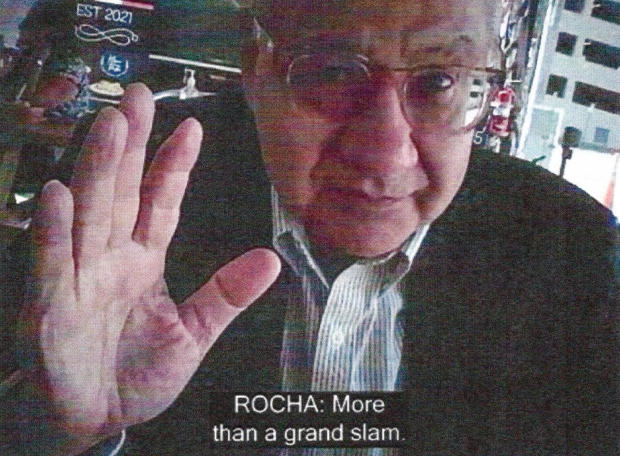
According to court documents, an undercover FBI agent posing as a Cuban intelligence representative contacted Rocha through WhatsApp with a message "from your friends in Havana."
Over a series of meetings in Miami, prosecutors said Rocha referred to the United States as "the enemy" and boasted that Cuba's intelligence efforts were "more than a grand slam."
"My number one concern; my number one priority was … any action on the part of Washington that would endanger the life of the leadership, or the revolution itself," Rocha allegedly told the undercover agent, according to court filings.
Prosecutors also alleged Rocha continued meeting with Cuban intelligence handlers as recently as 2017 by traveling through the Dominican Republic and Panama before reaching Havana.
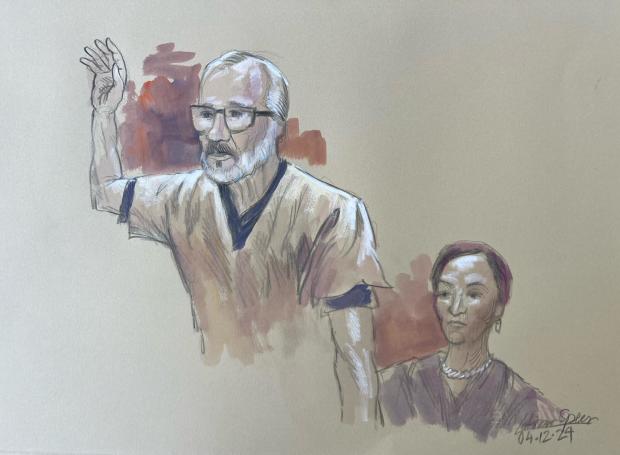
During his sentencing in 2024, federal prosecutors said the full damage caused by Rocha's decades-long covert relationship with Cuba may never be fully known. Former colleagues who worked alongside Rocha said they were stunned by the allegations.
"He would have been enormously valuable to them," former U.S. Ambassador to Panama John Feeley told CBS News in 2024.
The DOJ complaint filed this week includes seven separate counts seeking to revoke Rocha's citizenship.
Prosecutors argue he was never eligible for naturalization because he allegedly concealed material facts, gave false testimony during immigration proceedings, advocated for communism and was not attached to the principles of the U.S. Constitution.