South Florida stays steamy this weekend with chances of showers, thunderstorms rising

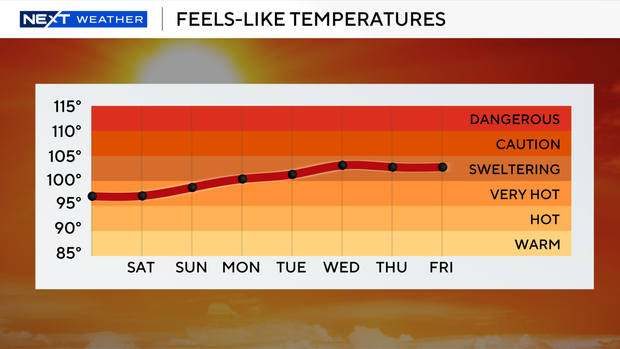
It's going to be a hot and steamy Friday across South Florida with high temperatures in the 90s during the afternoon and feels-like temperatures in the mid- to upper 90s when you factor in the humidity.
There is a moderate heat health risk on Friday for sensitive groups.
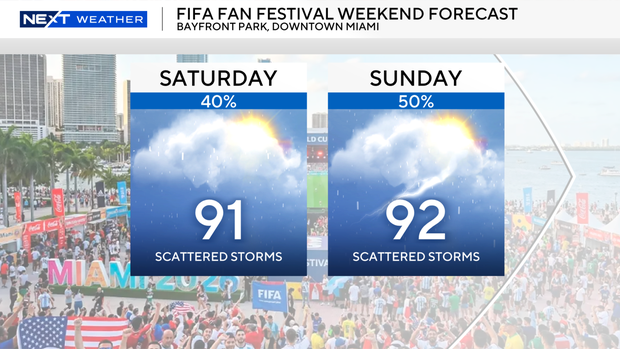
It will be mainly dry through Friday morning, but later in the day spotty showers and thunderstorms will develop around midday and continuing through the afternoon.
The wind is light and there is only a low risk of rip currents along our Atlantic beaches. The UV index will be extreme on Friday. There are no alerts or advisories for boaters along the Atlantic waters or the Keys waters.
The chance of rain will be rising this weekend as the winds shift more out of the south and moisture moves in. The weekend will not be a complete washout but scattered showers and thunderstorms will develop every afternoon.
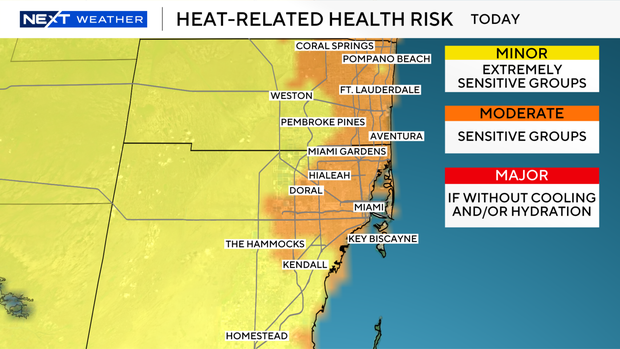
It stays sizzling as high temperatures soar into the low 90s on Saturday with most of South Florida under a moderate risk of heat-related health illnesses, but on Sunday there may be areas under a major risk of heat-related illness.
This means that without proper hydration and/or cooling, heat illness will be possible.
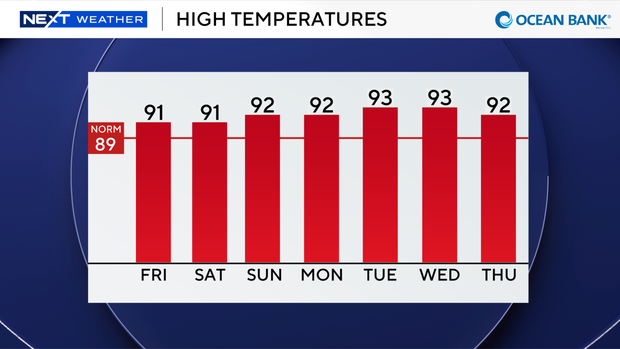
It will be wetter and warmer early next week as we will likely see more showers and thunderstorms on Monday.
Next Tuesday and Wednesday the chance of rain decreases a bit with only a few storms in the forecast.
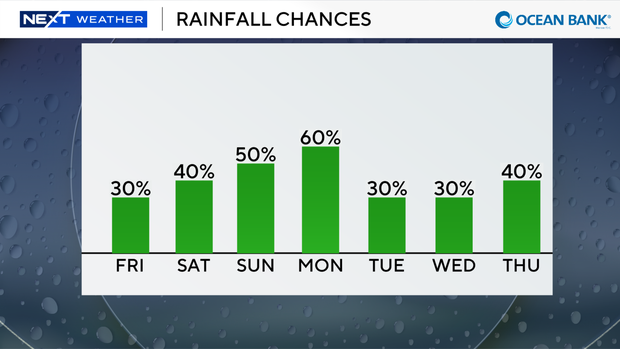
High temperatures will climb to around 93 degrees with feels-like temperatures in the 100s.
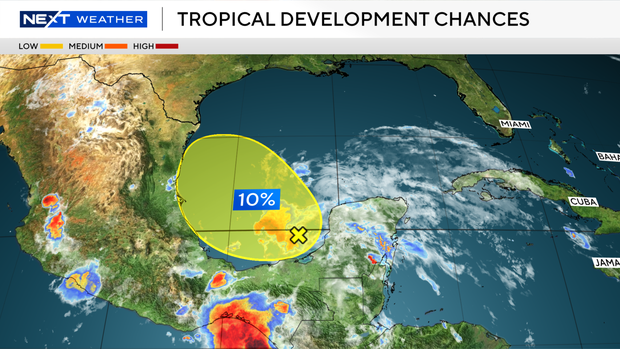
The CBS News Miami NEXT Weather team is monitoring an area in the tropics that is not a direct threat to South Florida. The National Hurricane Center is monitoring a disorganized area of shower and thunderstorms near the Yucatan Peninsula and the Bay of Campeche that is expected to develop into a broad area of low pressure.
The NHC is giving the system a low potential, a 10% chance of development over the next two to seven days as environmental conditions are only marginally favorable for development.