Judge orders unsealing of grand jury transcripts from Epstein case in Florida
Washington — A federal judge on Friday granted the Justice Department's request to unseal grand jury transcripts from a federal investigation in Florida into convicted sex offender Jeffrey Epstein.
The Justice Department had renewed its request for the material to be made public last month after Congress passed and President Trump signed a law that requires the attorney general to disclose records related to the government's investigation into Epstein.
U.S. District Judge Rodney Smith granted the request from Justice Department officials in a brief order.
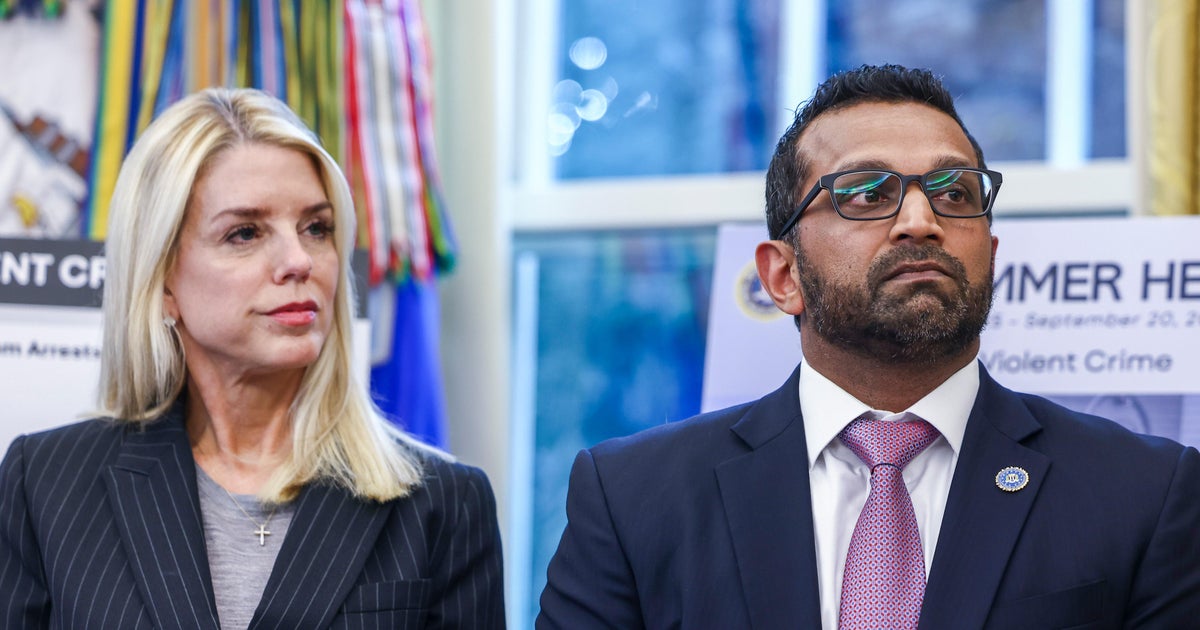
In its motion to the court last month, Attorney General Pam Bondi, Deputy Attorney General Todd Blanche and other government lawyers wrote that the court should authorize the Justice Department to release the transcripts and lift any protective orders that would prevent disclosure to the public "in light of the act's clear mandate."
"The Legislative and Executive Branches have nearly unanimously directed the Department of Justice to make records related to the Epstein and Maxwell investigations publicly available," they wrote.
The Trump administration initially petitioned courts in Florida and New York in July to unseal grand jury materials after it faced backlash for a Justice Department memo that said any additional disclosure of information regarding Epstein was neither "appropriate or warranted."
The Justice Department said that a review of material related to Epstein conducted with the FBI concluded there was no "client list" or evidence that the late disgraced financier blackmailed prominent figures. Investigators also "did not uncover evidence that could predicate any investigation against uncharged third parties," according to the memo.
Judges in Florida and New York denied those initial bids for the information to be released to the public, since federal rules generally require grand jury proceedings to be kept secret.
But the Trump administration tried again following Congress' passage of the Epstein Files Transparency Act, arguing that the law should override grand jury secrecy rules. It said that any victim-related and personal identifying information would be redacted from the grand jury transcripts if unsealed.
Grand juries were convened in West Palm Beach in 2005 and 2007 to investigate Epstein. He ultimately evaded federal charges at the time through a deal with prosecutors that allowed him to plead guilty to state prostitution charges. In 2019, he was arrested on federal sex trafficking charges and died in custody.
The material that Smith ordered to be unsealed is transcripts from those grand jury proceedings in Florida. It's unclear how quickly the information will be made public.
Congress has separately been releasing information it has received through its own investigation into the federal government's handling of Epstein's case. It has made public a trove of emails and messages obtained from Epstein's estate, as well as photos and videos of his private island in the Caribbean.
Democrats on the House Oversight and Government Reform Committee said they have also received financial records related to Epstein from JPMorgan Chase and Deutsche Bank, which they plan to make public in the near future.