Live Updates: Iran state media says talks with U.S. halted, attacks on another key waterway coming
What to know about the Iran war today:
- An Iranian news outlet linked to its Revolutionary Guard Corps said Monday that the regime was suspending indirect talks with the U.S. and opening "other fronts" in the war in response to what it considers U.S. and Israeli ceasefire violations, specifically threatening the Bab el-Mandeb strait.
- President Trump had continued to voice optimism for diplomacy early Monday, saying on Truth Social that, despite another exchange of airstrikes over the weekend, "Iran really wants to make a deal." He urged critics to "sit back and relax, it will all work out well in the end."
- A U.S. official says Israel is not expected to tolerate ongoing Hezbollah attacks on civilians, as fighting between Israel and the Iranian-backed group in Lebanon escalates, further complicating efforts toward a U.S.-Iran agreement.
IRGC-linked Iranian news outlet announces "activation of other fronts, including the Bab el-Mandeb strait"
An Iranian news outlet closely linked with the country's Islamic Revolutionary Guard Corps indicated Monday that the Iranian regime had given its Houthi rebel allies in Yemen the nod to start attacking commercial shipping via another key Middle Eastern waterway, the Bab el-Mandeb strait.
As Iran and the U.S. accused each other of new ceasefire violations and Israel ramped up its parallel war against Iranian-backed Hezbollah in Lebanon, diplomatic efforts appeared to flounder on Monday, and the Tasnim news agency said the regime had halted its indirect talks with the U.S. and given the Houthis marching orders.
Iran and its regional proxy forces "have placed on their agenda the complete blockade of the Strait of Hormuz and the activation of other fronts, including the Bab el-Mandeb Strait," Tasnim said, calling the decisions a bid to "punish" Israel and its supporters for the ongoing Israeli operations in Lebanon.
Iran had threatened at least three times during the war to have its Houthi allies attack the shipping lanes of Bab el-Mandeb.
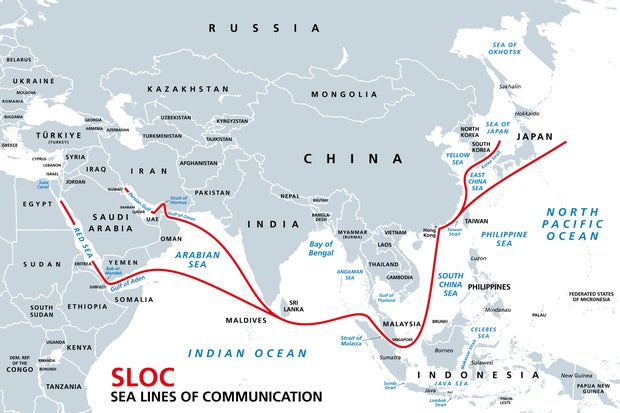
The strait is, just like the gridlocked Strait of Hormuz, a key chokepoint for global energy supplies in the Middle East, and the Houthis have attacked ships in the region before.
Unlike Hezbollah in Lebanon, which launched attacks on Israel almost as soon as the U.S.-Israeli strikes on Iran began, the Houthis have stayed out of the Iran war so far. Its leaders have warned, however, that they could engage if Tehran asks them to.
Iran to suspend talks with the U.S. over Israeli actions in Lebanon and Gaza, state media say
Iran's negotiating team will suspend peace talks with the U.S. over Israel's ongoing war with Hezbollah in Lebanon and other perceived violations of the U.S.-Iran ceasefire, according to Iran's semi-official Tasnim news agency.
Tasnim, which is close to the country's powerful Islamic Revolutionary Guard Corps (IRGC), said Iran would halt "talks and the exchange of texts through a mediator" given the "continuation of the Zionist regime's crimes in Lebanon."
Echoing statements earlier in the day from Iranian officials, Tasnim said Israel's war with Hezbollah in Lebanon was included in the ceasefire, which it said was being violated "on all fronts."
The U.N. Security Council is set to hold an emergency meeting Monday on the war in Lebanon, after Israeli forces seized a medieval castle far north of the border between the two countries. Israeli Prime Minister Benjamin Netanyahu also ordered strikes on what he describes as Hezbollah's "terror headquarters" in Beirut.
According to Tasnim, Iran has repeatedly emphasised that Israeli operations in Gaza and Lebanon must cease, and that its forces must withdraw from Lebanese territory as part of any peace agreement with the U.S.
Iran executes two more men arrested during January 2025 protests
Iran has executed two more men arrested during anti-regime protests in January 2025, according to Mizan News, the Iranian national judiciary authority's media outlet.
Iran accused the men of being "key organizers" of the protests in Tehran. The two men, identified as Mehrdad Mohammadinia and Ashkan Maleki, were convicted in connection with an arson attack on the Jafari Mosque in Kooy-e Nasr, Mizan said Monday, as well as charges including destruction of public property, clashes with security forces, blocking streets, and disrupting public order.
They were hanged on Monday morning after the Iranian Supreme Court upheld their sentence.
Mizan claimed one of the men had admitted to the crimes, but human rights groups have long accused Iran of obtaining forced confessions from detainees.
Iran, which was responsible for at least 2,159 executions in 2025, more than double the number from the previous year, has hanged more than 40 people on charges of espionage, links to opposition groups and alleged anti-establishment activities since the start of the war with the U.S. and Israel, according to BBC Monitoring.
Iran says Lebanon included in ceasefire, and U.S. and Israel "responsible for the consequences of any violation"
Iran said Monday that Lebanon was included in the ongoing ceasefire between the U.S. and Iran that began on April 8, and that the U.S. and Israel "are responsible for the consequences of any violation."
In a post on X, Iranian Foreign Minister Abbas Araghchi said the fragile U.S.-Iran ceasefire was "unequivocally a ceasefire on all fronts, including in Lebanon."
"Its violation on one front is a violation of the ceasefire on all fronts," he said, adding that the U.S. and Israel "are responsible for the consequences of any violation."
Iran's foreign ministry accused the U.S. Monday of another violation of the truce, after U.S. strikes on drone and radar sites in Iran triggered a retaliatory attack from Iran – the second such incident in a week.
"The United States is also violating the ceasefire including this morning," said foreign ministry spokesman Esmaeil Baqaei during a weekly news briefing, vowing that Iran would "take whatever measures we deem necessary to defend Iran's national security."
In Lebanon, Prime Minister Benjamin Netanyahu vowed that Israeli forces would push deeper into the country after seizing the medieval castle of Beaufort on Sunday. He also ordered strikes on what he said were Hezbollah's "terror headquarters" in a southern Beirut suburb.
Iran calls EU statement on strikes "a masterclass in selective outrage"
Iran has called a European Union statement condemning an attack on Kuwait "a masterclass in selective outrage."
In a statement Friday, the EU "strongly condemned" a previous attack on Kuwait by Iran, saying such attacks "pose a serious threat to regional security and stability."
Responding to the statement Monday, Iranian Foreign Ministry spokesman Esmaeil Baqaei said in a post on X that blaming Iran for "exercising its right to self-defense" in the face of U.S. attacks launched from neighboring nations was "a masterclass in selective moral outrage."
"It is hypocritical and reckless," he added.
Both the U.S. and Iran have described recent strikes - carried out despite a fragile, ongoing ceasefire - as defensive.
President Trump said early Monday that his critics should, "relax, it will all work out well in the end," despite the latest flare-up in fighting.
"Iran really wants to make a deal," he said Monday, after his administration made what a source told CBS News were somewhat significant changes to the current draft memorandum of understanding being haggled over by the two countries.
Iran on Monday said contradictory U.S. positions and Israel's ongoing incursion into Lebanon were delaying negotiations on the document, which is believed to include a 60-day extension of the ceasefire, a reopening of the Strait of Hormuz, and a framework for in depth talks on Iran's nuclear program and other contentious issues.
U.S. intercepted 2 Iranian missiles "targeting American troops in Kuwait," CENTCOM says
The U.S. military intercepted two Iranian missiles "targeting American forces in Kuwait" early Monday, which was late Sunday evening in the U.S., Central Command (CENTCOM) said in a brief statement on Monday.
"Last night at 11 p.m. ET, U.S. forces successfully intercepted two Iranian ballistic missiles targeting American forces based in Kuwait," CENTCOM posted on X. "These missiles were immediately defeated and no American personnel were harmed."
Iran's Islamic Revolutionary Guard Corps said early Monday that it had targeted an airbase it claimed the U.S. used to launch attacks Sunday against on at least one Iranian island in the Strait of Hormuz.
Iranian state media didn't say which U.S. base in the region was attacked, but the sequence of events mirrored an exchange of fire last week, when U.S. strikes described by the Pentagon as "purely defensive" drew retaliatory missile fire by Iran aimed at Kuwait.
Four U.S. service members and three contractors suffered minor injuries related to an Iranian ballistic missile strike on a Kuwaiti air base last week, a U.S. official told CBS News on Sunday. All seven returned to duty within 24 hours, the official said.
U.S. official says Israel not expected to tolerate Hezbollah attacks, calls on Iran-backed group to stop firing first
A U.S. official said Sunday evening that Secretary Rubio spoke with both Lebanon's President Josef Aoun and Israeli Prime Minister Benjamin Netanyahu over the weekend about the ongoing negotiations between Israel and Lebanon.
To advance the talks, the U.S. proposed a sequence of events that would see the Iranian-backed Hezbollah militia in Lebanon stop all attacks on Israel, and in return, Israel would refrain from escalation in Lebanese capital Beirut.
The idea is that those first steps would create space for gradual deescalation and an effective cessation of hostilities.
Aoun tried to advance the proposal, but the response from Parliament Speaker Nabih Berri, a senior Lebanese lawmaker who's acted as an interlocutor between the U.S. and Hezbollah, which has long been designated a terrorist organization, was described by the U.S. official as evasive and disappointing.
Berri said he could "guarantee" Hezbollah's commitment to a ceasefire, but only if Israel stopped its attacks on the group first. That, the official said, was disappointing, as it was the Iranian-backed group that initiated the current round of fighting on March 2.
Hezbollah started launching rockets and drones at Israel in retaliation for the U.S.-Israeli strikes on its Iranian benefactors, two days after the U.S. and Israel launched their war with Iran.
The U.S. does not expect Israel to tolerate ongoing attacks against civilians by Hezbollah, the source said, adding that the fastest way to deescalate and protect civilians on all sides would be for Hezbollah to stop firing immediately.
Lebanon's president says his country is facing "vicious and reprehensible Israeli aggression"
Lebanese President Joseph Aoun said Monday that his country was facing "a vicious and reprehensible Israeli aggression," as Israel stepped up its offensive against Hezbollah with the capture of the medieval Beaufort Castle.
Aoun condemned the Israeli offensive in a post on X and pledged to "work to end the suffering of the Lebanese people, and people in the south (of Lebanon) in particular."
The U.N. Security Council is set to hold an emergency meeting Monday on Lebanon, after Israeli Prime Minister Benjamin Netanyahu said the castle's seizure marked a "dramatic shift" in his country's battle against Iranian-backed Hezbollah.
The Israel Defense Forces said a soldier was killed Monday in fighting in southern Lebanon, bringing to 26 the number of Israeli military deaths since Israel ramped up its assault on Hezbollah in tandem with the joint U.S.-Israeli war with Iran in early March.
The IDF also issued another evacuation warning to residents of multiple Lebanese villages Monday, as Netanyahu ordered an attack on what he called Hezbollah's "terror headquarters" in the southern Beirut suburb of Dahiyeh.
CBS/AFP
Iran says the U.S. keeps violating the ceasefire
Iran's foreign ministry said Monday that the United States has continued to violate the ceasefire, after U.S. strikes on a southern port triggered a brief military flare-up - the second under very similar circumstances in a week.
"The United States is also violating the ceasefire including this morning," said foreign ministry spokesman Esmaeil Baqaei during a weekly news briefing, vowing that Iran would "take whatever measures we deem necessary to defend Iran's national security."
Baqaei asserted that a lack of trust, constant change of positions by the U.S., and Israeli actions in Lebanon were delaying diplomatic attempts to extend the ceasefire, according to the Reuters news agency.
"We insist that a ceasefire in Lebanon is an essential condition for any deal aimed at ending the war," Baqaei said, reiterating a longstanding Iranian demand in the negotiations with the U.S.
Israel's Prime Minister Benjamin Netanyahu and the country's Defense Minister Israel Katz announced Monday that they had ordered forces to launch new attacks on targets purportedly linked to Iranian-backed Hezbollah in the southern Dahiyeh neighborhood of Lebanon's capital Beirut.
CBS/AFP
Kuwait army says air defences intercepted Iranian missile, drone attacks as Iran says it launched assault
Kuwait's air defences intercepted missile and drone attacks, the military said Monday, with the country later blaming Iran.
"The General Staff of the Army wishes to advise that any sounds of explosions heard are the result of air defence systems intercepting these hostile attacks," the army said in a post on X.
The foreign ministry later said in a statement that it was "holding Iran fully responsible for these heinous attacks."
KUNA, the state news agency, reported that air raid sirens sounded across the Gulf nation, which is a U.S. ally.
The attack appears to have come from Iran's powerful Revolutionary Guard Corps (IRGC) after the U.S. strikes on Iran over the weekend.
In a statement, the IRGC said that "following an attack a few hours ago by the invading U.S. military" on the port of Sirik, the IRGC struck the "air base from which the attack originated, and the predetermined targets were destroyed."
It warned that "if such aggression is repeated, the response will be entirely different," and "responsibility for the consequences" will lie with the U.S.
CBS/AFP
Trump says Iran "really wants to make a deal" and that "it will all work out in the end"
President Trump, in a post on his Truth Social platform at about 1 a.m. Eastern on Monday, criticized critics of his handling of the Iran war and offered new optimism that a deal to deescalate the conflict could still be imminent.
"Iran really wants to make a deal, and it will be a good one for the U.S.A. and those that are with us," he wrote. "But don't the Dumocrats, and various seemingly unpatriotic Republicans, understand that it is MUCH tougher for me to properly do my job and negotiate, when political hacks keep negatively 'chirping,' at levels never seen before, over and over again, that I should move faster, or move slower, or go to war, or not go to war, or whatever. Just sit back and relax, it will all work out well in the end - It always does!"
U.S. launches more "self-defense strikes" on Iranian radar and drone sites, CENTCOM says
The U.S. military launched "self-defense strikes" targeting Iranian radar sites and command and control sites for drones over the weekend, U.S. Central Command said Sunday.
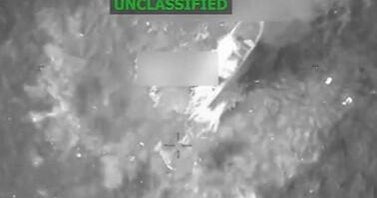
"The measured and deliberate strikes occurred on Saturday and Sunday in response to aggressive Iranian actions that included the shootdown of a U.S. MQ-1 drone that was operating over international waters," CENTCOM said. "U.S. fighter aircraft swiftly responded by eliminating Iranian air defenses, a ground control station, and two one-way attack drones that posed clear threats to ships transiting regional waters."
The U.S. strikes targeted sites in Goruk and on Qeshm Island, CENTCOM said.
Iran's Islamic Revolutionary Guard Corps said early Monday local time that it had targeted an airbase it claimed the U.S. had used to launch attacks on a telecoms tower on Siri Island, state media reported, although the IRGC did not specify which base it was referring to or where it was located.
Kuwait, meanwhile, said its air defenses engaged incoming drone and missile fire early Monday. The Guard's statement was likely referring to the attack on Kuwait.
Defense officials told CBS News on Monday morning that the new round of strikes against Iranian targets took place right on the Strait of Hormuz, one on the coast, another on an island in the latest military escalation during the fragile ceasefire.
The U.S. has lost a least two dozen multi-million-dollar Predator and Reaper Drones, primarily to Iranian fire, since the war began.
Trump's edits to potential Iran agreement focused on Strait of Hormuz, enriched uranium, source says
President Trump's edits to the U.S.-Iran memorandum of understanding included somewhat significant changes related to the Strait of Hormuz and the removal of highly enriched uranium, according to a source with knowledge of the negotiations.
The broad strokes of the memorandum include a 60-day cessation of violence, along with clauses that call for reopening the strait and a framework to reopen negotiations on Iran's nuclear program.
Multiple sources told CBS that the arrangement also involves the potential of waivers or sanctions relief to Iran that could allow it to access billions in frozen assets depending on the progress of the diplomacy.
Mediators led by Pakistan are handling the back-and-forth between Washington and Tehran. Details of each exchange are limited. Mr. Trump had said Friday that he would make a final determination on the deal that day, but then further edits were sent to Iran. Mr. Trump told Lara Trump in an interview taped Thursday that he was in "no hurry" to make a deal.
The White House did not respond to a request for comment. Axios was the first to report Mr. Trump's requested edits to the memorandum.
U.S. service members, contractors injured in missile strike on Kuwaiti base, U.S. official says
Four U.S. service members and three contractors suffered minor injuries related to an Iranian ballistic missile strike on a Kuwaiti air base last week, a U.S. official told CBS News.
All seven returned to duty within 24 hours, the official said.
Iran launched a ballistic missile towards Kuwait at 10:17 p.m. Eastern time on Wednesday, CENTCOM had previously said. The missile was intercepted by Kuwaiti forces. Kuwait also reported drone and missile attacks on Thursday morning.
Iran's Revolutionary Guard said Thursday that it had targeted an American base in retaliation for U.S. strikes on the southern part of the country, though it did not specify where that base was. The U.S. described its strikes as defensive.
Netanyahu says capturing Lebanese castle marks "dramatic shift" in campaign
Israeli Prime Minister Benjamin Netanyahu vowed to push deeper into Lebanon after his military took over the medieval castle of Beaufort on Sunday, calling it a "dramatic shift" in the campaign against Hezbollah.
Israeli forces used the Beaufort castle, also known as Qalaat al-Chakif, as a base during their previous two-decade occupation of southern Lebanon that ended in 2000.
In a video statement released hours after the military took Beaufort, Netanyahu said "we have returned united, determined and stronger than ever".
"Now my directive is to deepen and expand our hold in places that were under Hezbollah's control. The capture of Beaufort is a dramatic stage and a dramatic shift in the policy we are leading."
The push to Beaufort came as the Israeli military issued a sweeping evacuation order to areas south of the Zahrani River, north of the Litani and around 25 miles from the border. It said it was targeting "Hezbollah infrastructure in Tyre and several additional areas in southern Lebanon" as Lebanon's state-run National News Agency reported a series of strikes on the area.
Lebanese Prime Minister Nawaf Salam had accused Israel on Saturday of pursuing a "scorched-earth policy and collective punishment" in the south, urging a halt to the fighting.
France said on Sunday it requested an emergency meeting of the United Nations Security Council, alarmed by Israel's "ever-deeper occupation of Lebanese territory."
Mediators continue to discuss U.S.-Iran proposal
Mediators are continuing to discuss a memorandum of understanding between Iran and the U.S. as of Sunday morning.
President Trump made edits to the memorandum on Friday, according to a source with knowledge. The edited proposal was then sent back to Tehran for approval. A response has not yet been shared.
This is the third round of edits that the president has made to the U.S. proposal, which has been passed back and forth to Tehran through mediators. That process is led by Pakistan. The source indicated the U.S. changes were somewhat significant though details were not immediately available. There is no immediate deadline.