Trump threatens Iran strikes, says too soon for new direct talks after reporting "great progress"
Follow updates on the war in the Middle East for Thursday, May 7, here. See earlier developments below.
What to know about the Iran war:
- President Trump threatened Iran on Wednesday with "higher level" military strikes if it doesn't accept a peace deal, but he says it's "too soon" for new direct talks with Iranian officials in Pakistan after reporting "great progress" in negotiations to end the war.
- Iran has yet to react publicly to President Trump's announcement of a pause in the brief Project Freedom mission to guide ships through the Strait of Hormuz, which prompted the first Iranian attacks on vessels in the strait and against U.S. Gulf allies in almost a month.
- Mr. Trump put Project Freedom on pause Tuesday night, saying it was to see if "a Complete and Final Agreement" to end the war with Iran could be nailed down amid what he called "great progress" in negotiations brokered by Pakistan.
Senior Hezbollah commander killed by Israel in Beirut suburbs, source says
A senior commander from Hezbollah's elite force was killed in an Israeli strike on Beirut's southern suburbs on Wednesday, the first on the area in nearly a month, a source close to the group said.
At least 11 other people were killed in strikes across the south and east, according to the Lebanese health ministry.
Israeli Prime Minister Benjamin Netanyahu said his military had targeted "the commander of Hezbollah's Radwan force."
The source close to Hezbollah told AFP on condition of anonymity that "Malek Ballout, the operations commander in the Radwan force" was killed.
Lebanon's state-run National News Agency had reported that "Israeli warplanes launched an attack targeting Ghobeiri" in the southern suburbs, a Hezbollah stronghold.
An AFP correspondent saw a building covered in rubble following the strike as people left the area with their belongings.
Many of the southern suburbs' residents had already left after Hezbollah drew Lebanon into the Middle East war in March, and haven't returned despite the truce in force since April 17.
A Lebanese security source told AFP on condition of anonymity that the strike hit an apartment in which Radwan leaders were holding a meeting.
Iran denies attacking South Korean ship in Strait of Hormuz
Iran denied on Thursday attacking a South Korean cargo ship in the Strait of Hormuz this week, as President Trump said a deal to end the war was "very possible" but warned Washington would resume bombing if talks failed.
Tehran's embassy in Seoul said it "firmly rejects and categorically denies" allegations that its armed forces were behind a blast aboard the Panama-flagged HMM Namu, which caught fire on Monday while transiting the strategic waterway with 24 crew members on board.
Mr. Trump later claimed Iran had "taken some shots" at the vessel and urged South Korea to join U.S.-led efforts to restore shipping through the strait.
South Korea said after his remarks that it would "review its position" on joining U.S. operations to escort ships through the strait.
But National Security Adviser Wi Sung-lac said Wednesday that the suspension of the escort program, named "Project Freedom," had made the review unnecessary.
Shipper says Strait of Hormuz shutdown costing it $60 million per week
Hapag-Lloyd, one of the world's largest shipping companies, said in a statement that the shutdown of the Strait of Hormuz is costing it around $60 million per week, with rising fuel and insurance costs hitting particularly hard.
The company said alternate routes to other harbors or over land are limited.
The spot price of Brent crude oil, the international standard, fell to around $100 per barrel Wednesday, easing significantly from big price jumps earlier in the week. Crude sold for roughly $70 a barrel before the war began.
Iran's soccer chief on World Cup: "Our host is FIFA, not Mr. Trump or America"
Iran's soccer chief Mehdi Taj on Wednesday said the country will participate in the World Cup in North America this summer, under certain conditions.
"We are going to the World Cup, for which we qualified, and our host is FIFA, not Mr. Trump or America," Taj told Iranian state broadcaster IRIB.
"If they accept hosting us, then they must also accept that they must not insult our military institutions in any way. Because if they do, then naturally it could create the same kind of situation that happened in Canada, where there was a possibility we might have to return," Taj said. "So there must be this kind of guarantee so that we can go with peace of mind."
The Iranian delegation turned back from Canada's border last week while they were en route to attend the FIFA Congress in Vancouver. Taj told state media the choice to go back to Iran was their own, but the Canadian minister of immigration told the parliamentary committee that Taj's visa was canceled whilst he was in the air because of his ties to the Islamic Revolutionary Guard Corps, the Canadian Broadcasting Corporation reported.
Secretary of State Marco Rubio has said that the Iranian team would be allowed to play in the U.S., but no one with IRGC ties would be allowed in the country.
Macron says strikes on UAE are "unjustified," calls on U.S. and Iran to lift Hormuz blockade
French President Emmanuel Macron said he spoke with Iranian President Masoud Pezeshkian on Wednesday and told him attacks on Emirati civilian infrastructure and ships near the Strait of Hormuz were "unjustified."
"I expressed my deep concern about the ongoing escalation and condemned the unjustified strikes against Emirati civilian infrastructure and several ships," he said on X following the call.
Macron also said he called on both the U.S. and Iran to immediately lift the blockade in the strait without any conditions.
Speaking about the France and U.K.-led initiative announced earlier Wednesday to help ensure safe passage for commercial vessels through the strait, the French leader said, "Recent events clearly demonstrate the usefulness that such a mission would have." He added that he will speak with President Trump about the mission.
Pezeshkian's office confirmed on its website that Macron and Pezeshkian had discussed the latest regional developments, the course of negotiations and the situation in the strait in a telephone call.
"We are pleased that France's approach is based on resolving issues through dialogue," Pezeshkian told Macron, according to Iran's presidency.
But "any negotiation regarding the full reopening of the Strait of Hormuz requires the lifting of the naval blockade imposed by the United States," Pezeshkian's office said.
CBS/AFP
On negotiations with Iran, Trump says there's "never a deadline"
As reporters began to leave the Oval Office Wednesday, one asked the president about a deadline for negotiations with Iran.
"Never a deadline," the president responded. "It'll happen. It'll happen. But never a deadline."
The president in the past has tried to impose a deadline for negotiations. He ended up extending that deadline and ceasefire for negotiations to continue.
Earlier Wednesday, the president told the New York Post it's too soon to send senior U.S. officials to Iran for another in-person talks.
Gas prices top $4.50 a gallon, reaching highest level since July 2022
Gasoline prices across the U.S. surged to an average of $4.54 a gallon on Wednesday, the highest since July 2022, according to AAA data.
The price of regular gas has jumped 52%, or $1.56 per gallon, since the start of the Iran war in late February, as disruptions to oil flows in the Middle East drive up costs for motorists. The cost is approaching the highest-ever gas price, when it reached $5.02 a gallon in June 2022 during a pandemic-era spike in inflation.
Fuel costs climbed even as oil prices edged lower Wednesday on renewed hopes for a U.S.-Iran agreement, highlighting a disconnect between crude markets and what drivers pay at the pump.
Trump says he met with oil executives at the White House last night
President Trump said he met with top oil executives at the White House on Tuesday night, including executives from ExxonMobil and Chevron.
"I was with ExxonMobil last night, the chairman was here," the president told reporters in the Oval Office. "And we're talking about Venezuela, along with a lot of them, Chevron, they were all here last night. They all want to go there and elsewhere."
U.S. oil companies have been working with the federal government to sell Venezuelan oil. But gas and diesel prices are also soaring as shipments stuck in the Persian Gulf destabilize global markets.
Trump says they've had "very good talks over the last 24 hours"
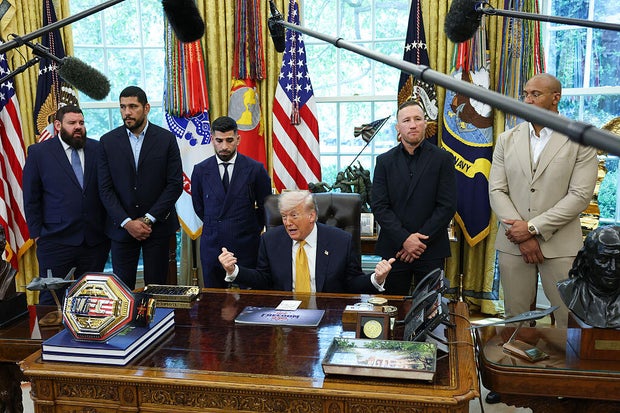
President Trump, speaking to reporters in the Oval Office during an event with UFC fighters, said the U.S. has had "very good talks over the past 24 hours" about Iran.
It's not clear if the president meant the U.S. and Iran were talking directly or through Pakistan. The president claimed, as he has before, that Iran wants to "make a deal badly."
"They want to make a deal," he said. "We've had very good talks over the last 24 hours. And it's very possible that we'll make a deal."
Mr. Trump acknowledged that they've "had some good talks before, as you know, and all of the sudden, the next day like, they're like, they forgot what happened."
The president also said if the U.S. left Iran right now, it would take them 20 years to rebuild.
Netanyahu says he will speak with Trump on Iran talks
Prime Minister Benjamin Netanyahu will speak to President Trump about the situation with Iran, according to the Israeli leader.
Netanyahu said he speaks with Mr. Trump on a "almost on a daily basis." The White House hasn't mentioned whether the two will talk Wednesday.
"We have full coordination, there are no surprises," Netanyahu said in a taped message Wednesday. "We share common goals, and the most important goal is to remove the enriched material from Iran, all the enriched material, and dismantle Iran's enrichment capabilities."
The U.S. paused its Operation Freedom late on Tuesday because Mr. Trump said the U.S. and Iran made "Great Progress…toward a Complete and Final Agreement." However, Wednesday morning, he said Iran agreeing to a new deal was "perhaps, a great assumption" and he threatened more devastating strikes than before the ceasefire if an agreement is not reached.
"President Trump believes he can achieve this one way or another," Netanyahu said. "But we are prepared for any scenario, and this is my instruction to the IDF and our security forces. Israel is stronger than ever, Iran and its proxies are weaker than ever."
Trump says U.S. war with Iran "going very smoothly"
President Trump said the war with Iran is going "unbelievably well" in brief comments at the beginning of an event to honor military mothers at the White House on Wednesday.
He also favorably compared the operation in Iran to the successful one in January targeting Nicolas Maduro in Venezuela.
"We're in a— I call it a skirmish, because that's what it is, a skirmish, and we're doing unbelievably well, as we did in Venezuela, where it was rapid, over in one day and we're doing pretty much equally as well I would say, larger, but we're doing very well in Iran."
"It's going very smoothly, and we'll see what happens," Mr. Trump added.
The president also repeated that the Iranians want to make a deal. He had halted Operation Freedom — the military escort of ships stuck in the Persian Gulf — late Tuesday at the request of Pakistan due to supposed progress in those peace talks.
"They want to make a deal, they want to negotiate, and I think that military mothers would want to hear that," he said.
Israel targets leader of Hezbollah's Radwan force, Netanyahu says
The commander of Hezbollah's Radwan force has been targeted by an Israeli attack in Beirut, Prime Minister Benjamin Netanyahu and Defense Minister Israel Katz said in a joint statement.
It was unclear whether the attack was successful.
"The terrorists, led by Radwan, were responsible for firing at Israeli settlements and harming IDF soldiers," Katz and Netanyahu said in the statement. "No terrorist has immunity — Israel's long arm will catch every enemy and murderer.
The Radwan force is Hezbollah's group of special forces.
U.S. opens fire, disables Iranian-flagged tanker in Gulf of Oman
U.S. forces in the Gulf of Oman opened fire Wednesday morning on the Iranian-flagged empty oil tanker M/T Hasna and disabled the ship, according to U.S. Central Command.
The ship was allegedly heading to an Iranian port when the U.S. military commanded it to stop in accordance with the ongoing blockade.
"After Hasna's crew failed to comply with repeated warnings, U.S. forces disabled the tanker's rudder by firing several rounds from the 20mm cannon gun of a U.S. Navy F/A-18 Super Hornet launched from USS Abraham Lincoln (CVN 72)," CENTCOM said in a statement. "Hasna is no longer transiting to Iran."
The Hasna is believed to be the second large vessel the U.S. has disabled during enforcement of the blockade. The USS Spruance intercepted the Iranian-flagged cargo ship Touska on April 19, and fired at the ship to disable its engines, U.S. officials said.
Another 52 ships have been forced to turn around or return to port as part of the U.S. blockade, CENTCOM said earlier Wednesday.
Trump says Iran is "militarily defeated," but U.S. operations may not be done
President Trump said Iran is "militarily defeated" in an interview with Sinclair Broadcast Group's Sharyl Attkisson.
"In their own minds, maybe they don't know that, but I think they do," Mr. Trump said in a clip from the interview released on Wednesday. "If we left today, it would take them 20 years to rebuild."
Asked if combat operations are done, Mr. Trump said, "No, I didn't say that."
"They are defeated, but that doesn't mean they're done," he said. "We could go in for two more weeks and do every single target. We have certain targets that we wanted, and we've done probably 70% of them, but we have other targets that we could conceivably hit."
U.S. to press allies to bolster counterterrorism efforts, including on Iran
U.S. counterterrorism officials will meet with international partners on Friday to ask how allies can boost efforts to combat terrorist threats, especially from Iran and in the Strait of Hormuz, a White House official said.
A new counterterrorism strategy, signed by President Trump on Tuesday, seeks to crack down on Islamist terror groups, drug cartels and violent domestic political groups.
Seb Gorka, the senior director for counterterrorism at the White House National Security Council, told reporters that the U.S. will be seeking more from allied countries that want to be viewed as "serious" nations.
"We have a very simple metric: if you want to be measured as a serious nation, whether it is protecting tankers in the Strait of Hormuz or whether it is working against jihadi threats in the Sahel of Africa, we expect more from you. The idea that there is one hyper-power in the world, America, and it will protect all from every threat, is untenable. We reject the concept of global police officer," Gorka said.
U.S. airlines spent over $5 billion on fuel in March: DOT
U.S. airlines spent $5.06 billion on jet fuel in March, up 56.4% from February, amid the ongoing war with Iran and closure of the Strait of Hormuz, according to the Department of Transportation's Bureau of Transportation Statistics.
The airlines used 1.615 billion gallons of fuel on scheduled service in March, 19.5% more fuel than in February, the agency said.
The cost was also up significantly from March 2025, when the airline industry spent $3.88 billion on fuel, the DOT said. The cost per gallon was $3.13 this March compared to $2.41 in March 2025.
The skyrocketing fuel costs caused by the closure of the Strait of Hormuz has caused many airlines to increase prices on everything from fares to baggage fees and food service. Spirit Airlines, which shut down over the weekend, said the cost of fuel put the final nail in the coffin for the struggling airline.
Israeli soldier seriously injured by explosive drone, army says
An Israeli soldier was seriously injured on Wednesday by a Hezbollah drone strike, according to the Israel Defense Forces.
The soldier was evacuated for medical treatment, Israel said, but provided no further details on the person's condition.
Iranian-backed Hezbollah earlier confirmed it had attacked Israeli soldiers in two locations in southern Lebanon, claiming it was "in defense of Lebanon and its people," and in response to what it described as Israeli violations of the U.S.-brokered ceasefire between Israel and Lebanon.
Israel also said it launched interceptors at rockets and "suspicious aerial targets" in the area of Israeli forces in southern Lebanon. No Israeli forces were injured in those apparent attacks, the IDF said.
Iranian foreign ministry spokesman says negotiations require "genuine attempt to engage," not "coercion"
After Iran's foreign ministry spokesman was quoted by the country's state-run media as saying the regime was in the process of reviewing the latest U.S. peace proposal, he issued a social media post saying any negotiations should be based on engagement, not "deception, extortion or coercion."
"The concept of 'negotiations' requires, at the very least, a genuine attempt to engage in discussions with a view to resolving the dispute," spokesman Esmaeil Baqaei said in a post on X. "It needs 'good faith', then, meaning that 'negotiations' is not 'disputation'; nor is it 'dictation', 'deception', 'extortion' or 'coercion'."
He didn't give any further indication of the Iranian government's view of the terms presented in the U.S. proposal, which Trump administration officials have not shared publicly.
CENTCOM says 52 vessels turned around by ongoing U.S. blockade of Iran's ports and vessels
U.S. Central Command said Wednesday that a "large contingent" of U.S. warships, aircraft and personnel continued "fully enforcing" the blockade of Iran's ports and Iranian-linked vessels.
"So far, 52 commercial vessels have been directed to turn around or return to port in order to comply," CENTCOM said in a social media post.
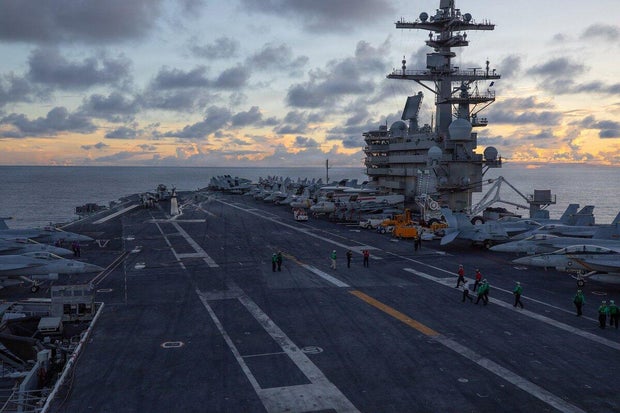
President Trump said in a post on his Truth Social platform Tuesday night that the blockade would remain in place, though the Project Freedom mission to guide ships through the Strait of Hormuz was being paused temporarily to make room for diplomatic efforts to secure a peace deal with Tehran.
France sends aircraft carrier to Mideast for "upcoming multinational initiative to secure the Strait of Hormuz"
France's Ministry of the Armed Forces said the country's Charles de Gaulle aircraft carrier and associated escort vessels would transit through the Suez Canal on Wednesday toward the southern Red Sea, as part of an "upcoming multinational initiative to secure the Strait of Hormuz."
France and the U.K. have led a push by primarily European and Persian Gulf nations to assemble a joint military force to help ensure safe passage for commercial vessels through the strait once the U.S.-Israeli war with Iran ends.
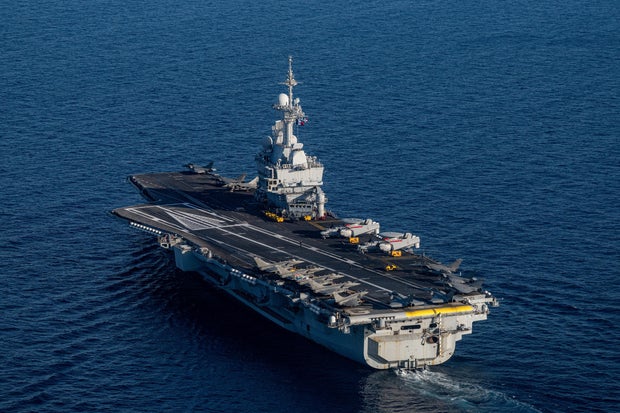
While many nations have expressed a willingness to join such an effort, none have indicated any willingness to enter the fray until hostilities have concluded.
According to the French defense ministry's statement on Wednesday, the effort "brings together more than forty nations" for a maneuver that will be "distinct from the military operations initiated in the region" already.
Germany announced Tuesday that it was sending one of its navy's minesweeping ships to the Mediterranean, so that it would be better positioned to join the international effort when it launches.
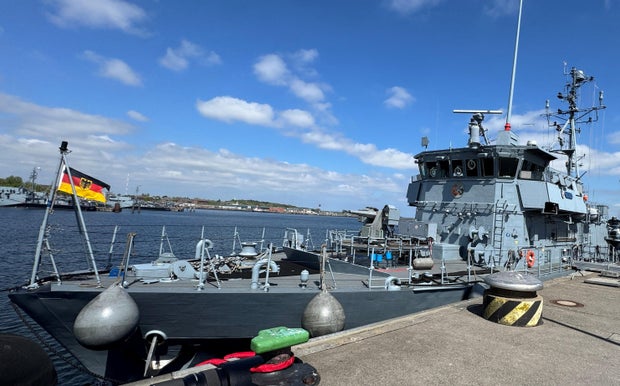
There has been little information made public about how the mission will function or under what leadership.
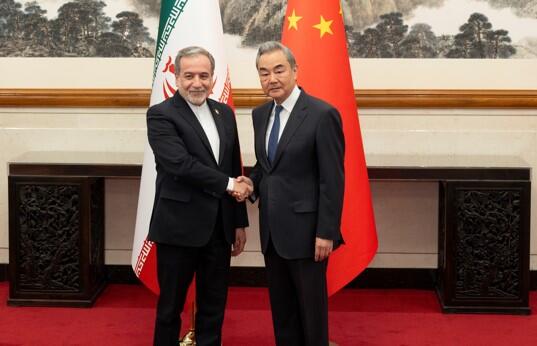
Iranian foreign minister says Tehran "trusts China" as it helps establish a "new post-war regional framework"
Iranian Foreign Minister Abbas Araghchi said Wednesday that he had a "constructive meeting" in Beijing with his Chinese counterpart Wang Yi, whom he thanked for reaffirming "Iran's right to uphold national sovereignty and national dignity."
"Iran trusts China and looks forward to its continued active role in promoting peace and ending the conflict, as well as supporting the establishment of a new post-war regional framework that can balance development and security," Araghchi said in a brief statement posted on social media.
Iran reviewing latest U.S. peace proposal, regime says
Iran's government is reviewing the latest U.S. peace proposal, Foreign Ministry spokesman Esmaeil Baqaei said in a statement to the country's ISNA news agency on Wednesday, adding that Tehran would convey its position on the proposal to Pakistani intermediaries after finalizing its response.
President Trump warned Iran earlier Wednesday, in a Truth Social post, that it would face American strikes "at a much higher level and intensity" unless it "agrees to give what has been agreed to, which is, perhaps, a big assumption."
Neither the Trump administration, Tehran nor Pakistan have confirmed any details of the latest iteration of the peace proposal, which is the result of weeks of back-and-forth negotiating led by Islamabad.
Iran's threat to shipping in the Strait of Hormuz, and its willingness to accept major constraints on its nuclear program, along with Israel's ongoing battle with Iranian-backed Hezbollah in Lebanon, have all proven formidable hurdles to a comprehensive peace deal thus far.
Strait of Hormuz traffic still gridlocked, or hidden, after latest Iranian attacks on commercial ships
Traffic through the Strait of Hormuz remained almost nonexistent in the 48 hours after President Trump announced the beginning of Project Freedom, a military operation to guide commercial ships out of the Persian Gulf through the Strait of Hormuz, according to data from the U.K. navy's Maritime Trade Operations Center and analysis from Lloyd's List Intelligence.
Mr. Trump announced Tuesday evening that the project was being "paused" after just a day, during which the U.S. military helped two vessels transit the strait.
The UKMTO recorded just 11 transits on May 3 and 4, down from a historical average of about 138 per day, the agency said in a report published Tuesday. Four cargo vessels and one oil tanker transited east, leaving the Persian Gulf, during that time, including the two assisted by U.S. forces.
Shipowners and mariners said Project Freedom had not "provided sufficient clarity or credible protection to justify resuming transits" through the narrow waterway, Lloyd's said in a media briefing Wednesday.
Many ships still in the Persian Gulf switched off their AIS location transponders, or were faking their locations this week, a CBS News analysis found Wednesday. Vessels can turn off their location broadcasts for safety reasons or to make journeys without being tracked openly.
Lloyd's said crew morale on the thousands of vessels stuck amid the war is low, affecting "far beyond the immediate area," citing a survey by the London-based charity Mission to Seafarers, which said some crews were rationing food and boiling seawater.
Trump says it's "too soon" to think about new round of direct talks with Iran in Pakistan
President Trump told the New York Post on Wednesday morning that it was "too soon" to start thinking about a second round of face-to-face peace talks between the U.S. and Iran, the newspaper reported as Mr. Trump threatened Iran with "higher level and intensity" strikes if it declines to agree to a peace deal.
Mr. Trump had said Tuesday night that he was pausing a U.S. operation to guide commercial vessels through the Strait of Hormuz to make room for diplomacy, saying there had been "great progress" in negotiations, without offering any details of the talks.
Asked whether The Post should prepare to send a reporter back to Pakistan for a new round of negotiations, after sources in Islamabad told some news outlets that the two sides were close to agreeing on a preliminary deal to end the war, Mr. Trump said, "I don't think so," according to the newspaper.
Trump threatens to attack Iran with "higher level and intensity" if it doesn't agree to peace deal
President Trump threatened Iran on Wednesday with new attacks, warning they would be at a "higher level and intensity" than previous rounds of bombing, if it declined to agree to a peace deal, which he said was "perhaps, a big assumption."
His latest remarks, in a Truth Social post, came 13 hours after he said in a previous post that he was pausing Project Freedom, a U.S. military operation to guide vessels through the Strait of Hormuz that lasted one day and drew a violent reaction by Iran, to see if a peace deal could be reached amid "great progress" in negotiations.
"Assuming Iran agrees to give what has been agreed to, which is, perhaps, a big assumption, the already legendary Epic Fury will be at an end, and the highly effective Blockade will allow the Hormuz Strait to be OPEN TO ALL, including Iran," Mr. Trump said Wednesday. "If they don't agree, the bombing starts, and it will be, sadly, at a much higher level and intensity than it was before."
Mr. Trump has not given any indication what Iran purportedly agreed to to end the more than two-month war and standoff over control of the strait, a vital shipping lane which has been gridlocked since the conflict began, sending global energy prices soaring.
Iran has not reacted publicly to any of Mr. Trump's latest remarks.
Secretary of State Marco Rubio said Tuesday night that Operation Epic Fury was already over, noting that President Trump had previously "notified Congress, we're done with that stage of it."
"The operation, Epic Fury, is concluded," Rubio said. "We achieved the objectives of that operation."
Iran's military thanks ship owners "for complying with Iran's Strait of Hormuz regulations"
Iran's Islamic Revolutionary Guard Corps issued a statement Wednesday thanking captains and shipowners in the Persian Gulf and Gulf of Oman "for complying with Iran's Strait of Hormuz regulations and contributing to regional maritime security."
The U.S. military and Iran have both claimed for weeks to be in control of the vital shipping lanes of the strait.
The U.S. launched an operation, Project Freedom, on Monday to guide ships through the strait in defiance of Iran's demands for vessels to coordinate with its military, but after just a day and two ships being led through the waterway, President Trump announced a pause in the mission Tuesday night.
He said the pause was to see if a peace deal could be nailed down with Tehran amid "great progress" in negotiations.
It came after Iran reacted to Project Freedom on Monday by attacking several ships in the strait and launching missiles and drones at U.S. ally the United Arab Emirates for the first time since Mr. Trump announced a ceasefire with Tehran on April 8.
In its statement Wednesday, published on its social media accounts, the IRGC said with U.S. "threats neutralized and new protocols in place, safe, stable passage through SOH [Strait of Hormuz] will be ensured."
Iran's military thanks ship owners "for complying with Iran's Strait of Hormuz regulations"
Iran's Islamic Revolutionary Guard Corps issued a statement Wednesday thanking captains and shipowners in the Persian Gulf and Gulf of Oman "for complying with Iran's Strait of Hormuz regulations and contributing to regional maritime security."
The U.S. military and Iran have both claimed for weeks to be in control of the vital shipping lanes of the strait.
The U.S. launched an operation, Project Freedom, on Monday to guide ships through the strait in defiance of Iran's demands for vessels to coordinate with its military, but after just a day and two ships being led through the waterway, President Trump announced a pause in the mission Tuesday night.
He said the pause was to see if a peace deal could be nailed down with Tehran amid "great progress" in negotiations.
It came after Iran reacted to Project Freedom on Monday by attacking several ships in the strait and launching missiles and drones at U.S. ally the United Arab Emirates for the first time since Mr. Trump announced a ceasefire with Tehran on April 8.
In its statement Wednesday, published on its social media accounts, the IRGC said with U.S. "threats neutralized and new protocols in place, safe, stable passage through SOH [Strait of Hormuz] will be ensured."
Israel announces new strikes in Lebanon as Hezbollah attack leaves 2 soldiers wounded
Israel's military said Wednesday that two soldiers were "moderately and lightly injured" in a Hezbollah drone and rocket attack on forces taking part in the ongoing invasion of southern Lebanon.
The Israel Defense Forces said in its statement that the Air Force had "intercepted a hostile aircraft prior to crossing into Israeli territory" in a separate incident.
Shortly after, the IDF said it had launched new strikes on "Hezbollah terror infrastructure sites in several areas in southern Lebanon."
In a statement posted on social media, Iranian-backed Hezbollah confirmed that it had attacked Israeli soldiers in two locations in southern Lebanon, claiming it was "in defense of Lebanon and its people," and in response to what it described as Israeli violations of the U.S.-brokered ceasefire between Israel and Lebanon and attacks on villages in the south that it said had caused civilian deaths and injuries.
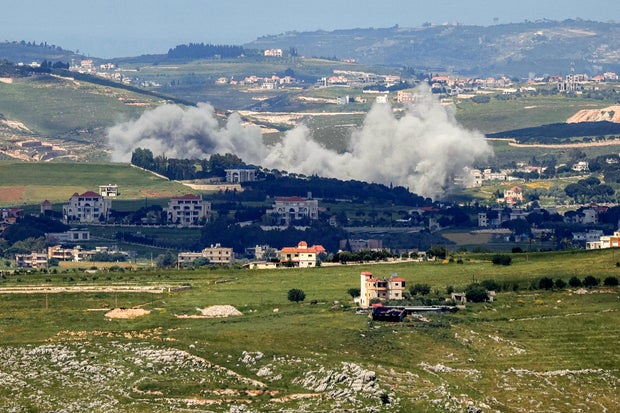
Israel and Hezbollah have continued exchanging regular fire since President Trump first announced the ceasefire in Lebanon, both always claiming to act in self defense and accusing the other of violating the truce.
The ongoing fighting in Lebanon has remained a major complicating factor in efforts by Pakistan to broker a diplomatic end of the war between the U.S. and Iran. Tehran has thus far refused to agree to any wider peace deal that doesn't include a halt to Israel's fight with Hezbollah in Lebanon.
Iranian state media says future of Strait of Hormuz will "likely reflect a new balance of power"
Traffic in the Strait of Hormuz, a vital shipping lane for energy supplies long kept completely open under international law, will be controlled in the future under a new system that "will likely reflect a new balance of power and security considerations" in the region, with bordering states Iran and Oman playing a central role, Iranian state news agency IRNA claimed Wednesday.
The report said Iranian and Omani officials had previously discussed potential joint mechanisms to manage maritime traffic, ensure safe passage, and introduce coordinated protocols for vessel movement once conditions in the region "stabilize."
IRNA said the proposals were framed as efforts to improve security and organization for shipping traffic in the strait, rather than to restrict navigation that had, until the U.S. and Israel launched their joint war on Iran on Feb. 28, been completely free and unfettered.
The article said Iran considers the Strait of Hormuz strategically linked to its national security, and that any long-term governance or operational structure for the waterway should be determined through regional dialogue, particularly with neighboring coastal states.
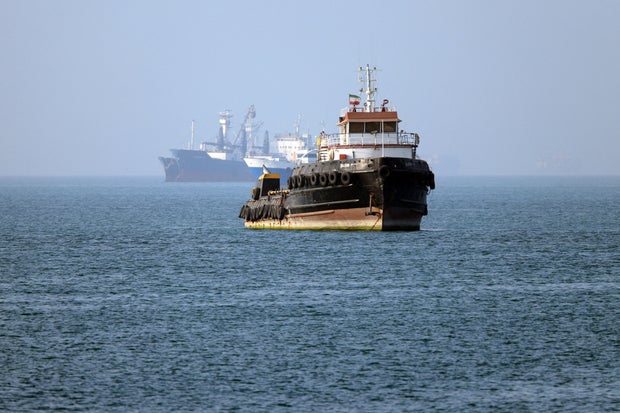
IRNA said recent developments had underscored the geopolitical importance of the strait, noting the severe global energy price hikes amid constraints on commercial traffic through the waterway during the war.
The U.S. and its regional allies in the Persian Gulf have accused Iran of piracy for its attacks on and threats against commercial vessels, which have gridlocked traffic in the strait.
Pakistani leader says Trump pausing Project Freedom "will go a long way towards advancing regional peace"
Pakistan's Prime Minister Shehbaz Sharif lauded President Trump on Wednesday for pausing Project Freedom, saying the halt to the brief U.S. military operation to guide ships through the Strait of Hormuz — which prompted Iran to attack ships and Gulf States for the first time in weeks — would "go a long way towards advancing regional peace, stability and reconciliation."
"We are very hopeful that the current momentum will lead to a lasting agreement that secures durable peace and stability for the region and beyond," said Sharif, whose country has served as an intermediary between Tehran and Washington, in a social media post.
"I am grateful to President Donald Trump for his courageous leadership and timely announcement regarding the pause in Project Freedom in the Strait of Hormuz," said the Pakistani leader, adding that his country "remains firmly committed to supporting all efforts that promote restraint and a peaceful resolution of conflicts through dialogue and diplomacy."
Mr. Trump said Tuesday evening, when he announced the pause in Project Freedom, that he was doing so after "great progress" in negotiations "toward a Complete and Final Agreement" to end the war with Iran.
Iran's government has yet to react publicly to Mr. Trump's announcement.
China is "deeply distressed" over Iran war, foreign minister says
Chinese Foreign Minister Wang Yi on Wednesday told his Iranian counterpart Abbas Araghchi that China was "deeply distressed" over the war that has lasted more than two months and said a "comprehensive ceasefire" was needed.
Wang met Araghchi in Beijing, the first time the Iranian foreign minister traveled to China since the war with the U.S. and Israel started Feb. 28.
"We believe that a comprehensive ceasefire is urgently needed, that a resumption of hostilities is not acceptable, and that it is particularly important to remain committed to dialogue and negotiations," Wang said.
After their meeting, Araghchi said Tehran would only accept "a fair and comprehensive agreement" to end the war, according to Iranian state media.
"We will do our best to protect our legitimate rights and interests in the negotiations," he was quoted as saying, without addressing President Trump's announcement on Tuesday that he was pausing Operation Freedom in the Strait of Hormuz "for a short period of time."
Mr. Trump said he was pausing the U.S. military operation to guide ships through the strait a day after it began to see whether a comprehensive peace deal could be agreed with Tehran, citing what he said had been "great progress" in negotiations brokered by Pakistan.
The operation infuriated Tehran, drawing the first Iranian attacks on ships in the strait, and on the United Arab Emirates, since the U.S.-Iran ceasefire began in early April.
CBS/AP
Trump pauses Project Freedom in Strait of Hormuz, says "Great Progress" made toward peace deal with Iran
President Trump said Tuesday on social media that Project Freedom will be paused as the U.S. and Iran make "Great Progress" toward a final agreement, but said the U.S. blockade would remain in place.
"Based on the request of Pakistan and other Countries, the tremendous Military Success that we have had during the Campaign against the Country of Iran and, additionally, the fact that Great Progress has been made toward a Complete and Final Agreement with Representatives of Iran, we have mutually agreed that, while the Blockade will remain in full force and effect, Project Freedom (The Movement of Ships through the Strait of Hormuz) will be paused for a short period of time to see whether or not the Agreement can be finalized and signed," Mr. Trump wrote on Truth Social.
Project Freedom, the U.S. military's effort to help move ships through the Strait of Hormuz, began Monday.
Gen. Dan Caine, chairman of the Joint Chiefs of Staff, said Tuesday there are more than 1,500 vessels with about 22,500 mariners trapped inside the Persian Gulf.
U.S., Gulf allies propose U.N. resolution threatening Iran with sanctions over Strait of Hormuz chokehold
The United States and its Gulf allies have proposed a United Nations resolution threatening Iran with sanctions or other measures if it doesn't halt attacks on ships in the Strait of Hormuz, stop imposing "illegal tolls," and start disclosing the placement of all mines to allow freedom of navigation.
The draft Security Council resolution, obtained Tuesday by The Associated Press, also demands that Iran "immediately participate in and enable" U.N. efforts to establish a humanitarian corridor in the strait for the delivery of vital aid, fertilizer and other goods.
It is the latest diplomatic effort by the U.S. and its Gulf allies after a watered-down resolution aimed at opening the strait was vetoed by China and Russia hours before Washington and Tehran announced a temporary ceasefire in early April.
Secretary of State Marco Rubio in a statement on Tuesday accused Iran of continuing "to hold the world's economy hostage" by trying to close the strait, threatening to attack ships, laying sea mines, and attempting to charge tolls "for the world's most important waterway."
Whether the resolution succeeds will be "a real test" for the U.N. "as something that functions, that can solve global problems," Rubio added at the White House briefing.
Rubio says Operation Epic Fury is over, U.S. has moved on to Project Freedom
During his press briefing with reporters, Secretary of State Marco Rubio said Operation Epic Fury is over.
"The operation is over," Rubio said. "Epic Fury is, the president notified Congress, we're done with that stage of it. OK? We're now onto this project of freedom."
Project Freedom is a U.S. effort to help commercial ships through the Strait of Hormuz.
"The operation, Epic Fury, is concluded," Rubio also said. "We achieved the objectives of that operation."
Rubio said the issue of Iran's enriched uranium is being addressed in negotiations, although he didn't go into where negotiations stand.