Trump says he was "an hour away" from striking Iran, insists war is "very popular"
Follow updates on the war in the Middle East for Wednesday, May 20, here. See earlier developments below.
What to know about the Iran war:
- President Trump says he was "an hour away" from making a decision to order new strikes on Iran, but that he didn't at the request of Persian Gulf allies. He said the war is "very popular" and he doesn't have "enough time" to keep explaining the rationale for it.
- Before Mr. Trump said he called off an attack on Monday, Iran said it had conveyed another amended set of terms for a potential peace deal. Iran also said the U.S., not Iran, had requested a ceasefire.
- Israel launched strikes on Tuesday across Lebanon, while Hezbollah said it carried out attacks against Israeli forces. Lebanese officials say the war between Israel and Iranian-backed Hezbollah, which has raged despite a U.S.-brokered ceasefire, has killed more than 3,000 people.
Oil tankers pass through Strait of Hormuz
A South Korean oil tanker was passing through the Strait of Hormuz on Wednesday, the country's top diplomat said.
"At this very moment, our oil tanker is passing through the Strait of Hormuz," Foreign Minister Cho Hyun told lawmakers at the National Assembly in Seoul.
Ship-tracking site MarineTraffic showed the South Korea-flagged tanker Universal Win on the eastern side of the Strait of Hormuz near the entrance to the Gulf of Oman, bound for the southeastern South Korean city of Ulsan after departing Kuwait's Mina Al Ahmadi port.
The passage comes weeks after a South Korean-operated vessel was hit by airborne objects near the Strait of Hormuz, heightening concerns in Seoul over the safety of South Korean shipping in the region.
Separately, the Reuters news agency, citing shipping data, reported that two Chinese oil-filled tankers left the strait on Wednesday.
The latest tanker movements increased hopes that an agreement to end the war might be getting closer. The vital shipping lane has been largely under Iran's control with traffic slowed to a trickle since hostilities started and determining who will oversee it will be a crucial part of any peace accord.
CBS/AFP
Xi tells Putin more Middle East hostilities "inadvisable," Chinese state media report
Chinese President Xi Jinping said further hostilities in the Middle East would be "inadvisable" and called for a "comprehensive" ceasefire as he spoke with his Russian counterpart Vladimir Putin in Beijing on Wednesday, state media reported.
"A comprehensive ceasefire is of utmost urgency, resuming hostilities is even more inadvisable and maintaining negotiations is particularly important," Xi told Putin, according to Xinhua news agency.
Israel intercepts remaining vessels of activist flotilla headed for Gaza
Israeli forces on Tuesday intercepted all remaining vessels from an activist flotilla attempting to challenge Israel's naval blockade of Gaza, the latest effort to highlight the grim conditions for nearly 2 million Palestinians with severe shortages of housing, food and medicine.
A live feed on the Global Sumud Flotilla website showed armed Israeli soldiers boarding the vessels as activists in life vests put their hands up. Soldiers then destroyed cameras mounted on the vessels.
Italy's Foreign Minister Antonio Tajani called for an urgent review of Israel's use of force after Italian activists said soldiers fired rubber bullets at vessels. Flotilla organizers claimed Israeli soldiers fired on five boats during the interdictions, with some damage.
Israel's Foreign Ministry said that no live ammunition was fired. In a statement late Tuesday, it added that "non-lethal means" were aimed toward the vessels as a warning, but without targeting or injuring protesters.
Israeli forces had begun stopping the flotilla around 167 miles from the Gaza coastline, according to the flotilla's website. The vessels departed last week from Turkey.
Israel has called the flotilla "a provocation for the sake of provocation" with no real intent to deliver aid to Gaza. The boats carry a symbolic amount of aid.
Senate advances resolution to limit Trump's Iran war powers for first time
The Senate advanced a resolution to limit President Trump's war powers in Iran on Tuesday, marking a breakthrough for Democrats after seven failed attempts.
Senators approved a motion to discharge the resolution from committee in a 50 to 47 vote. Four Republicans — Sens. Susan Collins of Maine, Lisa Murkowski of Alaska, Rand Paul of Kentucky and Bill Cassidy of Louisiana — joined the bulk of Democrats in favor of advancing the resolution. Sen. John Fetterman of Pennsylvania was the sole Democrat to oppose.
The vote marked the first time Cassidy supported advancing a war powers resolution. It came days after he failed to win enough support to advance to a runoff in the Louisiana GOP Senate primary, where Mr. Trump endorsed one of his opponents.
And three Republicans — Sens. John Cornyn of Texas, Tommy Tuberville of Alabama and Thom Tillis of North Carolina — did not vote, tipping the scales in Democrats' favor for the first time since they began bringing war powers resolutions related to Iran.
The vote marked only a first step in the Senate. And even if both chambers approved the resolution, the president would be expected to veto it. But Democrats say the move would carry significance and have the potential to change the president's thinking in the war.
Vance says Iran would be "first domino" in race by countries to get nuclear weapons
Vice President JD Vance resurrected the Cold War-era "domino theory" to justify the war, saying that a failure to stop Iran's nuclear ambitions would lead to other countries pursuing atomic weapons.
"If you have every country in the world scrambling to try to get a nuclear weapon, it would make us all much less safe," Vance told reporters at the White House briefing. "And Iran would really be the first domino."
During the Cold War with the Soviet Union, U.S. policymakers argued that if a country went communist, it could cause neighboring nations to fall like dominoes into communism as well.
This led to efforts to contain the spread of communism and resulted in American interventions in Vietnam and other nations.
U.S. forces identified at least 10 mines in Strait of Hormuz, officials say
A recent American intelligence assessment showed that U.S. forces identified at least 10 mines in the Strait of Hormuz, according to U.S. officials with knowledge of the matter who spoke to CBS News under condition of anonymity to discuss sensitive national security matters.
In March, CBS News reported that U.S. officials had assessed that there were at least a dozen underwater mines in the Strait of Hormuz, according to American intelligence assessments at the time. The officials said then that the mines employed by Iran in the strait are the Iranian-manufactured Maham 3 and Maham 7 Limpet Mine. Another U.S. official said the count was less than a dozen.
CBS News was unable to determine what type of mines make up this latest assessment. Earlier this month, the U.S. military began directing commercial ships toward a route in the Strait of Hormuz farther from Iran that the Navy has spent weeks clearing.
The U.S. warned that transiting the normal route could be "extremely hazardous" because of mines laid in the strait by Iran. The Pentagon this month displayed a graphic saying Iran had laid new mines in the Strait of Hormuz on April 23.
Iran school bombing still under investigation, head of Central Command tells lawmakers
The House Armed Services Committee's ranking Democrat pressed the top U.S. military leader in the Middle East for information on the bombing of a school that killed more than 165 people when the war started.
Adm. Brad Cooper, who leads U.S. Central Command, said the bombing is still under investigation. He said the strike was complex, noting how the school was on a missile site operated by Iran's paramilitary Revolutionary Guard.
Cooper said he's committed to transparency once the investigation is complete. But Democratic Rep. Adam Smith of Washington said, "I do not trust that answer."
Smith said he respects Cooper, but accused Defense Secretary Pete Hegseth of showing a "callous disregard" for protecting civilian life.
U.S. says it sanctioned Iranian shipping, financial networks
The U.S. on Tuesday sanctioned several Iranian regime currency exchange houses as well as associated personnel and front companies, the State Department said in a statement.
The U.S. also sanctioned 19 vessels "that collectively enable Iran's regime to evade international sanctions and fund its destabilizing activities across the Middle East."
"As part of the Economic Fury campaign, this action targets the shadow financial system and illicit shipping operations that allow Iran to move billions of dollars annually from oil and petrochemical sales, directly supporting the regime's military operations and its proxies throughout the region," the State Department said.
The U.S. said the Amin Exchange was targeted, with the State Department describing it as "a major Iranian currency exchange house that operates through a network of front companies in the United Arab Emirates, Turkey, and China, including Hong Kong, to launder money for sanctioned Iranian banks and state-owned enterprises."
The U.S. Treasury said it "is also prepared to take action against any foreign company supporting illicit Iranian commerce, including airlines, and, as necessary, may impose secondary sanctions on foreign financial institutions that facilitate Iran's activities—including those connected to the People's Republic of China's independent 'teapot' oil refineries."
Vance can't "say with confidence" the Iranians will make a deal
During Tuesday's White House press briefing, Vice President JD Vance was asked if he personally believes the Iranians will come to a deal. Vance said the Iranians themselves may not be clear on their direction, and it's not always clear what they want.
"So do I personally believe it? The honest answer is, how could I possibly know, right?" Vance said. "You negotiate with people and sometimes you feel like you're making progress and sometimes you feel like you're not making progress. What I think, what I think, is that the Iranians want to make a deal."
"But I will not say with confidence that we're going to reach a deal until we're actually signing a negotiated settlement here," he added.
U.S. offers reward for info on financial network for Iran's Revolutionary Guard
The U.S.' Rewards for Justice Program says it is offering $15 million for information on the financial network for Iran's Revolutionary Guard.
"Your information could help disrupt this terrorist organization's financial networks," Rewards for Justice said in a post on social media Tuesday.
The program said the Guard "uses numerous financial mechanisms to fund its activities, including cryptocurrency accounts, custodians, and front companies."
Troops say Army ignored request for more medical support before deadly attack on Kuwait base
A U.S. Army unit asked to bulk up medical support weeks before a fatal Iranian strike on their command post in Kuwait, but they were ignored, soldiers told CBS News. Some of the survivors of the March 1 attack also said at least one soldier who was killed could have been saved if there had been more medical resources onsite.
The soldiers' accounts suggest the Pentagon didn't adequately prepare U.S. personnel for Iran's retaliatory strike that killed six U.S. service members and wounded 20. It was the deadliest attack on American troops since the Iran war began, and the worst since 2021.
"This was a failure," Major Stephen Ramsbottom said in an interview with CBS News. He said he believed Master Sergeant Nicole Amor could have survived her wounds had there been a doctor, a fixed aid station or more than one ambulance at the post.
Israel launches strikes in Lebanon; Hezbollah says it carried out attacks
The Israeli military on Tuesday launched a series of strikes across Lebanon, while warning residents of a dozen towns to flee despite a truce in the war with Hezbollah.
Lebanon's state-run National News Agency and AFP photographers said the strikes targeted several areas in the Tyre district and Nabatieh province in the country's south. The top two floors of a building in Maashuq in the Tyre district collapsed after an airstrike, according to AFP images. It also damaged neighboring buildings and parked cars.
A strike on the same town a day prior destroyed a primary healthcare center managed by the Hezbollah-linked Islamic Health Committee, the Lebanese health ministry said.
An airstrike on Tuesday on the Saray neighborhood in Nabatieh, which includes shops, an old mosque and traditional residential buildings, destroyed a large part of it. AFP images showed a plume of smoke rising from the area.
The Israeli military previously issued evacuation warnings for 12 Lebanese towns, 11 of them in the south and one in the eastern Bekaa area. It later repeated the same warning.
In a separate statement, the army said it intercepted a drone from Lebanon.
Hezbollah meanwhile said it carried out several attacks against Israeli forces in southern Lebanon, in addition to targeting Iron Dome platforms in Jal Alam and Margaliot in northern Israel.
The Lebanese civil defense on Tuesday said it had lost contact with seven citizens after an Israeli incursion in the southern town of Rashaya al-Fukhar. It said Israeli forces later released four of them, while the other three remain "in Israeli captivity."
U.S. Gulf allies grapple with "confusion of roles" amid varying approaches to Iran war
A rift may be widening among Persian Gulf states in their response to the ongoing U.S.-Israeli war with Iran, with some U.S. allies pushing for greater diplomatic engagement to end the war while others appear more intent on ending the threat posed by the Iranian regime.
The United Arab Emirates has adopted one of the most assertive postures during the war. Its Foreign Ministry has repeatedly described Iranian attacks as a "flagrant violation of national sovereignty and international law" and affirmed the nation's "right to respond."
In a Wall Street Journal opinion piece in March, the UAE's Ambassador to the U.S. Yousef Al Otaiba described Iran as a "threat to global security and economic stability" and called for a "conclusive solution" to the crisis.
Oman, which like Iran owns coastline in the Strait of Hormuz, has, by contrast, preserved its long-standing role as a regional interlocutor between Tehran and Western powers. Iran said this week that it's working with Oman to create a joint "mechanism" to control traffic through the vital shipping lanes of the strait.
Saudi Arabia has repeatedly condemned Iranian missile and drone strikes as a "flagrant violation of sovereignty," but also pursued behind-the-scenes diplomacy aimed at preventing an escalation of the conflict.
Qatar has similarly sustained high-level engagement with Tehran. Qatari Foreign Ministry spokesperson Majed Al-Ansari said Tuesday that Doha "supports de-escalation and Pakistan's mediation efforts to maintain a ceasefire and avoid renewed escalation."
Anwar Gargash, a senior advisor to the UAE's leader and the country's former foreign minister, issued lightly veiled criticism on Tuesday of some of his neighbors, lamenting a "confusion of roles" among Gulf and neighboring states.
"The confusion of roles during this Iranian brutal aggression is puzzling," he said in a post on X. "The role of the victim has become mixed with the role of the mediator … a grey stance remains more dangerous than no stance at all."
Top NATO military commander says he's "thinking" about alliance's role in Strait of Hormuz
NATO's top commander said Tuesday he was "thinking" about how the alliance could help in the Strait of Hormuz, but no formal planning had begun yet.
"Am I thinking about it? Absolutely. But there's no planning yet until the political decision is taken," U.S. General Alexus Grynkewich, NATO's Supreme Allied Commander Europe, told journalists.
President Trump has blasted Washington's European allies in NATO for their response to his war on Iran – which has seen the crucial waterway closed.
European countries spearheaded by Britain and France have been scrambling to put together a possible plan for how they could help keep the strait open if the war ends.
So far the U.S.-led alliance NATO has steered clear of seeking any direct involvement in the conflict – despite pressure from Mr. Trump.
"Each nation is considering their response, with many, including Belgium, France, Germany, Italy, and the United Kingdom, sailing ships to the region," Grynkewich said.
"We all agree it's in our interest to ensure freedom of navigation in international waters."
European diplomats at NATO have played down the prospect of the alliance taking up a major role in the strait given internal divisions. But they say it could be involved in some way in any eventual operations led by France or Britain if they materialize.
Israeli forces intercept 6 more activist flotilla vessels headed for Gaza
Israeli forces on Tuesday intercepted six remaining vessels from a much larger activist flotilla attempting to challenge Israel's naval blockade of Gaza. Two other boats are still on their way to the Palestinian territory, according to the activist group's livestream.
A live feed on the Global Sumud Flotilla website showed armed Israeli soldiers on Zodiac boats boarding the Andros, Zefiro, Don Juan, Alcyone and Elengi vessels as activists donning life vests held their arms up. Israeli soldiers then destroyed cameras mounted on the activists' boats.
This is the group's latest effort to underscore the grim living conditions of nearly 2 million Palestinians in the coastal territory, suffering from severe shortages of housing, food, and medicine.
The flotilla boats were stopped around 90-100 miles from the Gaza coastline, according to the flotilla's website tracker.
The vessels departed last week from the port of Marmaris, Turkey, in what flotilla organizers described as the final leg of their planned journey to Gaza's shores.
On Monday, the Israeli navy stopped some 41 boats from the activist flotilla in international waters off Cyprus, detaining those on board.
The Global Sumud Flotilla said Tuesday that hundreds of detained activists from over 40 nations were "being forcibly transported" by an Israeli naval ship to an unnamed port, due to arrive at its destination shortly.
The Flotilla organizers demanded the "immediate, unconditional release of all our participants, alongside the more than 9,000 unjustly detained Palestinian political prisoners" and urged world leaders to press for the same.
Iran's deputy foreign minister rules out "surrender," says "we either triumph or become martyrs"
For Iran "surrender holds no meaning," Deputy Foreign Minister Kazen Gharibabadi said Tuesday. "We either triumph or become martyrs."
In a post on X, Gharibabadi mocked Mr. Trump's Monday assertion that he had called off an attack on Iran planned for Tuesday at the request of Gulf allies.
Mr. Trump said he did so to give negotiations a chance, but Gharibabadi noted that the U.S. president included a threat to resume attacks on Iran in his statement.
"This means calling 'threat' by the name of 'opportunity for peace,'" the Iranian official wrote.
President Trump said Tuesday that he had been "an hour away" from a decision to order new strikes on Iran Monday, but that he called off the attack amid "serious negotiations" with Tehran, which are being brokered by Pakistan.
"Iran, united and resolute, is prepared to confront any military aggression," Gharibabadi wrote on X. "For us, surrender holds no meaning; we either triumph or become martyrs."
Mr. Trump warned Monday that if no peace deal is agreed, the U.S. could "go forward with a full, large scale assault of Iran, on a moment's notice."
Bessent urges Europe to "join the United States in moving aggressively" on sanctions to curb Iran's income
Treasury Secretary Bessent called Tuesday on European nations to help the U.S. stop mechanisms that finance terror organizations, including shell companies operating in Europe.
In remarks delivered to the "No Money for Terror Conference" in Paris, France, Bessent lauded U.S. sanctions and other measures as having "deprived the Iranian regime of revenue for their weapons programs, terrorist proxies, and nuclear ambitions," according to a transcript of his remarks provided by the Treasury.
But while the U.S. is "hardly alone in facing the scourge of terrorism, especially from Iran," Bessent argued that "too often, we seem to be alone in our resolve to thwart it."
"Crushing the threat of terrorism compels all of you to step up and join us in rooting out the financing that sustains it — from shell companies that are embedded within Europe, to shadow banking networks that lurk across the Middle East, and drug cartels across the Western Hemisphere," he said, urging fellow finance ministers and other officials to embrace economic sanctions as "instruments of peace" to "create the conditions that can hasten a change in behavior."
"If we are serious about 'no money for terror,' then there must also be 'no room for excuses,'" Bessent told his counterparts, urging them to "join the United States in moving aggressively."
Trump says he doesn't have "enough time" to keep explaining reasons for Iran war
President Trump insisted Tuesday that the war with Iran is not unpopular, contrary to what recent polling suggests, arguing that people understand it's about stopping Iran from having a nuclear weapon.
"Everyone tells me it's unpopular, but I think it's very popular," he told reporters at the White House.
The president said Americans' opinions change when he explains that Iran cannot be allowed to obtain a nuclear weapon that could potentially strike Los Angeles or other major U.S. cities.
Iran denies ever trying to build a nuclear weapon, and Mr. Trump had previously argued that a round of U.S.-Israeli airstrikes in June 2025 had "obliterated" the Iranian nuclear program.
"I tell you what, when we explain it to people, I don't really have enough time to explain to people," he said Tuesday. "I'm too busy getting it done."
Trump says he was "an hour away" from decision to strike Iran
President Trump told reporters Tuesday he was "an hour way" from making the decision to strike Iran on Monday, but that U.S. allies in the Persian Gulf requested he not go ahead with the plan. Mr. Trump made the comments to reporters while offering them a tour of the White House ballroom construction site.
The president said he would allow a "limited period of time" — two or three days, at least — for talks to continue, saying several Gulf states had told him there was progress in negotiations brokered by Pakistan toward a peace deal.
Mr. Trump said Monday that he was holding off on a strike on Iran that had been scheduled for Tuesday — plans that had not been mentioned by U.S. officials until the president made his announcement in a Truth Social post.
Gaza flotilla claims 5 of its boats "sustained shots" from Israeli troops
The organizers of the Gaza flotilla intercepted by Israeli forces on Monday said Tuesday that at least five of its boats "sustained shots" fired by the intervening soldiers.
In two videos datemarked Tuesday of what appears to be the same incident, posted on the Global Sumud Flotilla's (GSF) Telegram channel, activists on a vessel called the Girolama can be heard shouting "don't shoot" as metallic pings are heard.
A video posted by the group on X includes the caption: "With hands in the air, participants implored 'do not shoot'. This is an attack on humanity. This is what apartheid looks like: when those trying to save lives are met with bullets."
"Shots fired very clearly at Girolama boat," wrote the GSF with two other videos posted on their Telegram page. The group said four other boats, named as the Munki, Elengi, Alcione and Zefiro, were also fired at.
Neither the Israeli military nor the foreign ministry immediately responded to CBS News' request for comment on the GSF's claims, and it was not clear from the video if live ammunition was used by the Israeli forces.
One video posted by the group shows an Israeli soldier appearing to fire a weapon, but it is not clear what type of rounds were used.
Of the original 70 vessels that left Turkey as part of the flotilla, only five were still navigating toward the Palestinian enclave on Tuesday, according to a tracker on the GSF website, having seemingly avoided Israeli interception.
Gaza has been under an Israeli naval blockade since 2007.
Israeli forces have stopped several previous GSF flotillas from reaching Gaza's coast, arresting and deporting more than 470 people, including Swedish activist Greta Thunberg.
GSF said Tuesday that as far as it knows, "no-one has been seriously hurt."
CENTCOM says U.S. forces have redirected 88 ships in blockade of Iranian ports
The U.S. military has redirected 88 commercial vessels since it began blockading Iranian ports and ships associated with the Islamic Republic, according to U.S. Central Command. The new figure is up from the 85 vessels CENTCOM said had been intercepted as of Monday.
In a post on X, CENTCOM said U.S. forces had also disabled four vessels "to ensure total compliance" since the start of the blockade on April 13.
The U.S. blockade of Iranian ports and ships, and de facto Iranian blockade of the Strait of Hormuz, has gridlocked vital shipping lanes and sent global energy prices skyrocketing.
President Trump said Monday that he was calling off a major attack on Iran after a request from Gulf leaders. He said "serious negotiations" between the U.S. and Iran were underway, which several Gulf states believed could yield a peace deal that would be acceptable to all parties.
Iranian Army spokesman threatens to "open new fronts" in war if U.S. resumes attacks
Iran "cannot be defeated," the country's Army spokesman Brigadier General Mohammad Akraminia declared Tuesday, threatening to "open new fronts" in the war launched by the U.S. and Israel if they attack again.
If the U.S. "carries out another act of aggression against our dear Iran, we will open new fronts against them using new tools and methods," said Akraminia in a post shared on social media by Iran's Islamic Revolutionary Guard Corps, without offering any indication what tools or methods the Islamic Republic might turn to.
"The only path for the enemy is to respect the Iranian nation and uphold Iran's legitimate rights," he said.
Iran has threatened on several occasions during the war to expand its attacks on ships in and around the Strait of Hormuz, and on Israel and America's Persian Gulf allies, to target shipping in the Red Sea.
Iran's Houthi allies in Yemen have previously attacked ships in the Red Sea and around the Bab el-Mandeb strait, which serves as the southern gateway to the Red Sea much like the Strait of Hormuz serves as the gateway to the Persian Gulf.
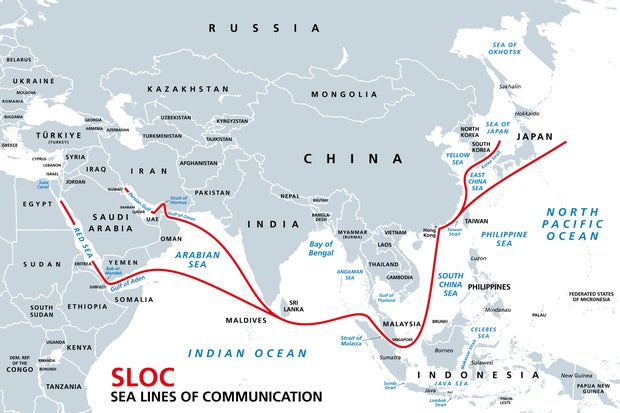
An estimated 10% of the world's oil supply flows through the Bab el-Mandeb strait, which is bordered by Djibouti to the south and Yemen to the north. If it were to be effectively blocked along with the Strait of Hormuz, the primary routes for roughly 30% of the world's crude oil supply would be cut off.
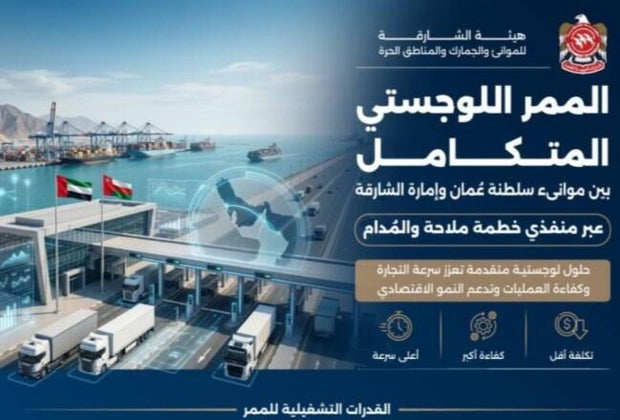
UAE and Oman announce new "logistics corridor" to bypass Strait of Hormuz
A new "logistics corridor" between Sharjah in the United Arab Emirates and Oman has been launched as an alternative to the Strait of Hormuz, UAE authorities have announced.
The new route, which opened on May 14, according to the Sharjah Customs Authority, will see trucks ferry goods between the Sharjah port and the port of Sohar in Oman, bypassing the strait.
The vital shipping lanes of the strait have been largely blocked by Iranian attacks and threats since the U.S. and Israel launched their joint war on Iran at the end of February. This, coupled with the U.S. blockade of Iranian ports, has cut maritime traffic through the strait by around 90% according to the British navy — and the gridlock has hiked global oil prices by around 40%.
Before the war, around 20% of the world's crude oil supply, from Persian Gulf nations, was typically carried through the strait by tanker to reach Asia and elsewhere.
The new Sharjah-Oman overland route will mainly handle consumer goods, however, not oil and gas, which require larger vessels. Food, pharmaceuticals and industrial cargo are expected to be some of the items sent via the new corridor.
Qatar says U.S.-Iran negotiations need "more time"
Qatar's government said Tuesday that negotiations between the U.S. and Iran, which are being mediated by Pakistan, need more time to reach a deal.
"We are supportive of the diplomatic effort by Pakistan that has shown seriousness in bringing parties together and finding a solution, and we do believe it needs more time," Qatari Foreign Ministry spokesman Majed al-Ansari said during a news conference.
He spoke a day after President Trump said he had postponed a scheduled attack on Iran to give the process a chance.
He said he had done so at the request of Qatar, Saudi Arabia and the United Arab Emirates, as "serious negotiations" were underway that the Persian Gulf states believed could yield a deal, "which will be very acceptable to the United States of America, as well as all Countries in the Middle East, and beyond."
CBS/AFP
Iranian lawmaker says new U.S. attack would leave Trump "more embarrassed"
An Iranian lawmaker said Tuesday that any new U.S. attack on the country would be met with a "stronger response," and leave President Trump "more embarrassed."
Ebrahim Rezaei, spokesperson for Iran's Parliament National Security and Foreign Policy Commission, said Iran was "prepared for all scenarios," according to state TV network IRIB.
"The Americans must either submit to diplomacy and our conditions or submit to the power of our missiles," he added.
Mr. Trump said in a social media post Monday that he had called off an attack on Iran that had been planned for Tuesday after a request from Persian Gulf allies, saying "serious negotiations" for a peace deal were underway.
The Iranian regime had said earlier that it submitted its latest revised terms to the U.S. and that it was waiting for a response.
Rezaei said Tuesday that "any new aggression against Iran will be met with a stronger response and will make Trump even more embarrassed."
"The history of the Strait of Hormuz will never return to its previous state, and no power can reopen it without our consent," he said.
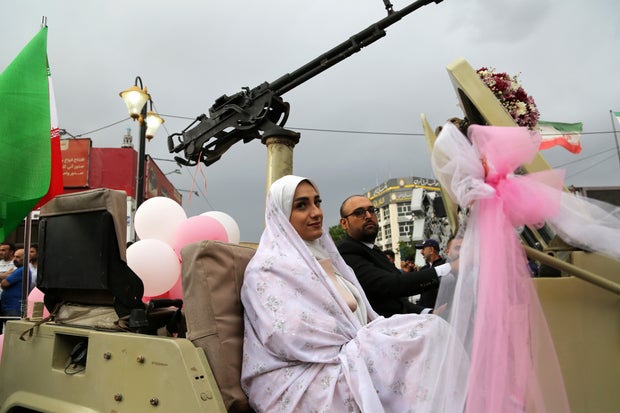
Iran holds mass wedding for 1,000 couples in "Sacrifice for Iran" event
Iran has held a mass wedding for at least 1,000 couples in Tehran as part of what state media called a "Sacrifice for Iran" event.
Couples who had agreed to fight for Iran if the country is attacked were celebrated with flowers, flags and balloons on Monday, and driven around on military vehicles.
At Imam Hossein Square, just one of the ceremony locations in the capital, 110 couples were married.
Israeli attacks have killed more than 3,000 people in Lebanon, health ministry says
Lebanon's health ministry said Monday that 3,020 people have been killed in Israeli attacks since early March, amid the neighboring nation's war with Iranian-backed Hezbollah. Another 9,273 people have been wounded, the ministry said.
Lebanese President Joseph Aoun said Monday he was ready to "do the impossible" to stop the war between Israel and Hezbollah, the U.S.- and Israeli-designated terrorist group based in his country.
Last week, a U.S.-brokered ceasefire between the governments of Israel and Lebanon was extended for 45 more days following a third round of talks in Washington, D.C., but Hezbollah has rejected both the truce and the negotiations, in which it has never been directly involved.
"The framework that Lebanon has set for the negotiations consists of an Israeli withdrawal, a ceasefire, the deployment of the army along the border, the return of the displaced, and economic aid," Aoun said Monday.
Hezbollah has continued attacking Israeli forces, who have occupied a significant swath of southern Lebanon, and firing rockets into northern Israel, claiming it is responding to Israel's ongoing attacks. Both sides have accused the other daily of violating the ceasefire.
The Israeli army warned yet more residents in southern Lebanese towns to evacuate their villages Tuesday ahead of strikes. Lebanese officials say more than 1 million people have been displaced by the war.
CBS/AFP
Trump warns assault on Iran could happen "on a moment's notice" if deal isn't reached
President Trump warned that a full, large-scale assault of Iran could happen "on a moment's notice" if a deal isn't reached.
Mr. Trump said in a social media post he's not going ahead with a planned attack of Iran on Tuesday, saying "serious negotiations" are taking place.
Iran said it's focused entirely on an agreement to end the war, but has not discussed any details on nuclear matters, the Trump administration's top issue.
Trump says U.S. "will NOT" follow through with "scheduled" military attack on Iran
President Trump on Monday afternoon said the U.S. "will NOT" follow through with "scheduled" attacks on Iran on Tuesday, after he said partner nations in the Middle East asked him to hold off. The president made the announcement on Truth Social.
"In their opinion, as Great Leaders and Allies, a Deal will be made, which will be very acceptable to the United States of America, as well as all Countries in the Middle East, and beyond," he wrote. "This Deal will include, importantly, NO NUCLEAR WEAPONS FOR IRAN!"
He said he told Pentagon leaders that while "we will NOT be doing the scheduled attack of Iran tomorrow," he instructed them "to be prepared to go forward with a full, large scale assault of Iran, on a moment's notice, in the event that an acceptable Deal is not reached."
Iranian officials lay out their terms for a peace deal and claim it was the U.S. that sought negotiations
An Iranian lawmaker has claimed the U.S. requested the ceasefire and negotiations between the two countries, not the other way around.
"The Islamic Republic of Iran never requested negotiations with the United States during the war," Ebrahim Rezaei, spokesperson for Iran's Parliament National Security and Foreign Policy Commission, said Monday, according to Iran's ISNA news agency.
Iran's Deputy Foreign Minister for Legal and International Affairs, Kazem Gharibabadi, also said Monday that Iran had submitted its latest proposal for a peace deal, but that U.S. representatives "have not yet provided an official response."
He said that for a peace deal to materialize, "war on all fronts, including Lebanon, must end; U.S. forces must withdraw from the region surrounding Iran; the maritime blockade must be lifted; sanctions must be removed; and Iran's assets must be released."