Oil prices rise as U.S. and Iran appear locked in a costly stalemate
Follow updates on the war in the Middle East for Tuesday, April 28, here. See earlier developments below.
What to know about the Iran war:
- Iran has offered a deal to reopen the Strait of Hormuz to commercial shipping if the U.S. drops its military blockade of Iranian ports and vessels. But the offer apparently includes no concessions on Iran's nuclear program, which President Trump has insisted must be dismantled as part of any agreement to end the two-month war.
- Hezbollah's leader has flatly rejected the U.S.-brokered negotiations between Israel and Lebanon, "and their outcomes," raising new doubt over the tenuous ceasefire in the parallel war and further complicating prospects for a U.S.-Iran deal.
- Mr. Trump abruptly called off plans over the weekend to send senior envoys to Pakistan for a second round of direct talks with Iranian officials, insisting his administration has "all the cards" and if Tehran wants "to talk, they can come to us, or they can call us." The move has left prospects for the Pakistan-led diplomacy deeply in doubt, as Iran's foreign minister met with President Vladimir Putin in Russia on Monday.
Iran says U.S. can't tell other nations what to do anymore
Iran said on Tuesday that the United States was no longer able to "dictate" what other countries do, as Washington weighed a new proposal from Tehran on ending the Middle East war.
"The United States is no longer in a position to dictate its policy to independent nations," defense ministry spokesman Reza Talaei-Nik said, according to state TV, adding that Washington would "accept that it must abandon its illegal and irrational demands."
Iran revises death toll from elementary school strike downward
Iran shared a breakdown Tuesday of the death toll from a deadly strike on an Iranian school on the first day of the Middle East war, state media reported.
Seventy-three boys and 47 girls were killed in the February 28 strike on an Iranian elementary school in Minab, state broadcaster IRIB and local media reported.
The attack happened on the day the United States and Israel launched attacks across Iran. In retaliation, Tehran struck targets in Israel and Gulf nations.
Twenty-six teachers, seven parents, a school bus driver, and a pharmacy technician at the clinic next to the school were also killed, IRIB said in a Telegram post.
That put the death toll at 155 instead of more than 175 reported earlier.
A U.S. Tomahawk cruise missile hit the elementary school due to a targeting mistake, according to the preliminary findings of a US military investigation reported by The New York Times.
President Trump initially suggested that Iran itself may have been responsible -- despite Iran not having Tomahawk missiles.
Iran's foreign minister Abbas Araghchi described the attack in a video address to the United Nations Human Rights Council as a "calculated, phased assault."
Araghchi stressed that "at a time when the American-Israeli aggressors, in their own assertions, possess the most advanced technologies, and the highest-precision military and data systems, no one can believe that the attack on the school was anything other than deliberate and intentional."
South Korea probes syringe hoarding as war hits plastic makers
Police in South Korea said Tuesday they were investigating companies suspected of hoarding medical syringes, as the Middle East war hits supplies of an oil-derived component crucial for making many plastic goods.
The U.S.-Israeli strikes on Iran and the virtual closure of the Strait of Hormuz have rattled deliveries of naphtha, a liquid essential for making a key ingredient in many medical supplies.
The disruption has affected petrochemical sectors in Asia in particular and forced governments to take action, with Seoul imposing a ban this month on hoarding syringes and needles, to guard against shortages.
The Seoul Metropolitan Police Agency told AFP on Tuesday that it "promptly began an investigation" into four medical device distributors suspected of violating the ban, following a complaint by the food and drug safety ministry.
The agency vowed to strengthen inspections across the supply chain to crack down on illicit behavior.
Under the ban, companies must not hold more than 150 percent of last year's average monthly sales volume in syringes and needles for five days or longer, or refuse sales without a valid reason.
But some firms appear to be exploiting the supply crunch by stockpiling syringes and selling them at higher prices, according to the ministry.
More than half of South Korea's naphtha imports last year came via the Strait of Hormuz, according to the presidential office.
President Lee Jae Myung pledged in a social media post on Saturday to take the "strongest possible" action against "antisocial behaviour that exploits community crises to worsen them and profit from them."
Lee's chief of staff announced this month that South Korea had secured an additional 2.1 million tons of naphtha from countries including Saudi Arabia and Oman via routes that don't pass through the strait.
Rubio says preventing Iran from having a nuclear weapon "remains the core issue"
U.S. Secretary of State Marco Rubio was asked in a Fox News interview about Iran's latest proposal, which would postpone discussions on its nuclear program but end its chokehold on the Strait of Hormuz if the U.S. lifts its blockade and ends the war.
"There's no doubt in my mind that at some point in the future if this radical clerical regime remains in charge in Iran, they will decide they want a nuclear weapon," Rubio said.
"That fundamental issue still has to be confronted," he said. "That still remains the core issue here."
Asked whether he thinks the Iranians are serious about making a deal, Rubio said they're skilled negotiators looking to buy time.
"We can't let them get away with it," Rubio said. "... We have to ensure that any deal that is made, any agreement that is made, is one that definitively prevents them from sprinting towards a nuclear weapon at any point."
Hegseth and Caine meet with lawmakers on defense budget
Defense Secretary Pete Hegseth and Gen. Dan Caine, chairman of the Joint Chiefs of Staff, visited Capitol Hill on Monday.
The two military officials planned to discuss the Pentagon's budget with the chairs and ranking members of the armed services committees and defense appropriations panels in both the House and the Senate, a source familiar with the meeting told CBS News.
Shortly after the meeting, Senate Armed Services Committee Chair Roger Wicker, a Mississippi Republican, told reporters they discussed "follow-up on bills that have already been enacted," along with the Trump administration's 2027 defense budget request, which includes a massive increase in spending over 2026 levels.
Wicker said Hegseth and Caine did not share how much money the military is looking for Congress to approve in a supplemental funding bill to help pay for the Iran war.
Iran's U.N. ambassador says Tehran needs "credible guarantees" against attacks before Gulf can be stable
Iran needs guarantees against another U.S.-Israeli attack before it can ensure security in the oil-rich Gulf, Tehran's ambassador to the United Nations said Monday.
"Lasting stability and security in the Persian Gulf and the wider region can only be achieved through a durable and permanent cessation of aggression against Iran supplemented by credible guarantees of non-recurrence and full respect for the legitimate sovereign rights and interests of Iran," Amir-Saeid Iravani told a U.N. Security Council session.
Speaking to reporters following his address to the council, Iravani claimed that "the United States and Israel have waged an unlawful war of aggression against Iran in violation of U.N. Charter, disrupting maritime security and threatening regional peace."
CBS/AFP
Bessent warns foreign governments against doing business with sanctioned Iranian airlines
Treasury Secretary Scott Bessent warned foreign governments against doing business with sanctioned Iranian airlines, saying in a social media post on Monday that doing so "risks exposure to U.S. sanctions."
"Foreign governments should take all actions necessary to ensure that companies in their jurisdictions do not provide services to those aircraft, including the provision of jet fuel, catering, landing fees or maintenance," Bessent said.
The U.S. Treasury "will not hesitate to act against any third parties that facilitate or conduct business with Iranian entities," he added.
U.S. and Iran clash over Tehran's nuclear program at U.N.'s review of atomic treaty
The United States and Iran clashed over Tehran's nuclear program as a review of the treaty meant to prevent the spread of atomic weapons got underway Monday at the United Nations.
At issue was the election of Iran as one of 34 vice presidents of the conference, where 191 parties to the Nuclear Nonproliferation Treaty are reviewing its implementation as they have done every five years since it took effect in 1970. Iran was a candidate of what has been dubbed the "nonaligned movement," made up of 121 mainly developing countries.
Christopher Yeaw, U.S. assistant secretary of state for arms control and nonproliferation, said that while there may be differing views about Iran's ultimate intent and how to address its program, Iran has shown "contempt" for its commitments under the treaty.
"Rather than choosing to use this review conference to defend the integrity of the NPT and call Iran to account, we instead elect Iran a vice president," Yeaw said. "It is beyond shameful and an embarrassment to the credibility of this conference."
Iran's ambassador to the U.N. in Vienna, Reza Najafi, called the U.S. allegations "baseless and politically motivated," declaring its opposition to the U.S. as a vice president of the review conference.
He said the United States was the only country to use nuclear weapons and accused it of expanding its nuclear arsenal in violation of the treaty and obstructing progress toward a Middle East free of nuclear weapons by supporting Israel.
Dozens of nations push for reopening Strait of Hormuz
In a joint statement led by Bahrain, dozens of nations reiterated their calls to reopen the Strait of Hormuz on Monday. Meanwhile, United Nations Secretary-General Antonio Guterres referenced the growing humanitarian cost of the closure while speaking before the U.N. Security Council.
"These pressures are cascading into empty fuel tanks, empty shelves — and empty plates," Guterres said.
At the security council meeting, which focused on maritime security, French Foreign Minister Jean-Noel Barrot criticized parties on all sides of the conflict. Barrot said the crisis began after the U.S. and Israel struck Iran without clear goals and "in a manner that flouts international law."
But he said Iran is responsible for closing the passageway. "Straits are the arteries of the world. They are not the property of any individual. They are not for sale, therefore, they cannot be impeded by any obstacles, tolls, nor bribery," he said.
CBS/AP
U.S. and Iranian officials clash over nuclear ambitions
U.S. and Iranian officials clashed over the Islamic Republic's nuclear ambitions during the opening of the nuclear non-proliferation treaty review, a global conference taking place at the United Nations headquarters in New York, which started Monday. The dispute was almost certain to continue during the four-week meeting.
At issue was the election of Iran as one of 34 vice-presidents of the conference. Iran was a candidate of the Nonaligned Movement, comprising 121 mainly developing countries.
The U.S. was backed by Australia and the United Arab Emirates. The United Kingdom, France and Germany also expressed "concern." Russia objected to singling out Iran.
The U.S. representative, whose name was not immediately available, said the Trump administration was "deeply shocked" that a country that has demonstrated "contempt" for the treaty is now a vice president.
Iran's Ambassador to the U.N. in Vienna, Reza Najafi, categorically rejected the U.S. statement, calling the allegations "baseless and politically motivated."
Conferences to review the nuclear non-proliferation treaty are held every five years. The goal of the treaty is to prevent the spread of nuclear weapons and achieve nuclear disarmament, according to the U.N.
CBS/AP
Trump met with national security team this morning on Iran proposal, Leavitt says
White House press secretary Karoline Leavitt said President Trump met with his national security team Monday morning, after Iran proposed a mutual reopening of the Strait of Hormuz and holding off on the nuclear conversation.
"The proposal was being discussed. I don't want to get ahead of the president or his national security team," Leavitt said. "What I will reiterate is that the president's red lines with respect to Iran have been made very, very clear."
Leavitt said she didn't want to go so far as to say the U.S. is "considering" the Iranian proposal.
Iranian foreign minister on "very good" meeting with Russia's Putin
Iranian Foreign Minister Abbas Araghchi described his meeting with Russian President Vladimir Putin as "very good."
In a statement, he said "the issue of war and aggression" by the U.S. and Israel was discussed "in detail." According to the Iranian diplomat, their meeting lasted more than an hour-and-a-half and covered a range of topics, including "bilateral relations and regional issues" involving the conflict.
He also said "very good ideas were put forward," and "there are very good grounds" for continued cooperation between Iran and Russia.
Armenia could face "influx of refugees" if Iran conflict worsens, says global affairs analyst
Uncertainties surrounding the Iran war have created "a lot of anxiety" for Armenians, said Michael Bociurkiw, a global affairs analyst and senior fellow at the Atlantic Council's Eurasia Center.
Bociurkiw has been reporting from the border between Iran and Armenia, which refugees or asylum seekers can freely pass through. Russia, to the north, has helped Armenia control it.
"If things worsen in Iran, there could be an influx of refugees into Armenia," Bociurkiw told CBS News on Monday, noting that the country of 2 million recently took in about 120,000 of its own people after signing a peace agreement with Azerbaijan at the White House last year.
That agreement included plans to develop a transit corridor in the region named after President Trump, which is now in development.
"If the Iranians don't like that, there is a U.S. embassy in Yerevan, and people said it's not out of the imagination that the Iranians could throw a missile that way," said Bociurkiw. "So, things could go bad. But for now, it is pretty peaceful."
United Nations chief warns "drivers" of nuclear proliferation are accelerating
United Nations Secretary-General Antonio Guterres said Monday that "the drivers" of nuclear weapons proliferation were accelerating, while speaking at a conference attended by signatories of the landmark nuclear non-proliferation treaty. The conference, at U.N. headquarters in New York City, took place amid mounting global fears of a renewed nuclear arms race.
"For too long, the treaty has been eroding. Commitments remain unfulfilled. Trust and credibility are wearing thin. The drivers of proliferation are accelerating. We need to breathe life into the Treaty once more," Guterres said in opening remarks.
In 2022, during the last review of the treaty considered the cornerstone of non-proliferation, Guterres warned humanity was "one misunderstanding, one miscalculation away from nuclear annihilation."
With global geopolitical friction heightened since that last meeting, it was unclear what this year's two-week gathering could achieve.
But Do Hung Viet, Vietnam's U.N. ambassador and president of the conference, said its success or failure "will have implications way beyond these halls and way beyond these next five years," adding that "the prospects of a new nuclear arms race are looming over us."
The nuclear non-proliferation treaty aims "to prevent the spread of nuclear weapons and weapons technology, to promote cooperation in the peaceful uses of nuclear energy and to further the goal of achieving nuclear disarmament and general and complete disarmament," according to the U.N. It has been signed by almost all the countries on the planet, with notable exceptions including Israel, India, and Pakistan.
CBS/AFP
German chancellor says U.S. "is being humiliated" by Iranian leadership
German Chancellor Friedrich Merz on Monday criticized the U.S. for going into the Iran war without any strategy, saying this also makes it harder to end the conflict.
"The problem with conflicts like these is always the same: it's not just about getting in; you also have to get out. We saw that all too painfully in Afghanistan, for 20 years. We saw it in Iraq," the chancellor said while speaking Monday to students in Marsberg in the Sauerland region of Germany.
The lack of U.S. strategy and the fact that the Iranians are stronger than previously thought made it hard to end the conflict now, he said.
"Especially since the Iranians are negotiating very skillfully — or rather, very skillfully not negotiating," he added. "And then letting the Americans travel to Islamabad, only to send them back without any results. An entire nation is being humiliated by the Iranian leadership, especially by these so-called Revolutionary Guards."
Germany, he said, maintains its offer to send minesweepers in order to help reopen the Strait of Hormuz, but only after the fighting is over.
39 U.S. states saw average gas prices increase over the last week, data show
The average price of gasoline in the U.S. rose 7 cents over the last week and currently stands at $4.04 per gallon, according to new data released by GasBuddy, an app that tracks gas prices across parts of North America and Australia. Within the U.S., that data comes from more than 12 million price reports at roughly 150,000 gas stations nationwide, according to the company.
While average gas prices have increased in 39 U.S. states since last week, average diesel prices declined across the country, said Patrick De Haan, a petroleum analyst at GasBuddy, in a statement.
"However, that divergence may prove short-lived," he said. "Oil prices have been climbing again as markets react to renewed geopolitical tensions and the cancellation of talks between the U.S. and Iran. As a result, gasoline prices are set to rise further this week, with diesel expected to follow."
De Haan suggested the Great Lakes and Plains regions, as well as other inland states, could see average gas prices reach their highest points since 2022.
Trump to hold Situation Room meeting on Iran
President Trump will hold a meeting in the White House Situation Room on Monday to discuss Iran, CBS News has learned.
Superyacht linked to U.S.-sanctioned Russian oligarch transits Strait of Hormuz
A superyacht linked to a sanctioned Russian steel magnate sailed through the Strait of Hormuz over the weekend, shipping data shows, as traffic through the waterway remains largely gridlocked by the U.S. and Iran's restrictions on the vital shipping lane.
The 465-foot vessel named Nord transited the strait, passing by Iran's Larak island Saturday and was anchored off Muscat as of Monday morning, according to data from MarineTraffic.com.
Mordashov, the CEO of Russian steel and mining company PAO Severstal, was placed under sanctions by the U.S. Treasury Department in 2022, in connection with Russia's war in Ukraine. The Nord is owned by a Russian firm that is owned by Mordashov's wife, Reuters reported Monday.
The Nord had been moored in Dubai since the war with Iran began on February 28, and it was unclear whether it had obtained explicit permission from Iran to transit the strait. Other civilian vessels have been attacked by Iran's IRGC naval forces and accused of trying to sneak past the country's blockade.
The U.S. military expanded its blockade of Iranian ports on April 16 to include Iranian-linked vessels, sanctioned ships "and vessels suspected of carrying contraband," regardless of their location in the waters around Iran.
There is no indication that the Nord superyacht is specifically subject to U.S. sanctions.
Russian state media say Putin lauds Iranian people "fighting for their independence and sovereignty"
Russian President Vladimir Putin told Iran's top diplomat that Moscow would do everything it could to help secure peace in the Middle East, during a meeting in Saint Petersburg on Monday.
Iran's Foreign Minister Abbas Araghchi had blamed Washington for the failure of talks on brokering a deal to end the fighting, with a ceasefire between the sides still holding.
"For our part, we will do everything that serves your interests, the interests of all the people of the region, so that peace can be achieved as soon as possible," Russian state media quoted Putin as telling Araghchi.
Putin also hailed "how courageously and heroically the people of Iran are fighting for their independence and sovereignty," the TASS news agency reported.
"Russia, just like Iran, intends to continue our strategic relationship," the Kremlin chief added.
CBS/AFP
Putin wishes Iran's new supreme leader well, tells visiting envoy Russia-Iran intel cooperation will continue
Russia's state-run TASS news agency said Monday that President Vladimir Putin had extended his best wishes for the health of Iran's new supreme leader to the Islamic Republic's visiting Foreign Minister Abbas Araghchi during their meeting in Saint Petersburg.
Iran's Supreme Leader Ayatollah Mojtaba Khamenei has not been seen or heard from directly since rising to the top role in Iran's ruling theocracy. He was named as the successor to his father, Ali Khamenei, who was killed in a strike on the first day of joint U.S.-Israeli airstrikes on Iran, which kicked off the ongoing war on February 28.
U.S. Defense Secretary Pete Hegseth has said the younger Khamenei was wounded and likely incapacitated in the same attack on Tehran, but his condition has not been confirmed, and Iran's other leaders continue to say he is in control of the country.
A few written statements have been attributed to the new supreme leader during the war, and Russian media said Monday that Putin received a message from Mojtaba Khamenei.
Iran's foreign minister blames "excessive demands" from U.S. for stalled diplomacy ahead of meeting with Putin
Iran's top diplomat blamed Washington on Monday for the failure of peace talks after landing in Russia as part of a whirlwind diplomatic tour, with direct negotiations between the warring parties seemingly at an impasse.
Foreign Minister Abbas Araghchi made the remarks in Saint Petersburg, where he is expected to meet with Russian President Vladimir Putin, having sandwiched a trip to Oman in between visits to main mediator Pakistan over the past few days.
Islamabad played host to the first and only round of talks between Washington and Tehran, and Araghchi's visit had fanned hopes for fresh negotiations over the weekend, until President Trump scrapped a planned trip by his envoys Steve Witkoff and Jared Kushner to Pakistan.
"The U.S. approaches caused the previous round of negotiations, despite progress, to fail to reach its goals because of the excessive demands," Araghchi said Monday.
The state-owned Russian news agency RIA said Putin had confirmed to Araghchi that Moscow intended to maintain its intelligence ties with Tehran.
U.S., European Union and British officials said early in the war that Moscow was providing Iran with intelligence to help it target American forces in the Middle East.
CBS/AFP
White House says Trump admin "will not negotiate through the press" as Iran offers Strait of Hormuz deal
A White House spokesperson told CBS News on Monday, in response to officials saying Iran had offered a deal to reopen the Strait of Hormuz in exchange for a dropping of the U.S. naval blockade, that the Trump administration would "not negotiate through the press."
"These are sensitive diplomatic discussions and the U.S. will not negotiate through the press. As the President has said, the United States holds the cards and will only make a deal that puts the American people first, never allowing Iran to have a nuclear weapon," Assistant White House Press Secretary Olivia Wales said in a statement.
Sources told CBS News that Iran's proposal did not include any terms related to the country's nuclear program, and would leave that matter to be negotiated later.
President Trump and his cabinet have said repeatedly that the U.S. naval blockade of Iranian ports and vessels will remain in place until the regime accepts its terms for a peace agreement, including handing over its enriched uranium and abandoning its nuclear program.
Stocks mixed but oil prices stay high amid uncertainty over any new U.S.-Iran talks
World shares were mixed Monday as the price of Brent Crude oil jumped $2.50 a barrel early in the day as talks on ending the war between the U.S. and Iran remained snagged.
Disruptions to shipping through the Strait of Hormuz have pushed oil prices sharply higher since the war began.
On Monday, Brent futures were up just more than 1% at $106.47 a barrel after initially trading around a multi-week high of $108.50 earlier in the session.
"It may be that hopes of a diplomatic breakthrough were pretty faint to start with, and markets are now in wait-and-see territory ahead of a heavy week of earnings and economic touchpoints," said Derren Nathan, head of equity research at Hargreaves Lansdown.
With energy prices high, the U.S. Federal Reserve is expected to keep interest rates unchanged on Wednesday, followed by similar decisions from the European Central Bank and Bank of England, which analysts believe is helping stock prices remain buoyant.
Markets in London, Paris and Frankfurt all advanced despite the elevated oil prices and a lack of progress in negotiations. U.S. futures were broadly steady ahead of trading.
Asian markets were mixed on Monday, as Tokyo and Seoul were buoyed by a tech rally, while Hong Kong slipped.
Investors were also looking ahead to earnings this week from U.S. tech titans Alphabet, Meta, Microsoft, Amazon and Apple.
"Investors have been encouraged by corporate news flow over the past few weeks, leading to higher equity prices," said Russ Mould, investment director at AJ Bell.
He added, however, that "higher oil for longer spells trouble for inflation, which in turn could act as a headwind for the economy."
CBS/AFP
Israel announces new strikes in Lebanon
Israel's military said Monday that it "has begun to strike Hezbollah infrastructure sites in the Beqaa Valley and in additional areas across southern Lebanon," as Israel's ceasefire with the Lebanese government continues to be challenged by an expanding exchange of fire with the Iranian-backed group.
The announcement by the Israel Defense Forces came shortly after sirens sounded in a few northern Israeli communities on the border with Lebanon, as authorities said drones had entered the country. There were no immediate reports of impacts.
Lebanese leader dismisses Hezbollah's criticism over deal with Israel
Lebanon's President Joseph Aoun commended the Trump administration on Monday for its efforts to end Israel's war with the Iranian-backed group Hezbollah in his country, and dismissed criticism from the group for agreeing to a ceasefire with Israel that has largely failed to stop the bloodshed.
Hezbollah's leader issued a scathing statement Monday flatly rejecting the Lebanese-Israeli negotiations brokered by the U.S., which have brought an ongoing ceasefire marked by multiple accusations of breaches by both sides and a still-rising death toll.
Hezbollah has not been involved in the talks, and it continues exchanging deadly fire with Israeli forces, who have occupied a swath of southern Lebanon and forced tens of thousands of residents to flee their homes.
"Some criticize us for deciding to go into negotiations under the pretext that there is no national consensus," Aoun said in a statement shared by his office on Monday. "I ask: When you went to war, did you first obtain national consensus?"
Hezbollah started launching attacks on Israel in retaliation for the U.S.-Israeli strikes on Iran, which killed the Islamic Republic's supreme leader, soon after the war began on Feb. 28. Israel responded with overwhelming force, unleashing a barrage of airstrikes on southern Lebanon and areas around its capital Beirut and later launching the ongoing ground invasion.
"How long will the people of the south continue to pay the price for others' wars on our land, the latest being the war in support of Gaza and the war in support of Iran?" Aoun asked Monday. "If the war were for Lebanon, we would have supported it, but when its purpose serves others, I completely reject it. What we are doing is not betrayal; betrayal is when someone drags their country into war for external interests."
Lebanon says 14 people killed by Israeli strikes on Sunday alone
Violence has continued between Israel and Hezbollah in Lebanon in spite of a recently extended ceasefire between Israel and Lebanon's government.
The two sides traded blame over violations on Sunday, with Prime Minister Benjamin Netanyahu saying the military was "vigorously" targeting the group as both sides claimed new attacks.
Hezbollah drew Lebanon into the Middle East war on March 2 by firing rockets at Israel to avenge the death of Iran's supreme leader Ali Khamenei, with Israel responding with strikes and a ground invasion.
Netanyahu told a weekly cabinet meeting that Hezbollah's actions were "dismantling the ceasefire," while Hezbollah vowed to respond to Israeli violations and its "continued occupation" of part of southern Lebanon.
Lebanon's health ministry said Israeli strikes on the country's south killed 14 people on Sunday alone, the deadliest day since the tenuous truce came into force.
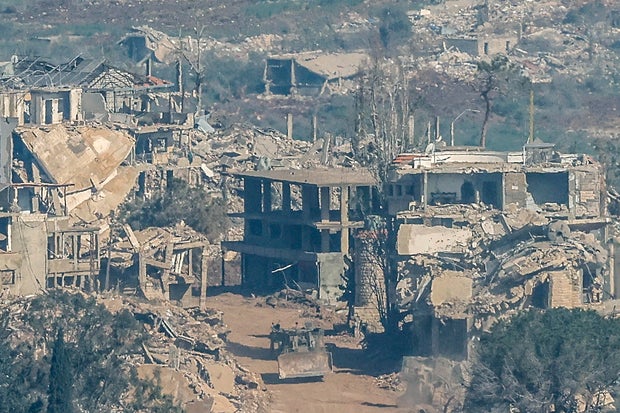
Israel also reported a soldier killed in combat in south Lebanon. The country maintains that under the terms of the truce, it can act against "planned, imminent or ongoing attacks."
"This means freedom of action not only to respond to attacks ... but also to pre-empt immediate threats and even emerging threats," Netanyahu said.
CBS/AFP
Oil prices rise again as Pakistan talks fail to materialize
Oil prices climbed almost 3% Monday as hopes for a peace deal between the U.S. and Iran dimmed and energy shipments through the Strait of Hormuz remained extremely constrained.
The price of international benchmark Brent Crude was up about $3, or almost 3%, to $108.36 per barrel early Monday morning, its highest price point in three weeks. U.S. West Texas Intermediate was up 2.6% before U.S. markets opened, at $96.85.
The Reuters news agency said Brent and WTI gained almost 17% and 13% respectively over the course of last week - their biggest weekly rise since the Iran war began.
There was brief hope at the end of last week that direct peace talks between the U.S. and Iran might resume, but President Trump said Saturday that he was not sending his envoys Steve Witkoff and Jared Kushner to Pakistan for a new round of negotiations, citing wasted time and confusion over Iran's leadership.
"We have all the cards," Mr. Trump insisted, adding that Iranian leaders could call him if they wanted to negotiate an end to the two-month war.
Iran offers deal to reopen Strait of Hormuz if U.S. drops blockade, but without nuclear concessions
Iran is offering to end its chokehold on the Strait of Hormuz without addressing its nuclear program, sources told CBS News on Monday, as the country's foreign minister made a visit to Russia he said was an opportunity to consult with Moscow regarding the war against Israel and the United States.
Axios was first to report the new offer from Iran, which President Trump is unlikely to accept as it does not address the nuclear issue.
Iran wants the U.S. to end its blockade of the country as part of its proposal, said the two officials, who spoke on condition of anonymity to discuss the closed-door negotiations — another stipulation the White House has previously rejected.
The new proposal, passed to the United States by Pakistani intermediaries, likely won't gain support from Mr. Trump, who has said he wants any peace deal to include a complete end of Iran's nuclear enrichment program.
"We have all the cards. If they want to talk, they can come to us, or they can call us," Mr. Trump said Sunday to the Fox News Channel.
CBS/AP
Hezbollah leadership "categorically reject" U.S.-brokered Israel-Lebanon "negotiations and their outcomes"
The Secretary-General of the Iranian-backed group Hezbollah in Lebanon, Sheikh Naim Qassem, said in a statement Monday that the group's leadership "categorically reject direct negotiations" that the U.S. has been brokering between Israel and Lebanon's government.
"Those in the position of authority must know that their actions will not benefit Lebanon nor themselves. What the Israeli-American enemy wants from them is not in their hands, and what you want from it will not be granted to you," Qassem said.
His statement is the latest rejection of the diplomacy that led to the ongoing, but incredibly fraught ceasefire that President Trump pushed Israel and Lebanon to sign weeks ago, which he then announced a three-week extension of last week, in a bid to smooth the path for a wider peace deal with Iran.
Hezbollah has long been one of Iran's most powerful so-called proxy paramilitary forces in the Middle East, while also functioning as a political party in Lebanon. It's Hezbollah's forces engaging in crossfire with Israel, not Lebanese state forces, and the group's exclusion from the Trump administration-led negotiations between Israel and Lebanon has complicated the ceasefire since it was first signed.
On Monday, Qassem said bluntly that, for Hezbollah, "these direct negotiations and their outcomes are as if they do not exist for us, and they do not concern us in any way whatsoever."
Hezbollah's rejection of the negotiations leaves the viability of the ceasefire in greater doubt than ever. And as the Iranian regime has said it will not agree to any peace deal that doesn't also halt Israel's war in Lebanon, it also casts further doubt on the prospects for a wider U.S.-Iran agreement to end the war that has gridlocked the Strait of Hormuz and already fueled rising inflation across the globe.
Death tolls climb as diplomacy stutters
Since the U.S. and Israel launched their war with Iran on Feb. 28, at least 3,375 people have been killed in Iran and at least 2,509 people in Lebanon, according to health authorities in both countries.
Israel dramatically ramped up its parallel war with Hezbollah in Lebanon two days after the Iran war began, in response to the Iranian-backed group firing volleys of rockets at Israel in retaliation for the strikes on Iran.
Israeli authorities say 23 people have been killed in the country during the war, and more than a dozen have been killed in Gulf Arab states allied with the U.S. by Iran's retaliatory missile and drone fire.
Fifteen Israeli soldiers in Lebanon, 13 U.S. service members in the region and six U.N. peacekeepers in southern Lebanon have also been killed.
CBS/AP
Iran's top diplomat to meet with Putin in St. Petersburg, Russia
Iran's Foreign Minister Abbas Araghchi was in Russia Monday for a meeting with President Vladimir Putin as part of a regional tour that included two stops in Pakistan and a visit to Oman, which shares the Strait of Hormuz with the Islamic Republic, Iran's state-run IRNA news agency reported.
Pakistan-led mediators are working to bridge significant gaps between the U.S. and Iran, according to a regional official involved in the mediation efforts who spoke to The Associated Press on the condition of anonymity because they were not authorized to discuss the matter.
CBS/AP
Iran's foreign minister, in Russia, blames U.S. for Pakistan talks failure, Iranian state media report
Iranian Foreign Minister Abbas Araghchi on Monday blamed the United States for the failure of peace talks in Pakistan, after arriving in Russia for a meeting with President Vladimir Putin.
"The U.S. approaches caused the previous round of negotiations, despite progress, to fail to reach its goals because of the excessive demands," Araghchi was quoted as saying by Iranian state media.
He also said "safe passage through the Strait of Hormuz is an important global issue," as the US and Iran continue their rival blockades of the vital waterway.