Live Updates: U.S. and Iranian negotiators meet as Trump threatens to "hit Iran very hard again" over Hezbollah

What to know about the Iran war today:
- JD Vance and other U.S. negotiators were in the same room as Iranian officials at a resort in Switzerland on Sunday, a rare face-to-face meeting as the two countries launched a 60-day sprint to negotiate over the fate of Iran's nuclear program.
- An emergency session on the fighting in Lebanon was added to the agenda for the Swiss talks, a diplomat told CBS News, as the conflict between Israel and Iran-backed Hezbollah endangers the U.S.-Iran ceasefire. More than a dozen people were killed in Lebanon by Israeli strikes overnight Saturday, hours after three diplomats briefed on the matter told CBS News that Israel and Hezbollah had reached a ceasefire agreement to end the fighting.
- The Strait of Hormuz will be closed again, Iran said Saturday, after accusing the U.S. and Israel of violating the memorandum of understanding by Israeli troops not withdrawing from southern Lebanon.
Iranian negotiator warns U.S. to "be careful" as Trump threatens Iran over Hezbollah
A top member of Iran's negotiating team warned American officials to "be careful with their statements" and cautioned that Iran's armed forces "are ready to respond," after President Trump threatened to strike Iran if it doesn't immediately stop Hezbollah from "causing trouble."
Iranian Parliament Speaker Mohammad Bagher Ghalibaf wrote on X: "Don't they think to themselves that if their threats had any effect, they wouldn't have reached the point of despair today? We don't count on the threats of the Americans."
The fresh saber rattling could inject new uncertainty into already delicate talks between the U.S. and Iran in Switzerland.
Germany's defense minister blames Trump for Strait of Hormuz closure
German Defense Minister Boris Pistorius on Sunday blamed US President Donald Trump for the closure of the Strait of Hormuz, calling for the vital waterway to be reopened.
"Ultimately, the cork in the bottle neck of the Strait of Hormuz was pushed in by Donald Trump, not by us, but we have an interest in getting it out again," Pistorius said in an interview with broadcaster ARD.
"The opening of the Strait of Hormuz, or rather safe passage through it, is in Europe's interest, in the interest of our energy supply and our economic recovery," Pistorius added.
The minister noted that any agreement to reopen the strait would need the support of Iran and Oman.
Berlin has repeatedly distanced itself from Trump's campaign against Iran, though officials have stopped short of blaming the US for the conflict. When Trump pressed allies to help re-open or secure the Strait of Hormuz in April, German Chancellor Friedrich Merz said the war was "not a matter for NATO." Merz and Pistorius have also criticised the United States for not consulting its allies before beginning strikes on Iran.
Return to pre-Iran war gas prices "might be a while," energy analyst says
It "might be a while" before U.S. gas prices drop to their pre-Iran war levels, ClearView Energy Partners Managing Director Kevin Book told "Face the Nation with Margaret Brennan."
The average price of regular gasoline is now slightly under $4 per gallon, below its wartime high of over $4.50 but still well above a year ago, when it hovered above $3, according to AAA data. Oil futures are also well below their April peaks, but are slightly higher than prewar levels.
Book predicted that gas prices could come down another five to seven cents if oil prices hold, but he said there's "uncertainty" after that. He noted that it could take until the end of the year to refill depleted oil inventories and return to a surplus.
"To get all the way back to where we were before the war, we would need inventories to replenish," he said. "We've drawn them down a lot, and it's going to take a while."
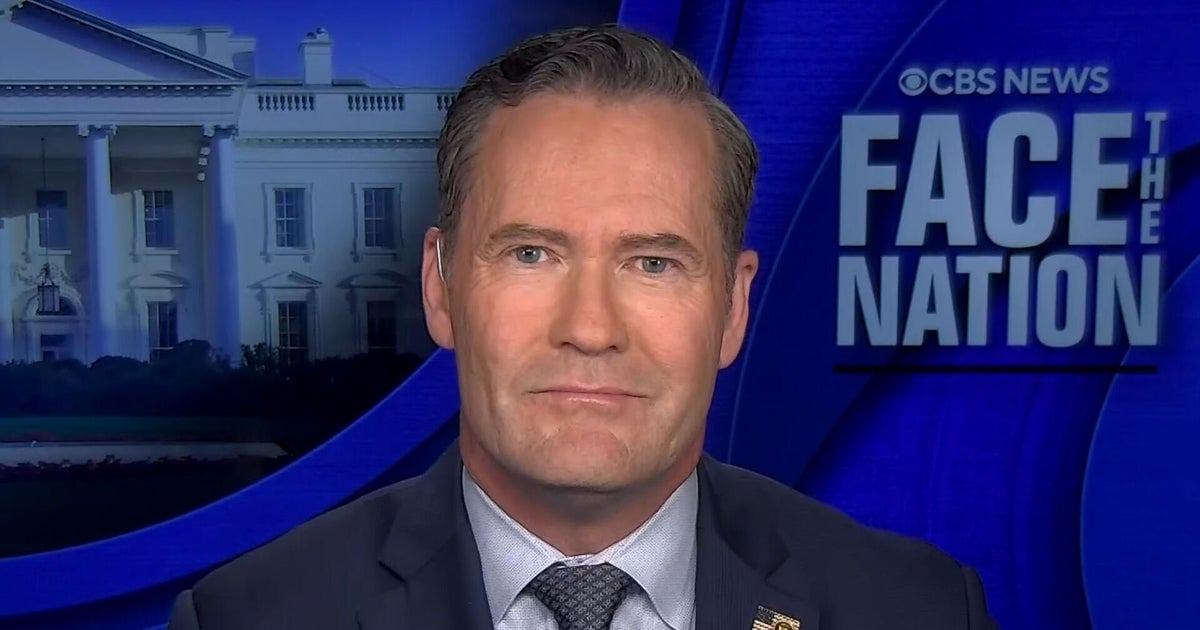
Mike Waltz says U.S. is taking "pragmatic approach" with Iran
As U.S.-Iran talks commence, U.S. Ambassador to the United Nations Mike Waltz said on "Face the Nation with Margaret Brennan" the Trump administration understands Iranian officials aren't "good guys," but is "laser focused" on trying to reach a nuclear deal.
"None of these senior members of this genocidal regime are good guys by any means," Waltz said. "They certainly wouldn't pass an FBI background check. No one expects that, but at the end of the day, the administration … is taking a pragmatic approach."
Waltz said "we know the type of people that we're dealing with," citing the Iranian regime's deadly crackdown on protests earlier this year, and its incarceration of Americans.
But he said any agreement with Iran would not be reliant on trusting the country, but instead would be "all about verification," and would carry credible threats of military force.
Sen. Lindsey Graham on a diplomatic solution: "I think it's going to fail"
GOP Sen. Lindsey Graham of South Carolina said on "Face the Nation" Sunday that he expects a diplomatic solution with Iran to fail, though he noted that he would "rather try diplomacy than take it off the table."
"Let's try a diplomatic solution," Graham said. "I think it's going to fail. What happens next?"
Graham, who said he spent four and a half hours with the president on Friday, outlined what he expects to happen if a diplomatic resolution fails.
"If this deal fails, President Trump is going to take the Strait of Hormuz over by force," he said. "The United States will control the Strait of Hormuz, we'll charge a fee for all those who go through to pay for the operation, and we're going to expand the Abraham Accords in calendar year 2026."
Graham said "if Iran contests control of the Strait of Hormuz by the United States, we will obliterate them."
"So, to all the people listening, if this diplomatic effort fails, President Trump is going to take the Strait of Hormuz. We're going to run it," Graham said. "We're going to try to get Saudi Arabia to join the Abraham Accords, end the Arab-Israeli conflict in 2026. And if Iran continues to attack Israel and Lebanon, the new policy will be, we'll hit Iran."
Israel-Hezbollah fighting in Lebanon almost destroyed peace talks, source says
A Middle Eastern official indicated that the special envoys leading the negotiations are out of sync with Rubio, especially as it pertains to the strategy for dealing with Israel and Hezbollah in Lebanon.
Rubio had been leading efforts to keep the U.S.-Iran war and the Israel-Hezbollah conflict diplomatically separate, the source said. The first point of the MOU mentions a permanent end to the situation in Lebanon, bypassing those efforts.
Israeli officials saw the decision to include Lebanon in the MOU as a concession to Iran by Trump's envoys, the source said.
The fighting in Lebanon has continued even after both sides agreed to a ceasefire. That risked blowing up not just the first day of negotiations, but potentially the entire Iran truce, according to the regional source.
Trump's national security team remains doubtful of Iranian compliance, sources say
Senior members of President Trump's national security team remain doubtful that Iran will comply with the terms of the memorandum of agreement, multiple sources told CBS News, pointing to what they view as Tehran's longstanding pattern of making commitments it does not fully keep.
Secretary of State Marco Rubio has expressed doubts about Iran's compliance, though he remains hopeful the framework agreement can hold, according to a person familiar with his views.
CIA director John Ratcliffe has briefed Mr. Trump on intelligence that includes inconsistencies with Iran's commitments made during MOU talks.
The CIA declined to comment. CBS News has also reached out to the White House and National Security Council.
Iran's president says country will "never back down from the right to enrich uranium"
Iran's president said Sunday that Iran will maintain its right to a nuclear program.
"What is certain is that we will never back down from the right to enrich uranium, and the other side is also forced to accept it," Masoud Pezeshkian said, according to state media.
Uranium enrichment is likely to be a major point of contention in U.S.-Iran nuclear talks. President Trump has long said he wants Iran to give up all uranium enrichment, a red line that Vice President JD Vance restated last week.
Iran has ruled out that idea, and has long insisted its nuclear program is intended for peaceful purposes, though the country has enriched uranium to levels well beyond the level required for most non-military uses.
— CBS/AP
Trump threatens to "hit Iran very hard again" if it doesn't stop Hezbollah
As U.S. and Iranian negotiators meet in Switzerland, President Trump leveled a threat to restart strikes on Iran if it does not immediately stop Hezbollah from "causing trouble."
"Iran must immediately stop their highly paid PROXIES in Lebanon from causing trouble," the president wrote on Truth Social. "If they don't, we'll hit Iran very hard again, just like we did last week, only harder!!!"
The two countries agreed to extend their ceasefire for 60 days last week, buying them time to hold talks on a longer-term deal. Continued fighting between Israel and Iran-backed Hezbollah in Lebanon has complicated those talks. Iran has alleged the Israeli military's presence in Lebanon constitutes a ceasefire violation, but Israel says it is not bound by the deal.
Trump warns Iran "won't have a country" if it closes Strait of Hormuz
In an interview with Fox News, President Trump said he warned Iranian officials they "won't have a country" and "won't even make it back to [their] f***ing country" if they follow through with threats to close the Strait of Hormuz, as U.S. and Iranian negotiators hold talks in Switzerland.
Mr. Trump also told Fox News' Trey Yingst the U.S. "may take over the strait, if we have to," and "I'll blow the s*** out of them" and collect tolls on ship traffic.
The newly signed memorandum of understanding between the U.S. and Iran requires the Strait of Hormuz to open up, but Iran said Saturday it was closing the key oil industry chokepoint, alleging the deal was violated because fighting between Israel and Hezbollah was ongoing. The U.S. has denied that Iran has control over the strait, and says the waterway remains open.
CBS News poll shows Americans want Iran war ended, but few say U.S. got better of agreement
Americans do want the Iran war to end — especially those hardest hit by rising gas prices — and many see hope for lower prices. But they also believe the U.S. did not succeed in its strategic or economic interests, and that the conflict has not been worth the cost.
Most Americans believe Iran's nuclear program has not been permanently stopped, and that Iran will not stop threatening its neighbors. The public also believes that the Trump administration doesn't feel goals were met, but that officials are mainly looking to end the war. Plenty in the president's Republican rank-and-file are unconvinced, too.
And so, relatively few Americans think the U.S. is getting the better of the new agreement.
Iranian delegation enters room with U.S. team
Members of Iran's negotiating team — including Foreign Minister Abbas Araghchi and Parliament Speaker Mohammad Bagher Ghalibaf — were spotted entering a conference room where U.S. officials and mediators from Qatar and Pakistan are present.
Several minutes earlier, reporters were ushered out of the room following brief remarks by Vice President JD Vance and the prime ministers of Pakistan and Qatar. During the televised portion of the meeting, Araghchi and Vance were briefly in the room at the same time, but Araghchi appeared to quickly leave before Vance delivered remarks, according to a member of the White House press pool. Araghchi was later seen re-entering the room.
Vance on Lebanon: "Great progress has been made"
Vice President JD Vance said "I feel great about where we are in Lebanon" as fighting between Israel and Iran-backed Hezbollah complicates efforts to reach a deal between the U.S. and Iran.
Vance said "great progress has been made" in recent days.
"The president has committed us to see a full regional ceasefire," he said.
Iran has insisted that fighting stop in Lebanon as part of any broader deal with the United States. Israel has said it is not bound by the U.S.-Iran ceasefire agreement.
Vance says Trump has asked to "transform our relationship with the people of Iran"
Vice President JD Vance spoke at the opening of the meeting, thanking Pakistani and Qatari leaders for their help in mediating the talks with Iran, along with President Trump for empowering the leaders to "find a diplomatic resolution to a host of issues."
"The opening of the Strait of Hormuz, the ending of the Iranian nuclear program, all of these things have already been accomplished," Vance claimed. "The question before us now is, how much more can we accomplish together? Can we turn over a new leaf? Can we change relations in the Middle East permanently? Or do we go back to doing things the old way, which is not our preference."
The vice president said "what we're trying to accomplish here is something very simple," outlining that through diplomacy, the leaders are looking to "transform the Middle East," saying "we see a future where everybody can work together to promote peace and prosperity for everyone."
Vance noted that "this is a historic meeting," saying "outside the last few months, never before has the Iranian and American leadership met at such a high level."
"What the president has asked us to do is turn over a new leaf to transform our relationship with the people of Iran, and to extend an outstretched hand that says to the people of Iran that if your leadership is willing to give up being a driver of regional instability, if they are willing to give up nuclear weapons ambitions for the long term, then the United States is willing to fundamentally transform our relationship with that country," Vance said. "That is certainly our goal. We've already made great progress over just the last few hours, and I expect that we'll make additional progress in the hours to come."
JD Vance appearing with Iranian delegation
Vice President JD Vance is now appearing on-camera in the same room as Iranian negotiators at the Bürgenstock resort on Lake Lucerne in Switzerland.
Vance was spotted in the room, along with U.S. envoys Jared Kushner and Steve Witkoff, and Iranian Prime Minister Abbas Araghchi. U.S. and Iranian officials did not appear to interact during a brief period at the top of the meeting when the media was allowed inside.
Pakistani Prime Minister Shebhaz Sharif and Field Marshal Asim Munir, who have helped mediate U.S.-Iran negotiations, are also present, along with Qatari Prime Minister Sheikh Mohammed bin Abdulrahman al Thani.
It is unusual for U.S. and Iranian officials to meet face-to-face. Most negotiations between the two countries have been indirect, with countries like Qatar or Pakistan serving as mediators. It's not clear what format the talks in Switzerland will take.
U.S. negotiators greet Pakistan's delegation after Vance's arrival in Switzerland
Vice President JD Vance arrived in Switzerland overnight ahead of peace talks with Iran, mediated by Pakistan, aimed at ending the war.
Vance was briefly seen speaking with the Pakistani delegation on Sunday around 5:15 a.m. ET. Vance greeted Pakistani prime minister Shehbaz Sharif warmly. He then embraced another Pakistani official. Special envoys Steve Witkoff and Jared Kushner, who are also part of the talks, also greeted the delegation.
"Thank you. Thanks for all your help," Vance could be heard saying.
Iranian negotiators have also arrived in Switzerland. Swiss media spotted foreign affairs minister Abbas Araghchi and parliamentary speaker Mohammad Bagher Ghalibaf entering the Burgenstock resort where talks are being held overnight. Both men have been prominent figures in all of the negotiations over the past several months.
Emergency session on Israel-Hezbollah conflict added to Switzerland peace talks, source says
An emergency session to address the conflict between Israel and the Lebanon-based militant group Hezbollah has been added to the schedule of the first day of peace talks in Switzerland, a diplomat attending the talks told CBS News.
That issue will be the first session when the U.S. and Iranian delegations begin their negotiations.
Vice President JD Vance departed for Switzerland earlier Saturday, while the Iranian delegation has already arrived in the country.
Qatari and Pakistani mediators are also taking part in the talks.
Neither Israel, Hezbollah nor the Lebanese government are party to the talks in Switzerland. Allowing Iran to introduce the Israel-Hezbollah conflict into the negotiations marks a shift in U.S. strategy.
Iranian delegation arrives in Switzerland for U.S. talks, Swiss foreign ministry says
An Iranian delegation landed in Switzerland late Saturday ahead of talks at the Bürgenstock Resort on the preliminary U.S.-Iran deal to halt the war in the Middle East, Bern said.
"We welcome the arrival of the Iranian delegation in Switzerland," the Swiss foreign ministry said on X, adding that the talks were part of the implementation of the memorandum of understanding signed with the United States.
Iran's official news agency IRNA also said Tehran's delegation had arrived in Switzerland ahead of the talks.
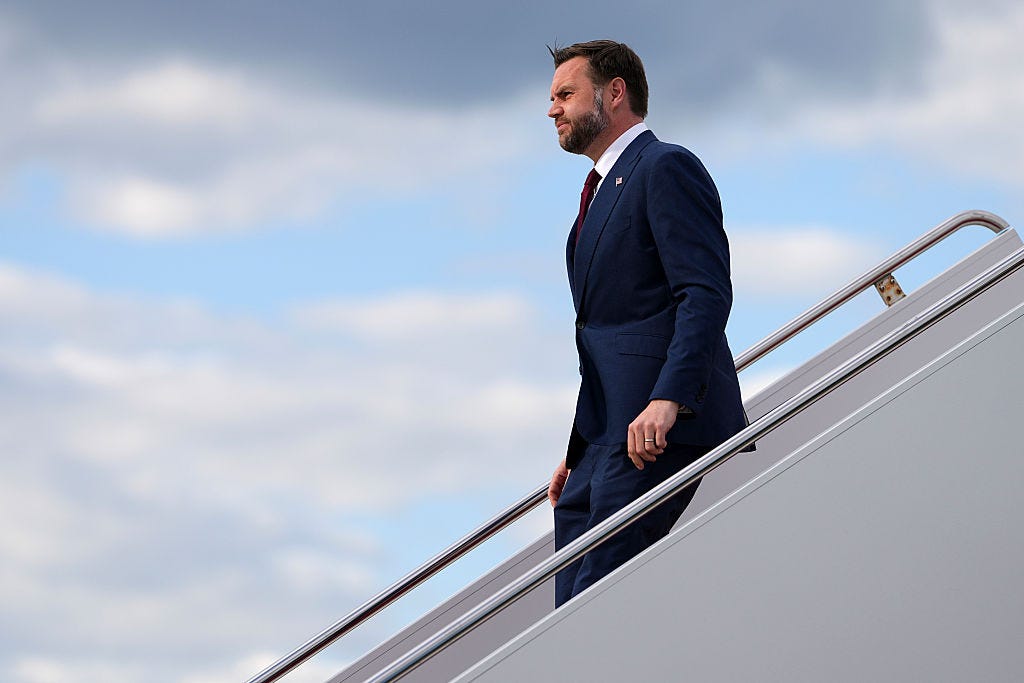
Vance heads to Switzerland Saturday to begin negotiations with Iran
Vice President JD Vance has departed for Switzerland, where he will take part in direct long-term peace talks with Iran.
Vance left from Joint Base Andrews on Saturday afternoon.
Prior to his departure, he told reporters he would be in Switzerland for "a day or two," but that technical teams would remain there after that. Vance said the Iranian delegation had just landed in Switzerland.
"Looking forward to starting the technical talks with the Iranians, the Pakistanis, and the Qataris," Vance said. Qatar and Pakistan have served as mediators between the U.S. and Iran throughout the war.
"I think we're going to hopefully make progress on the nuclear issue, make progress on the Lebanon ceasefire issue," Vance said. "Those are the two big things that I think we're going to be focused on."
Vance had initially been slated to depart for Switzerland on Thursday, but at the last minute, his trip was postponed.
At the time, a White House spokesperson said "the logistics of these negotiations have never been simple or predictable."
Trump threatens to impose U.S. tolls for "Guardian Angel" services after Iran claims Strait of Hormuz is closed
President Trump said that there will be no tolls on ships passing through the Strait of Hormuz unless the U.S. collects the proceeds.
After Iran claimed it closed the strait because of Israel's ongoing attacks in Lebanon, Mr. Trump on Saturday threatened to impose U.S. tolls in the crucial waterway if a final deal with Iran isn't reached in 60 days. In a Truth Social post, the president said the money would be for "services rendered as the Guardian Angel to the countries of the Middle East."
His post underscored that the agreement calls for toll-free travel for 60 days.
The announcements indicated a rough start to technical-level U.S.-Iran talks that key mediator Pakistan said will begin Sunday, with Qatari mediators also participating.
CBS/AP
Luxury resort where U.S.-Iran talks are being held is closed to the public
The Bürgenstock Resort in Switzerland, where the talks between Iran and the U.S. are being held Sunday, told CBS News it will remain closed to the public through Tuesday.
The luxury resort overlooking Lake Lucerne and the Swiss Alps has been closed since June 17, and it is currently scheduled to resume regular operations midday on Wednesday.
U.S. counters claim Iran controls the Strait of Hormuz
The Strait of Hormuz remains open to commercial traffic, according to U.S. Central Command, despite claims from Iran it has shut it down.
"Iran does not control the Strait of Hormuz. Traffic continues to flow, and U.S. forces are monitoring the situation to ensure this remains the case," CENTCOM spokesperson Capt. Tim Hawkins said in a statement.
Iran said it was shutting down commercial traffic in the strait due to a violation of the memorandum of understanding — namely Israel continuing to occupy southern Lebanon.
The Islamic Revolutionary Guard Corps warned vessels not to approach the strait or their "security could be at risk."
Iran foreign minister, parliament speaker to represent Iran at talks; IAEA will also attend
Abbas Araghchi, Iran's foreign minister, and Mohammad-Bagher Ghalibaf, Iran parliament speaker, will attend the talks in Switzerland on behalf of Iran, according to a source familiar with the delegation.
Araghchi and Ghalibaf have been prominent figures in all of the negotiations over the past several weeks and months.
Rafael Grossi, the leader of the International Atomic Energy Agency, the United Nation's nuclear watchdog, is also in Switzerland, according to a source, and expected to lead some portion of technical talks dealing with Iran's nuclear program.
The 14-point memorandum of understanding stipulates that the IAEA will carry out inspection verification and oversee the downblending of Iran's enriched uranium.
Iran-U.S. talks to begin on Sunday, Pakistani mediators say
The negotiations between the U.S. and Iran, focused on reaching a lasting peace between the two countries, will begin on Sunday in Bürgentstock, Switzerland, the Pakistan Ministry of Foreign Affairs said.
As part of the memorandum of understanding signed this week, the U.S. and Iran will have 60 days to work out several issues not addressed in the MOU, including what will happen to Iran's nuclear program.
"Representatives of the United States and Iran, along with Mediators from Pakistan and Qatar, will participate in the discussions," the ministry of foreign affairs said in a statement. "Pakistan will continue to facilitate the process in its role as mediator, with a view to advancing the understandings reached under the Islamabad Memorandum of Understanding."
Special envoys Steve Witkoff and Jared Kushner are already in Switzerland for the talks, while Vice President JD Vance said he could join in the coming days.
Commercial ships should not approach Strait of Hormuz, IRGC warns
The Islamic Revolutionary Guard Corps is warning commercial vessels not to approach the Strait of Hormuz after Iran announced it was closing the shipping lane again due to violations of the memorandum of understanding between the U.S. and Iran.
"It is emphasized that the Strait of Hormuz is closed and vessels should not approach the Strait of Hormuz; otherwise, their security will be at risk," the IRGC said in a statement to its affiliated station, Fars News.
The announcement came right after the U.S. Central Command released a statement hailing the success of commercial transit in the strait — before Iran said it was being closed again Saturday night.
Fifty-five commercial vessels transited the Strait of Hormuz on Saturday, according to CENTCOM, "moving large amounts of cargo and more than 17 million barrels of oil to global markets."
"U.S. forces remain present and vigilant to ensure all aspects of the agreement with Iran are adhered to, obeyed, and in full force and effect," CENTCOM said in its statement.
JD Vance plans to go to Switzerland "in the next couple of days," he says
Vice President JD Vance, whose travel to Switzerland had been put on hold, told Fox News on Saturday he will now travel to the negotiations as soon as "the principals" are in place.
"We'll plan the talks when the principals from the Iranian government, also the Qatari and the Pakistani government, arrive. That may happen as soon as tomorrow, but these things are always a little bit in flux," he told "Fox and Friends." "Jared [Kushner] and Steve [Witkoff] have been on the ground now for a few hours dealing with some of the technical elements of this negotiation."
The vice president said he could then travel to Switzerland himself "sometime in the next couple of days."
"They want to do a delicate dance, the Qataris, and the Pakistanis want to make sure that we do this in the right way," Vance told Fox News. "So I'm trying to be respectful — given my position of the last year and a half. I have to care about diplomatic protocols all of a sudden."
Vance said he sees no evidence of the Strait of Hormuz being closed, though Iran publicly announced the strait was being closed again just after the interview took place.
"One of the things the president has set us out to do as a high priority is to open the straits. That's now happened," Vance said, just before Iran's announcement. "We actually got 16 million barrels of oil out of the Straits of Hormuz yesterday. That is a record going back to even before the conflict started. So, you're seeing those ships move."
Iran negotiating team will travel to Switzerland, spokesman says
Immediately after announcing it would reclose the Strait of Hormuz to shipping traffic, Iran said it will be sending representatives to Switzerland for negotiations on a lasting peace deal — and a commitment to the already-signed memorandum of understanding.
"The Iranian delegation will travel to Switzerland to follow up on and demand the implementation of the other side's commitments," the foreign ministry said in a statement. "If part of the other side's commitments is not implemented, the entire memorandum of understanding will be jeopardized."
Iran said it was closing the Strait of Hormuz over the violation of the first clause in the 14-point memorandum of understanding signed earlier this week, which called for the war to stop on all fronts, including Lebanon. However, Hezbollah and Israel continued to trade attacks and accuse each other of violating the ceasefire, just agreed to on Friday.
Iran also considers it a violation of the MOU for Israel not to pull forces out of Lebanese territory, something Israel says it will not do.
U.S. special envoy Steve Witkoff traveled to Switzerland overnight, CBS News has confirmed, for talks aimed at a potential nuclear agreement between the U.S. and Iran. The MOU stipulates the talks will be a duration of 60 days but could be extended if both sides agree.
Iran recloses Strait of Hormuz over alleged violations in Lebanon: Iranian state TV
Iran is closing traffic to the Strait of Hormuz again due to Israeli troops remaining in Lebanon in violation of the memorandum of understanding, according to Iranian state TV.
Iran's military command said in a statement it was closing the strait, which was just reopened Wednesday, because of the "United States' bad faith and its clear breach of its commitment to implement the first clause of the memorandum ending the war" and Israel's "failure to withdraw from the territories of southern Lebanon."
Iran has said it will consider it a violation of the U.S. memorandum of understanding if Israel does not withdraw from all Lebanese territory. However, Prime Minister Benjamin Netanyahu said the Israeli army will not exit the security zone it established in southern Lebanon.
"It should be noted that this is the first step in responding to the enemy's breach of its commitments," Iran's military command said, according to Iranian state TV. "Should the aggression continue, further measures will be planned and implemented to compel the enemy to abide by its obligations."
Fighting continued between Hezbollah and Israel overnight Saturday, with Hezbollah launching dozens of projectiles and Israel carrying out strikes that killed more than a dozen people. Neither Hezbollah nor Israel were involved in the negotiation of the MOU, which stated the war would end on all fronts, including in Lebanon.
Lebanese soldier killed in Israeli strike overnight
A Lebanese soldier was killed in an Israeli strike overnight Saturday as Lebanon accuses Israel of intentionally trying to sink the ceasefire deal.
The Israeli airstrike on the Kfar Rumman–Nabatieh road killed one member of the country's army, according to an army spokesperson. The Lebanese army is separate from Hezbollah, the Iran-backed militia that operates in Lebanese territory.
The death prompted outage from the country's officials, which has tried to barter peace between the two countries even as Hezbollah continues fighting.
"It has become clear that the continuation of Israel's brutal attacks is aimed at obstructing any solution that would allow for the restoration of stability in Lebanon," the Lebanese army said in a statement.
The Israeli army generally does not target the Lebanese army, only Hezbollah, but several dozen members of the country's military have been killed in the fighting since March.
Talks in the U.S. between Israeli and Lebanese representatives were still on for next week as scheduled, Secretary of State Marco Rubio said on Friday. It was unclear if Saturday's strike would affect that.
Trump touts Iran success in early morning posts
President Trump was up early on Saturday, posting about the success of his war with Iran, despite the situation in Lebanon heating up overnight.
"Radical Left fools and Dumocrats realize how well we have done in our War against Iran, with their Country being completely defeated militarily," Mr. Trump wrote on Truth Social at 7 a.m. "Obuma just kept giving them $Billions in cash, and never used our then depleted military for what should have been done to reign in the World's number one sponsor of terror, Iran."
He went on to also insult former President Joe Biden, before concluding, "Iran got away with 'murder' for 47 years, until I came along. Then it all changed."
Mr. Trump posted again about an hour later, criticizing Democrats for saying Iran was in a better position now than three months ago, "despite the fact that they have been defeated militarily."
The president spent the night at Camp David after revealing the new Air Force One at Joint Base Andrews and has no public events on his schedule Saturday.
Israel, Hezbollah trade accusations of ceasefire violations
Israel and Hezbollah are trading specific accusations of ceasefire violations in Lebanon as their fighting threatens to drag down the entire agreement between the U.S. and Iran.
Israel accused Hezbollah of firing more than 50 projectiles at Israeli soldiers operating in southern Lebanon.
"These attacks constitute repeated and ongoing violations of the ceasefire agreement by the Hezbollah terrorist organization," the Israeli army said in a statement Saturday. "The IDF will not tolerate attacks against Israeli civilians or IDF soldiers and will respond with determination to any act of aggression directed against them."
However, Hezbollah said it will continue to consider any Israeli presence in Lebanese territory to be a violation of the U.S.-Iran memorandum in and of itself. Israeli Prime Minister Benjamin Netanyahu has said Israeli troops will not exit the security zone it established in southern Lebanon. While the memorandum of understanding requires fighting to stop and Israel to respect Lebanese sovereignty, neither party was actually involved in the negotiations.
"The Islamic Resistance declares that, while remaining committed to the ceasefire, it will not hesitate to confront any attempt by the enemy to seize territory and expand its occupation," Hezbollah said in a statement.
Hezbollah also accused the Israeli army of conducting an operation Friday night to take Ali Al-Taher Height, a strategic high ground above the Litani River in Lebanon, which Israel has been unable to acquire.
Witkoff heads to Switzerland for talks; Vance's travel canceled
Special envoy Steve Witkoff traveled to Switzerland overnight, CBS News has confirmed. The first round of talks regarding a potential nuclear agreement between the U.S. and Iran are expected to be held in Bürgenstock in the coming days to handle the technical details of implementing the broad terms in the already signed memorandum of understanding. The MOU stipulates the talks will be a duration of 60 days but could be extended if both sides agree.
Qatar's prime minister, Sheikh Mohammed bin Abdulrahman bin Jassim Al-Thani, arrived in Switzerland Friday. Doha has been a key mediator and shuttled between the two sides in recent weeks to hash out the 14-point MOU.
Iranian foreign affairs minister Abbas Aragchi is not in Switzerland, his office confirmed to CBS News. Aragchi is an experienced negotiator having handled past rounds of nuclear negotiations with the U.S. and Europe. It is not clear at this time who will attend from Tehran.
Vice President JD Vance's travel has been canceled.
Rafael Grossi, the leader of the International Atomic Energy Agency, the United Nations' nuclear watchdog, is also expected to be in Switzerland and lead some portion of technical talks dealing with Iran's nuclear program. The MOU stipulates that the IAEA will carry out inspection verification and oversee the downblending of Iran's enriched uranium.
Fighting continues in Lebanon, state media says
Israeli strikes on southern Lebanon on Saturday killed at least seven people, including two children, hours after reports emerged of a ceasefire agreement and threatening an interim agreement between the United States and Iran to end the war in the Middle East.
Lebanon's National News Agency said the strikes hit the southern town of Nabatieh and nearby villages. At least seven people remained trapped under the rubble, it said. Lebanon's civil defense agency said 16 people were killed in the Nabatieh area, where an AFP photographer saw smoke rising over the city after strikes.
An Israeli military official said Hezbollah had fired more than 50 projectiles at Israeli forces in southern Lebanon overnight, prompting the military to start targeting the militant group there. The official spoke anonymously in line with regulations.
Hezbollah has not officially claimed any attacks on Israel or its troops in Lebanon since the ceasefire was announced.
Mediators were scrambling to halt the fighting between Israel and the militant Lebanese Hezbollah group, after a heavy exchange on Friday killed at least 47 people in Lebanon and four Israeli soldiers.
Trump says he personally asked Israel to agree to ceasefire with Hezbollah
In a Friday phone interview with NBC News, President Trump said he spoke with Israeli officials and requested they agree to a ceasefire with the Lebanon-based militant group Hezbollah, an Iranian proxy.
NBC News said the president declined to say, however, whether he had specifically spoken with Israeli Prime Minister Benjamin Netanyahu.
Mr. Trump told NBC News the ceasefire in Lebanon was "a positive," and referred to it as "little icing on the cake."
Israel and Hezbollah reached a ceasefire deal earlier in the day, three diplomats briefed on the agreement previously told CBS News. The exact terms of the deal were unclear. Iran has insisted that fighting stop in Lebanon as part of any broader ceasefire with the United States.
Israel is honoring ceasefire, but Hezbollah must be "destroyed," ambassador says
Countering claims from Hezbollah that the ceasefire has been broken by Israel, Yechiel (Michael) Leiter, the Israeli ambassador to the U.S., said on X that Israel has not carried out any strikes since 11:30 a.m. local time.
"Israel remains firmly committed to an immediate ceasefire," Leiter wrote. "At 11:30 this morning, Israel halted all offensive operations; Hezbollah and Iranian claims to the contrary are bold lies.
"If Hezbollah honors the agreement and ceases its hostilities, they will be met with quiet."
However, Leiter still said Hezbollah must be eliminated from Lebanon in order for the country to "prosper and enjoy democratic freedoms."
"This will only happen when Hezbollah, a murderous Iranian proxy, is destroyed," Leiter said. "The end of Hezbollah will mark the beginning of a beautiful peace between our two countries."
While the strikes have ended, Israel has no plans to leave the security zone it established in southern Lebanon, Leiter said. Hezbollah has said Israel must exit Lebanese territory entirely or it will consider it a violation of the memorandum of understanding.
Lebanon-Israel talks still expected next week: U.S. State Department
Secretary of State Marco Rubio indicated talks scheduled for next week between representatives from Israel and Lebanon will still take place after holding a phone call with Lebanese President Joseph Aoun on Friday, according to the U.S. State Department.
"Secretary Rubio underscored that Lebanon's bilateral negotiations with Israel represent the only feasible path to reconstruction, economic recovery, and ending recurrent cycles of violence," State Department spokesperson Tommy Pigott said in a statement about the call. "They discussed the next round of negotiations, scheduled for June 23–25 in Washington, where the two sovereign governments will make progress toward a lasting peace."
Hezbollah and Israel agreed to a ceasefire, brokered by the U.S. and other Middle Eastern countries, on Friday. Hezbollah, an Iranian-backed militia in Lebanon, has not been part of previous rounds of talks between Lebanon and Israel and rejected a previous negotiated deal between the two sides.
"Secretary Rubio reiterated the need to disarm Hizballah and to re-establish control over all Lebanese territory," Pigott said of the call. "They also discussed the need to coordinate with regional allies to advance these aims."
How the Iran war united, and then divided, Trump and Israel's Netanyahu
The stage — and the cage — were set Sunday at the White House as President Trump prepared to mark his 80th birthday with a long-planned night of UFC combat, and an announcement of a long-awaited deal with Iran to extend a ceasefire and reopen the Strait of Hormuz.
Hours before it was to be signed, however, Israeli jets struck Lebanon's capital Beirut, killing at least three people.
"This morning's attack on Beirut should not have happened, particularly on a special day when we are so close to a Peace Deal with Iran," Mr. Trump said in a post on Truth Social.
His call with Israeli Prime Minister Benjamin Netanyahu soon after was less diplomatic.
Latest Israeli strikes killed 47 in Lebanon: Health ministry
Israeli airstrikes and bombardments killed at least 47 people and wounded 97 others in Lebanon on Friday, according to the latest updated toll from the Lebanese health ministry.
The dead included at least seven women and two children, according to the health ministry. The figures were released as a new ceasefire between Israel and Hezbollah was due to start.
Consultations ongoing regarding next round of talks, says Iran
Consultations are ongoing through mediators regarding the next phase of U.S.-Iran talks aimed at drafting a final deal to end the war, according to Iranian Foreign Ministry spokesperson Esmaeil Baqaei.
He said Friday that the public would be informed if and when the necessary conditions for launching negotiations are met.
Since the two countries' memorandum of understanding has now been signed both digitally and by President Trump in person, the meeting in Switzerland is no longer considered urgent, he said, adding that planning is underway for a direct meeting to be held in the coming days.
Iran mediators to meet in Egypt on Sunday
Mediators in the U.S.-Iran conflict, including Pakistan, Saudi Arabia and Turkey, are due to gather for talks in Egypt on Sunday, Cairo and Islamabad said.
Pakistan's foreign ministry said Friday that the four-way meeting would bring together the foreign ministers of Pakistan, Saudi Arabia, Turkey and Egypt to "discuss regional developments and exchange views on issues related to peace, security and stability."
Egypt's foreign ministry said late Thursday that the meeting would be followed by expanded talks and a joint news conference.
The Cairo meeting comes after U.S.-Iran talks scheduled in Switzerland for Friday, aimed at following up on the agreement to end the war, were postponed.
The White House confirmed that Vice President JD Vance's planned trip to Switzerland for the talks had been canceled.
The deal, signed this week by President Trump and his Iranian counterpart Masoud Pezeshkian, aims to end the war that began on Feb. 28 with joint U.S.-Israeli strikes on Iran.
Iran says ships transiting Strait of Hormuz will need insurance approved by Tehran
Iran says ships transiting the Strait of Hormuz will need insurance approved by Tehran, according to a document from the regime's new Persian Gulf Strait Authority (PGSA) seen by CBS News on Friday.
The undated document says "all vessels must hold a valid insurance policy approved by
the PGSA."
The PGSA - an agency created by Iran during the war, and which the regime says has sole responsibility for regulating traffic through the vital waterway - said Friday that ships intending to transit the strait are still required to request permission via the body during the 60-day period set out in the U.S.-Iran memorandum of understanding (MOU).
Ships must also follow Iran's approved route around the country's Larak Island, in the north of the narrow strait, according to the document, which says the PGSA reserves the right to introduce insurance fees in the future.
Trump rejects Iran's claim that he signed agreement "out of desperation"
President Trump denied on Friday the Iranian Supreme Leader's claim that the U.S. signed the agreement with Tehran this week "out of desperation."
"We didn't meet out of desperation, Iran did. They are FINISHED!" Mr. Trump declared in a Truth Social post.
The president said the U.S. would "play out" the 60-day negotiation period laid out in the memorandum of understanding with Iran, but he didn't offer any further explanation of his remark. That two-month period of direct talks on Iran's nuclear program and other contentious issues had been expected to start Friday, but it has been delayed amid renewed fighting in Lebanon between Israel and Hezbollah.
In a reference to criticism over the deal from both sides of the political aisle in Washington, President Trump reiterated his insistence in his Friday post that Iran would "get no money, not ten cents!" under the deal signed this week.
While the release of billions of dollars in frozen Iranian assets is to be negotiated during the now-postponed next phase of negotiations, the memorandum of understanding states that the "U.S. and regional partners will develop a reconstruction plan for Iran worth at least $300 billion."
Israel and Hezbollah agree to a ceasefire, diplomat briefed on the deal says
Three diplomats briefed on the agreement told CBS News on Friday that Israel and Hezbollah had agreed to a ceasefire in Lebanon, as first reported by the Reuters news agency.
The agreement was scheduled to begin at 9 a.m. Eastern on Friday, according to Reuters.
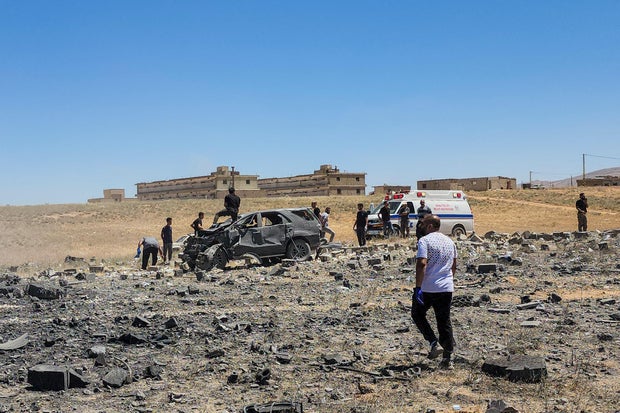
The truce was agreed following the deadliest flare-up in fighting between the two sides since the U.S. and Iran reached an agreement Sunday on their memorandum of understanding.
That agreement, signed by President Trump and Iran's president Wednesday, calls for hostilities to end on all fronts, including in Lebanon, though neither Israel nor Hezbollah were parties to the memorandum.
Hezbollah again blames Israel for continued fighting as U.S.-Iran deal fails to bring Lebanon peace
Hezbollah accused Israel on Friday of not complying with any ceasefire agreement pertaining to Lebanon for nearly two years. The Iranian-backed group said it would continue attacking Israeli troops in response, as their war threatened to derail the U.S.-Iran deal signed by President Trump only two days ago.
"The Israeli enemy has intensified its continuous violations of the ceasefire, committing massacres and destroying residential buildings and civilian infrastructure," Hezbollah, which has long been designated a terrorist organization by Israel and the U.S., said in a statement. "It has continued land assaults through attempts to infiltrate and control villages and areas it was unable to reach before the agreement."
Hezbollah accused Israel of never complying with any ceasefire agreement reached since Nov. 2024, including the most recent deal between Iran and the U.S. - a memorandum of understanding that demands an immediate cessation of hostilities on all fronts, including in Lebanon.
Hezbollah said its fighters in Lebanon would "defend their land and people with courage" and continue "inflicting losses on the enemy army among its officers and soldiers."
Israel has, in turn, accused Hezbollah of violating all ceasefires, virtually from the moment they are agreed. The Israeli military said Friday that its operations in Lebanon would continue until the threat posed by Hezbollah is eliminated.
France calls on U.S. to pressure Israel to cease hostilities in Lebanon
France's foreign minister called Friday on the U.S. to pressure Israel to halt its fighting with Iran-backed Hezbollah in Lebanon to "respect" the U.S.-Iran agreement.
"This agreement involves the cessation of hostilities, the Israeli government must respect it, and the United States in particular must exert all the necessary pressure on the Israeli government so that this is the case," Jean-Noël Barrot said during an interview with French broadcaster Franceinfo.
Barrot also called on Iran-backed Hezbollah to stop attacking Israel and to begin a disarmament process.
Israel says it hit at least 80 Hezbollah targets in Lebanon overnight in response to "repeated, ongoing, and blatant violations of the ceasefire."
Hezbollah and Israel have exchanged fire - and accusations of ceasefire violations - almost daily for weeks, even before the U.S.-Iran deal was signed on Wednesday. While the fighting eased earlier this week, it flared again on Thursday evening.
Netanyahu says Hezbollah will pay "heavy price" for deaths of 4 Israeli soldiers
Prime Minister Benjamin Netanyahu said Friday that Israel will "exact a very heavy price from Hezbollah" for the death of four Israeli soldiers.
"My instructions are clear: Israel will not tolerate attacks on our soldiers or our territory, and it will exact a very heavy price from Hezbollah for these attacks," Netanyahu said.
The Israeli leader also echoed previous statements on Israeli forces' continued presence in southern Lebanon.
"As I have made clear unequivocally, including yesterday: Israel will remain in the security zone in southern Lebanon as long as necessary to protect the northern communities," he said in the statement.
Iran regime says it doesn't trust the U.S. to adhere to terms of deal
Iran's powerful Supreme National Security Council said Friday that the regime signed the memorandum of understanding with the U.S. but has "complete distrust" in the United States to uphold the agreement, and it warned that "any deviation or violation" would bring a reciprocal action.
In a statement, the 12-member council said Iran's theocratic rulers were monitoring developments under the agreement "with complete distrust of the faithless and treaty-breaking enemy, and with precise supervision over the negotiation process and the implementation of the programs."
"Should any deviation or violation occur on the part of the American side, a reciprocal action will be taken according to the plan determined in advance," it said.
The U.S.-Iran deal is already facing a major test, as direct talks scheduled to take place on Friday were postponed amid intensified fighting between Israel and Hezbollah in Lebanon.
25 five ships tracked transiting Strait of Hormuz Thursday as Iran and U.S. lifted restrictions
A total of 25 commercial vessels transited through the Strait of Hormuz on Thursday, the highest number seen on any day since mid-April, according to data from maritime tracking firm AXSMarine.
The increase came after President Trump and his Iranian counterpart signed an initial agreement that calls for the crucial shipping route to reopen amid an extended ceasefire between the U.S. and Iran - and an end to hostilities in Lebanon.
The memorandum of understanding signed Wednesday also calls for 60 days of direct bilateral negotiations aimed at a much wider peace deal to begin, but that next step - which had been expected to start Friday in Switzerland - has been delayed amid increased fighting between Israel and Hezbollah in Lebanon.
On June 18 "we observed 25 verified commercial vessel crossings through the Strait of Hormuz -- the highest single-day count since 18 April and more than five times the average daily level recorded during the first ten days of June," AXSMarine said in a news release.
Israeli military says it attacked 80 Hezbollah targets in Lebanon
Israeli military said Friday that it had struck at least 80 Hezbollah targets across southern Lebanon as fighting between the two sides reignited in the first major test of the fragile U.S.-Iran agreement aimed at ending the war.
"Overnight, the IDF struck more than 80 command centers, terrorists, launch positions, and additional terrorist infrastructure sites," the Israel Defense Forces said in a statement
The statement said "dozens" of Hezbollah fighters were killed in the strikes, which the IDF called a response to "repeated, ongoing, and blatant violations of the ceasefire" by the U.S.- and Israeli-designated terrorist group based in Lebanon.
Lebanon's state-run National News Agency said at least 18 people were killed in the attacks on the country.
Iran's top negotiator says Tehran will not waver from its "red lines" in new talks with U.S.
Iran's chief negotiator Mohammad Bagher Ghalibaf said Friday that direct talks with the United States, provisioned by the memorandum of understanding signed on Wednesday but currently delayed, would be bound by Tehran's "red lines."
"As we have shown in the past path of negotiations, we are steadfast in fulfilling the conditions and red lines set, and in achieving the interests of the Iranian nation," Ghalibaf said in remarks published by Iran's official IRNA state news agency. "If the enemy seeks to be excessive, we have proven that our fingers are on the trigger and we have no hesitation in giving a crushing response to the enemy."
Iranian Supreme Leader Khamenei says Trump signed agreement "out of desperation"
A statement attributed to Iran's Supreme Leader Mojtaba Khamenei, conveyed by the nation's state media on Thursday evening, claims President Trump, "out of desperation, used all kinds of leverage" to reach a deal with Tehran.
"In the course of reaching this stage, the officials in charge, out of sincere concern and goodwill, made extensive efforts — and of course, it was the American president who, out of desperation, used all kinds of leverage to bring this about," Khamenei said in the statement.
Khamenei - who has not been seen or heard from directly since he inherited his position from his father, who was killed on the first day of joint U.S.-Israeli strikes, said Iran had accepted the terms of the agreement and that there would be "in-person negotiations in the future," but that Tehran would not necessarily accept the Trump administration's demands for a broader peace deal.
Iran pulled out of talks with U.S. over Israel's conflict with Hezbollah in Lebanon, official tells AP
Two regional officials, speaking to The Associated Press on condition of anonymity to discuss the closed-door talks, said mediators were focused Friday on calming newly intensified fighting in Lebanon.
One of the officials said Iran had suspended plans to begin direct talks with U.S. officials in Switzerland on Friday specifically over the fighting and comments by Israeli Prime Minister Benjamin Netanyahu, which they described as violating the interim deal between Iran and the U.S.
Vice President JD Vance on Thursday put off his trip to Switzerland, where he had been set to lead the next-phase talks with Iran provisioned by the memorandum of understanding signed by both countries on Wednesday. The White House blamed logistical issues for the delay in beginning the talks, which are expected to last 60 days.
Trump calls on Hezbollah and Israel to stop fighting
President Trump said Thursday night he expected Hezbollah and Israel to stop fighting under the agreement struck between the U.S. and Iran.
"The United States is committed to PEACE, and we encourage everyone in the Middle East Region to maintain their commitment to allowing our negotiations to beautifully unfold," Mr. Trump said in a Truth Social post. "We expect a complete Ceasefire on all fronts, including Lebanon, Hezbollah, and Israel."
Israel said it attacked Hezbollah in the early hours of Friday morning in response to "repeated violations of the ceasefire."
In a brief statement the Israel Defense Forces said it had "struck throughout the night and continues to strike Hezbollah terrorists and infrastructure sites in several areas across southern Lebanon."
Lebanese officials said at least 18 civilians were killed, making it the deadliest attack since the U.S. and Iran reached an agreement early this week on the memorandum of understanding signed Wednesday by Mr. Trump and Iranian President Masound Pezeshkian.
Israeli strikes kill 18 in Lebanon as fighting with Hezbollah flares up, health ministry says
Israel's military said Friday its forces struck targets throughout southern Lebanon overnight as Hezbollah reported intense fighting in the area.
Lebanon's state-run National News Agency reported at least 18 people were killed in Israeli airstrikes, which the Israeli military said were ongoing. Israel, meantime, said four of its soldiers had been killed in fighting in southern Lebanon, including a lieutenant colonel. An explosive drone attack hurt another five, it added.
Continued fighting in Lebanon could unravel the newly signed deal, which calls for an immediate halt to military operations "on all fronts, including in Lebanon," where Israel has been battling the Iran-backed Hezbollah militant group, and for ensuring Lebanon's "territorial integrity and sovereignty."
Vance no longer traveling to Switzerland for talks with Iran tonight, White House says
Vice President JD Vance is no longer planning to fly to Switzerland late Thursday to help kickstart talks with Iran, a White House spokesperson told reporters.
"As the Vice President said at his press conference, the plans for the upcoming technical talks have not been finalized, and the U.S. delegation has been prepared to depart at the first available opportunity. But the logistics of these negotiations have never been simple or predictable," the spokesperson said in a statement to the White House press pool. "As of now the Vice President is not departing tonight. We will let you know as soon as we have a concrete update about next steps."
The spokesperson added: "We look forward to beginning technical talks as soon as possible."
Under the memorandum of understanding signed by Iran and the U.S. this week, the two sides are planning to hold 60 days of technical talks on the fate of Iran's nuclear program.
Earlier in the day, Vance told reporters the plan was for those talks to begin this weekend, and he intended to travel to Switzerland for the start of negotiations, but "that could change" because Iran is "not an easy country … to get out of."
"It just depends on exactly when the Iranians can get there," he said. "We're trying to figure that out as we speak, but again, I suspect it will happen this weekend."