U.N. COP31 climate conference ends with no agreement after fossil fuel debate reaches standstill
COP31, the United Nations' annual climate conference, ended Sunday without a final agreement after days of contentious talks collapsed, mainly because of disputes between nations pushing to phase out fossil fuel use and others opposed to doing so.
The breakdown capped two weeks of negotiations in Antalya, Turkey, between delegations from nearly 200 countries. Their debates ran into overtime, becoming the longest COP summit in history, at a moment that U.N. officials and many scientists have called decisive for the trajectory of global warming and climate change.
The United States sent no representatives for the second year in a row, following the Trump administration's withdrawal from the 2015 Paris Agreement. That accord set a goal of limiting warming to 1.5 degrees Celsius above preindustrial levels, a target that has anchored every U.N. climate summit since and that the world is now poised to overshoot.
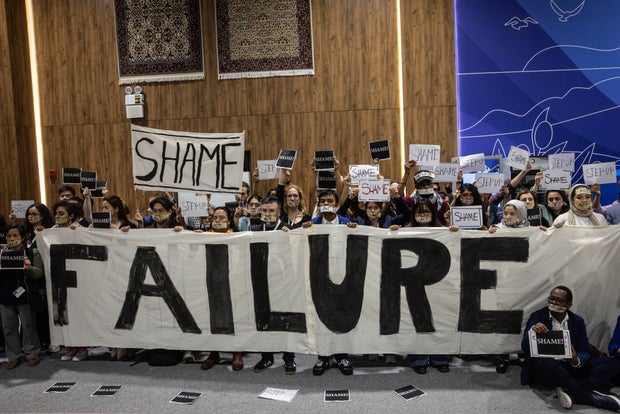
Talks reached an impasse Sunday, as the European Union opposed a draft agreement that failed to mention fossil fuels and which, its delegates argued, placated countries that export them. They joined a group of smaller nations facing heightened threats of climate extremes and challenged oil producers, like Saudi Arabia, that staunchly rejected their views. The finale came after days of tense discussions over some of the core topics at issue during the summit, including whether to establish new rules and goals around transitioning away from coal, oil and natural gas in favor of renewable energy.
COP31 President Murat Kurum, who is Turkey's environmental minister, said in televised comments from Antalya on Sunday that a draft had not been adopted due to a lack of consensus. The conference rules require unanimous agreement to reach a deal, so even a single nation's dissent can derail the process.
"We have always emphasized that this process is one that respects the will of the parties. We did everything we could," Kurum said. "In the end, we did not impose this text on anyone. We did not pressure anyone with a take-it-or-leave-it approach. There are parties in the hall that oppose this text, and we see that there is no agreement on it. Therefore, these decisions have not been adopted."
On Friday, the scheduled final day of the conference, a coalition led by France and Panama and including countries from Europe, Africa, Latin America and the Pacific rejected the latest draft agreement as too weak, according to the U.N. The group demanded explicit language on fossil fuels and stronger commitments on climate finance.
"We cannot continue to be held hostage by petroleum producers," said Panama's environment minister, Juan Carlos Navarro, at a news conference last week. He also vowed that Panama would formally object to any deal omitting issues related to fossil fuels.
An initial draft of negotiators' agreement had called for "accelerated action to phase out fossil fuels," a recurring goal at these summits, and urged an end to inefficient fossil fuel subsidies. It also resolved to bring warming back below 1.5 degrees as early as possible this century. But that language was gone days later, reflecting deep divisions over timelines and financing.
Later drafts still did not contain language about fossil fuels, although they did include proposed targets to capture billions of tons of carbon dioxide annually from the atmosphere by 2035, using technology that critics have said distracts from the need to cut fossil fuel use. They also called for electricity to supply more than a third of the world's energy by the same deadline, alongside goals around renewable energy and energy efficiency.
Negotiators had expressed "deep concern" in drafted text over global warming, which at its peak is projected to exceed 1.5 degrees. They also reaffirmed the need "for deep, rapid and sustained emissions reductions," warning that every increment of additional warming will increase the frequency and intensity of climate-related loss and damage. If current international climate plans were fully implemented, they noted, the world would be on track for just over 2.5 degrees of warming, down from projections of more than 4 degrees before the Paris accord.
The COP31 summit unfolded in a year marked by deadly disasters, record heat, destructive wildfires, tumultuous surf and other anomalies, which meteorologists have largely tied to a powerful El Niño. Scientists say its effects are amplified by climate change.
Speaking in Antalya last week, U.N. Secretary-General António Guterres urged governments to move away from fossil fuels, triple adaptation funding by 2035 and tax fossil fuel companies' windfall profits to help vulnerable nations recover from disasters. "Polluters must pay," he said. At a press conference two days later, he linked the climate crisis to deeper social and political instability.
"You cannot eradicate poverty when climate disasters keep throwing people back into it," Guterres said. "You cannot promise young people a better future while destroying the natural systems on which that future depends. And you cannot speak seriously about justice when those who did least to cause the crisis suffer first and worst."
Some environmental advocates felt the conference proposals didn't go far enough to meet the needs of communities that are already facing real consequences of the climate crisis.
Ellen Dorsey, named this month to the TIME100 climate list, told CBS News after leaving Antalya over the weekend that she hadn't expected substantial action from COP31, despite clear signs of urgency.
"The time for simply talking about phasing out fossil fuels is over. Governments need to act," Dorsey told CBS News. "That means no fossil fuel expansion, an end to fossil fuel subsidies, and an equitable phaseout that protects workers and communities."
Dorsey said fossil fuel lobbying has grown over the past decade, as has the presence of industry interests in national delegations at U.N. climate talks, including this one. Still, she sees promise in efforts pushing back, from grassroots movements to the Santa Marta process, a coalition using diplomacy to drive a transition away from coal, oil and gas.
"Momentum is building beyond the negotiations," said Dorsey, who called this "a historic inflection point" for climate policy. "The opportunity for real systemic change is here."


