Cases of flu-like symptoms in Michigan rated at "very high" by CDC

The number of Michigan residents diagnosed with flu-like symptoms has been considered "very high" for the past two weeks, based on recent flu data from the Centers for Disease Control.
Doctors across the country started taking note of this winter's influenza season fairly early, and the recent spike can be traced on a state-by-state basis through the weekly CDC reports.
Michigan was reported by the CDC to have "minimal" flu symptom activity during the week ending Nov. 22. That tracker noted "high" activity in Michigan for the week ending Dec. 13, and "very high" in Michigan for the weeks ending Dec. 20 and 27.
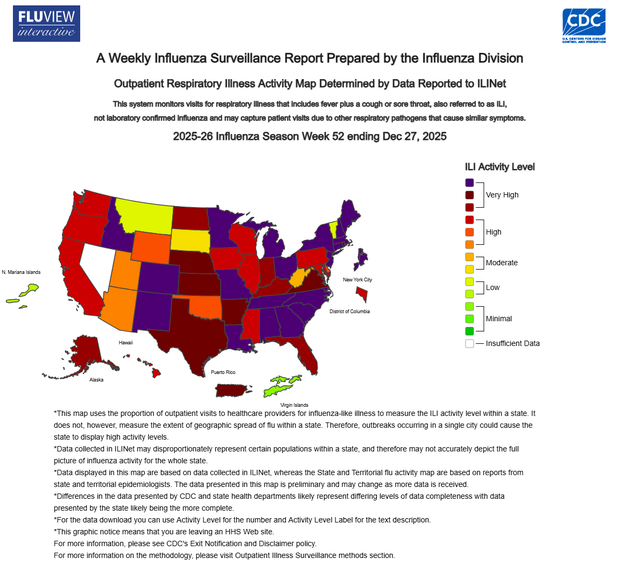
While the CDC flu symptom map includes cases that may turn out not to be influenza, the Michigan Department of Health and Human Services' weekly reports do track specific scenarios. For example, during the week ending Dec. 27, influenza symptoms accounted for 8% of Michigan emergency department visits.
State officials also said there have been 2,110 influenza-related hospitalizations in Michigan since the 2025-26 flu season began in October, of which 1,426 of those cases were in Southeast Michigan.
Most of the influenza strains detected this year are Type A, and more specifically, a Type A variant called H3N2.
"H3N2 in particular tends to cause more hospitalizations and severe disease, especially in patients over 65 and young children," Dr. Lea Monday, the section chief of Transplant Infectious Diseases at Wayne State University, told CBS Detroit in late December.
Influenza symptoms
Seasonal influenza is a contagious respiratory illness that can result in mild to severe illness, and is sometimes fatal, the Michigan Department of Health and Human Services said. The illness tends to come on abruptly, with symptoms including fever, sore throat, headaches and fatigue.
Adults age 65 and older, children age 4 and younger, and those with certain underlying health conditions are at the highest risk for complications.
Influenza treatment
Treatment for seasonal flu includes getting plenty of rest and drinking fluids. Some antiviral medications may be an option, state health officials said.
Influenza vaccinations
The CDC recommends that everyone 6 months and older get a flu vaccine every year, unless there is a medical reason they should not get it. The annual flu vaccines are selected in hopes of targeting the most likely variants expected to be circulating.
"The single best way to prevent flu is get vaccinated every year," state officials said.
Michigan health officials say only 23% of Michigan residents have received this year's influenza vaccine, counting everyone who has been vaccinated for the illness since July 1, 2025.
The above video originally aired Jan. 6.