1890s Méliès short found in Michigan, thought lost, may feature earliest known cinematic depiction of robotics
A 19th-century George Méliès film, thought to be long lost, has been found among a box of brittle movie reels that a Michigan donor brought to the Library of Congress, officials said.
The 45-second short, titled "Gugusse and the Automaton," was made around 1897 and had likely not been seen by anyone in more than a century. Some cinephiles believe it may feature the earliest-known depiction of robotics to exist in all cinema.
Further exciting film historians is the fact that Méliès is considered one of the most important figures in developing what the nascent form of cinema was capable of in its first few decades.
The cache was donated by Bill McFarland of Grand Rapids, whose great-grandfather William Delisle Frisbee was a traveling showman who exhibited films by night.
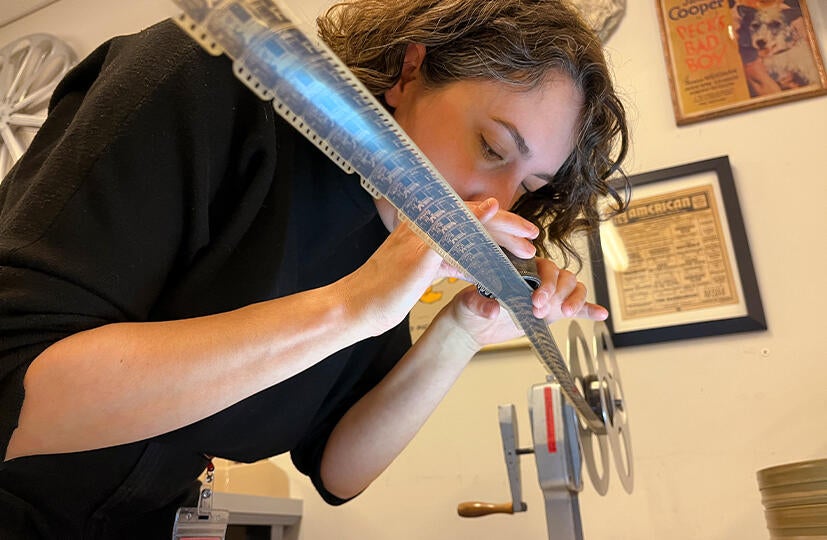
The films arrived in deteriorated condition, with about 10 reels that had been shuttled from basements to barns to garages. Some reels were rusted and misshapen, pieces of nitrate had crumbled, and other strips were stuck together. Library technicians peeled the reels apart and examined them frame by frame before making a surprising discovery.
Within the frames of the reel could be seen a painted black star on a pedestal and the slapstick action of a magician and a robot. Researchers quickly realized that the film was likely one that science-fiction enthusiasts had been aware of for decades, but had never laid eyes on, a film that existed more in legend than reality.
"This is one of the collections that makes you realize why you do this," Courtney Holschuh, the archive technician who unraveled the film, said.
In the one-reel short — which features only one single camera set-up, as was commonplace at the time — Méliès plays a magician who winds up an automaton dressed as the clown Pierrot. The automaton beats the magician with a walking stick; the magician retaliates with a sledgehammer, each blow seeming to shrink the automaton until it becomes a doll, and then smashes it into the floor.
Méliès, a prominent French stage magician who turned to filmmaking after seeing the Lumière brothers in Paris in 1895, pioneered theatrical tricks such as double exposure, black screens and forced perspective. Director Martin Scorsese paid tribute to his influence on fantasy filmmaking in his 2011 film "Hugo."
The print of "Gugusse" donated by McFarland is a duplicate at least three times removed from the original, and it arrived in extremely delicate condition. Library technicians spent more than a week scanning and stabilizing the print to a digital format so it can now be seen online in 4K.
McFarland's stash also contained Méliès's 1900 short "The Fat and Lean Wrestling Match" and fragments of an early Thomas Edison film, "The Burning Stable."
"The moment we set our eyes on this box of film, we knew it was something special," George Willeman, the Library's nitrate film vault leader, said.
McFarland said he had long preserved trunks of projectors, films and papers passed down through the family.
"They must have been out of their minds to see this motion picture and to hear the Edison phonograph," McFarland said, of the contemporary audience seeing the films his great-grandfather toured.


