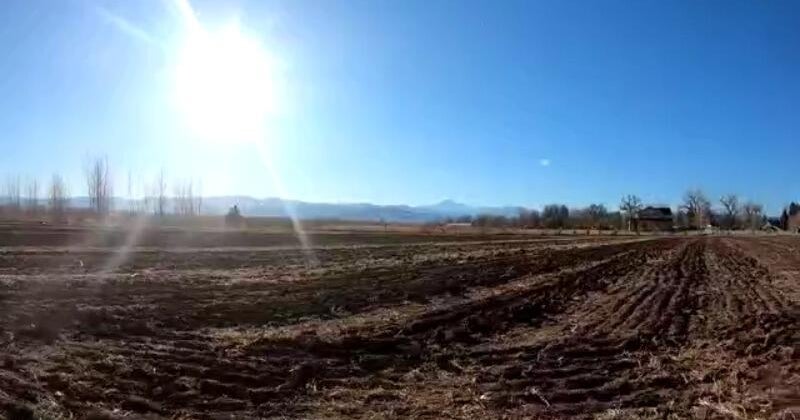
Winter basically skipped the Western United States

Colorado experienced its warmest winters on record, contributing to one of the worst mid-winter snowpacks in decades.
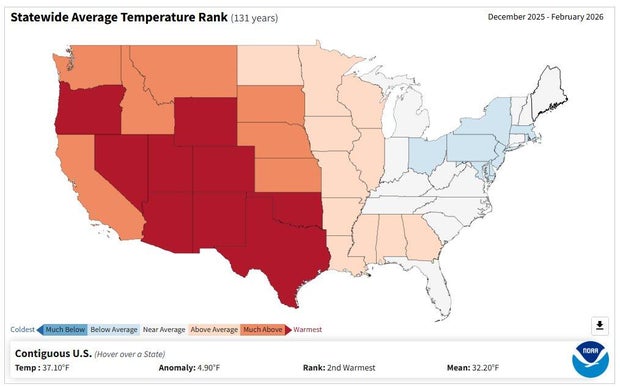
New climate data show the December through February period ranked as the second warmest winter in the United States in NOAA's 131-year climate record.
Several western states, including Colorado, Arizona, Nevada, New Mexico, Oklahoma, Oregon, Texas, Utah and Wyoming, recorded their warmest winter on record.
Warmest start to a water year in Colorado history
Colorado climate records show an exceptionally warm start to the 2025-2026 water year.
According to the Colorado Climate Center:
- December was the warmest on record statewide
- November ranked the third warmest
- February was the warmest on record statewide
Combined, the period marks the warmest start to a water year ever observed in Colorado.
Snowpack drought worsens
The unusually warm conditions have had a major impact on mountain snowpack.
Statewide snow water equivalent measured by SNOTEL stations reached its lowest early-February level since at least 1987.
Some mountain snow sites are reporting near-record or record-low snowpack levels for this point in the winter season.
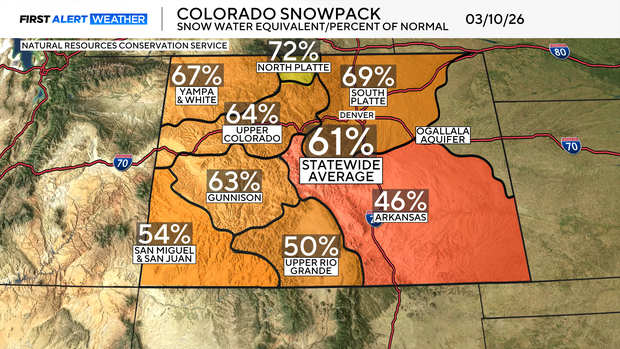
Colorado climate scientists say the current snowpack deficit is approaching levels seen during historic drought winters such as 1976–77 and 1980–81.
Colorado is a headwaters state, meaning snow that falls in the Rocky Mountains feeds major river systems across the western United States, including the Colorado, Arkansas, Rio Grande and Platte rivers.
According to the Natural Resources Conservation Service, mountain snowpack is a critical source of spring runoff and water supply. Low snowpack can increase drought risk and elevate wildfire danger later in the year.
There is still time
Colorado snowpack typically peaks around April 8.
There is still time for late-season storms to improve conditions, but reaching near-average snowpack levels is becoming increasingly unlikely without a significant shift in the storm pattern.