This was a terrible winter for skiing in Colorado. But it's not the worst, according to some mountain residents.
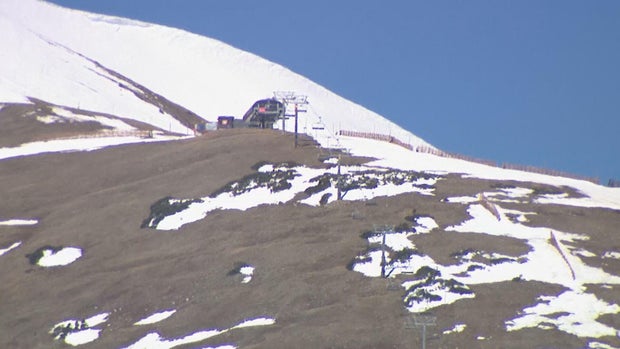
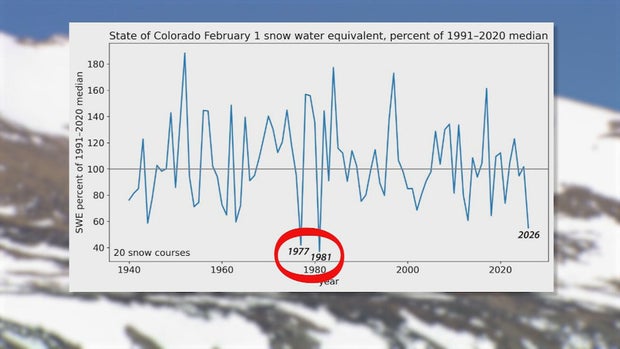
Colorado's mountains are coming off one of the driest winters on record, and while it may feel unprecedented (and is, according to snowpack levels), history shows the state has suffered terrible ski years before.
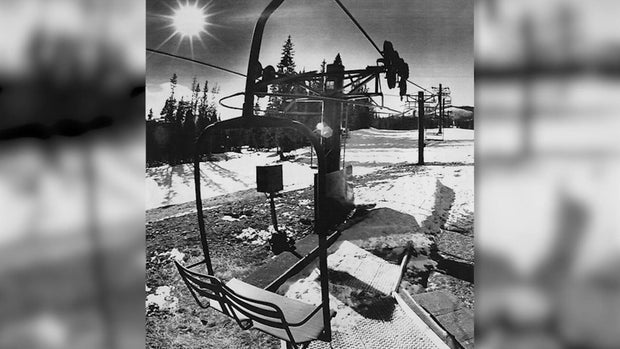
In Breckenridge, the winter of 1980 to 1981 still stands as the benchmark for some of the worst skiing the town has ever seen since Breckenridge Ski Resort started its tenure in town.
"That year, Breckenridge was only able to open for three days around the Christmas season, then closed for about six weeks and reopened in mid-February," Larissa O'Neil, executive director of Breckenridge History, said. "It was really devastating to a lot of people in the community."
The season came on the heels of another mild winter in 1976 to 1977, compounding the impact on a town that relied almost entirely on natural snowfall at the time.
"If you think about it, Breckenridge as a ski area was less than two decades old, and they had to rely 100% on natural snow," O'Neil said. "Skiing was what kept this town afloat in the winter months."
The consequences were immediate and severe.
"The ski area had to let go of about 300 employees in that 80-81 season," O'Neil said. "The local bank… went from getting about $16 million in deposits down to $11 million that season."
Skier visits also plummeted, dropping from roughly 750,000 the year before to just 200,000. The economic shock forced long-term change and turned the resort into a more resilient one, and in turn, the town as well. Breckenridge invested heavily in snowmaking, pouring about $2.5 million into infrastructure to prevent a repeat, according to O'Neil.
Fast forward to today, and that investment is part of why this year, while historically dry, has not had the same level of disruption. Still, for longtime locals, the similarities are hard to ignore.
"It has just been awful," said C.J. Muller, who spent decades in Breckenridge after moving there in 1970. "And then we capped it off a month ago (March) with just this unprecedented heat wave."
Muller says he can't shake the feeling he's seen something like this before. "I've seen a graph of the snow totals in Colorado in the 81 season and this season, and it was almost identical," he said.
Even with modern snowmaking and a more diversified economy, the visual impact alone has stood out. "In the years that I've been coming up here, it's never looked anything like this," Muller said.
And while history offers perspective, it also suggests this season will be remembered for decades to come.
"All year long, people have been looking back at 76-77 and 80-81," Muller said. "Nobody's going to forget this."
That's partially because it's not just about our ski season this time.
"Now we're talking a lot more about water in the West and how the snowfall here impacts the greater American West," O'Neil said. "We're talking about wildfires and the potential for that."
Which means this season may ultimately be remembered not just for its lack of snow, but for what it signals about the future.
"I think the 2025-2026 snow drought will be something we definitely talk about historically," O'Neil said.


