Northern Colorado police and fire departments see dramatic spike in fuel prices; "We feel the pain"

The war in Iran has resulted in a drastic spike in gasoline and diesel prices since the end of February, ultimately costing Colorado taxpayers significantly more to keep their first responding agencies on the roads. According to internal records obtained by CBS News Colorado, fire and police departments in Weld and Larimer counties have seen their expenditures at the pump spike anywhere from 45% to 216% in April compared to January of 2026.
"We feel that pain at the pump, just like everybody else does," said John Feyen, sheriff of Larimer County.
Feyen has decided to drive his issued motorcycle, when possible, in-part as a way to save on gasoline.
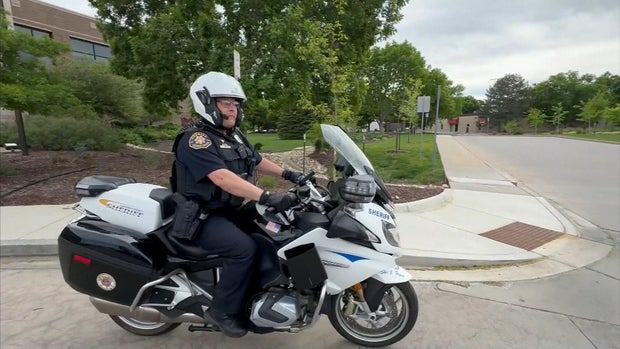
"This is the most economical vehicle we have. It gets like 50.2 miles per gallon," Feyen said.
However, a drastic majority of first responding vehicles get less than half of that gas mileage any given day. And, in a profession which requires vehicles to be moving at nearly all hours of the day, first responders are having to pay increased rates at the pump just like everyday Coloradans.
"Law enforcement is not immune to fluctuations in gas prices," said Chris Padgett, spokesperson for Loveland Police Department. "We are being incredibly conscious of the fuel that we are utilizing every shift when our patrol officers and detectives are out and about. But, it does not compromise the service and availability that we have as the police department."
CBS News Colorado obtained records from multiple Northern Colorado agencies showing how every single entity saw a drastic spike in gas prices, especially when comparing April expenses to January.
Among the agencies which handed over their data were Loveland and Fort Collins police departments, Loveland Fire Department and the Weld and Larimer County sheriff's offices. CBS News Colorado also received data from other agencies in the region.
The City of Greeley did not provide their police and fire data in time for this report, nor did Poudre Fire Authority which represents Fort Collins.
Of the agencies that provided their public records to CBS News Colorado, every single one showed a sharp increase in fuel expenses month-by-month since the start of 2026, except for one month in Larimer County. The county showed a drop in expenses between February and March, a drop which could not be pinpointed with specific reason by a spokesperson for LCSO.
The war in Iran started on February 28 of 2026. Comparing fuel expenses in February to March, agencies spent anywhere from 28% to 67% more at the pump.
In Fort Collins the police department spent 28.02% more in March than April.
The Loveland Police Department spent 33.05% more between March and April. The fire department in Loveland saw a jump of 67.72%.
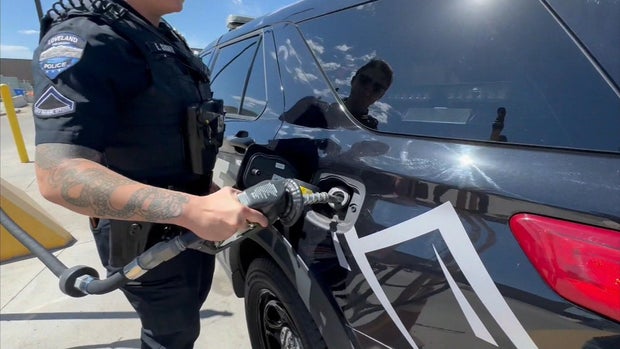
The Weld County Sheriff's Office reported a jump of 39.43% between February and March.
On January 1 of 2026 the national average gas price was $2.89. By the end of April the price was $4.23.
Comparing January monthly expenses at the pump to April's, the following increases were reported by agencies:
FCPS: +45.03%
LPD: +81.82%
LFRA: +94.04%
LCSO: +216.10%
The WCSO was unable to provide its data for the month of April in time for this report.
"Deputies are on the move pretty much from the time that they start shift until they end shift," Feyen said. "We have not built in this much leeway (in our budget)."
"With our budget, fuel being increasingly more expensive, it certainly could affect (budgets)," Padgett said. "If it continues long term, it could affect budget areas in different places."
Working in the favor of most major first responding agencies in the Northern Colorado region are contracts that purchase fuel in bulk and fixed rates. Those contracts help fuel city or county-owned gas stations throughout Northern Colorado that only government entities can pump from.
"Going to a local gas station or convenience store, those prices fluctuate daily," Padgett said, explaining why it is beneficial to fuel vehicles at government-owned gas stations.
"We've got 13 different fueling sites throughout the city of Fort Collins," said Jake Rector interim purchasing director for the City of Fort Collins.
Rector helps oversee the city's fleet program, which includes the police department as well as other city departments.
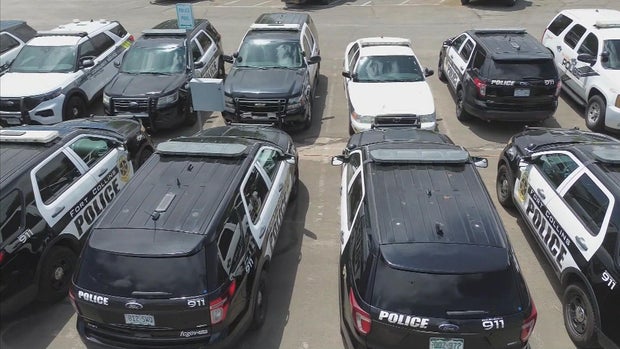
Rector explained how the city is able to save money through purchasing their fuel directly from a supplier instead of from a third party like a public gas station.
"Ours is about 0.02 cents of a markup. In comparison, the normal citizen who's going to go fill up at your local gas station is probably paying somewhere between a five to 10% markup," Rector said. "There's a reason why we strategically placed fueling infrastructure that the city owns and maintains throughout the city to allow them to take advantage of those prices."
Most agencies provide their first responders with gas cards that allow them to fuel up at public gas stations in a time of need. However, most agencies encourage their employees to fuel up at the discounted government-operated pumps.
Many may not know that most first responder vehicles are left running for entire shifts, even when an officer isn't in the vehicle. Idling helps keep emergency lights, computers and radios operating. Also, during hot summers or cold winters, idling allows cars to either remain cool or to not have windows fog, ultimately allowing first responders to get to scenes quicker.
However, amid the spike in gas prices of late and speculation that pumps in Colorado might be charging more than $5 a gallon in the coming months, some agencies are considering policy changes to help save fuel.
In Loveland, chief Tim Doran has asked his officers to consider turning their vehicles off during their shift when safely able to, that includes during extended times in which previously they would leave them idling.
"There's circumstances that dictate vehicles must stay on. But, if those circumstances do not dictate that, we are encouraging officers to turn off their vehicles," Padgett said. "Because of the fact that there are ways to conserve fuel during times like this."
Meanwhile, LCSO sheriff Feyen said he is considering different ideas to try and conserve fuel and money, and not just taxpayer dollars. He said that includes considering letting some employees either work from home or switch to a hybrid schedule which might allow them to save money in their own pockets instead of driving to work.
Each entity CBS News Colorado spoke with said their agency will not let the increased gas prices and impacts to budgets stop them from responding to emergencies and serving the community.
"Regardless of fuel prices, we will be there. We will respond to emergency situations, and we will continue to provide safety and security to the residents of Loveland," Pagett said.


