From shower water to toilet flushing: Colorado researchers showcase new ways to stretch every drop

As Colorado continues to navigate recurring drought and growing water demands, researchers and water experts are looking beyond traditional conservation measures and finding innovative ways to reuse water that would otherwise go down the drain.
At the center of that effort is Water TAP, a technology accelerator located at CSU Spur in Denver, where new ideas are being tested to help communities make the most of every gallon.
"The future of water management is not about finding more water, it's about using the water we currently have more wisely," said Sarah Millonig, Director of Operations and Strategic Engagement for the One Water Solutions Institute and Water TAP.
That philosophy is already on display inside the Hydro Building at CSU Spur.
One of the facility's flagship projects is called GRETA, Colorado's first commercial and legal graywater collection and reuse system.
Water from showers and handwashing sinks on the building's second floor is collected, treated, and reused to flush toilets throughout the facility.
"GRETA is Colorado's first commercial and legal graywater collection and reuse system," Millonig said. "She collects water from the second floor of the Hydro Building where there are showers and handwashing sinks. That water is collected and treated in our lab and then reused to flush toilets rather than using potable water."
The project demonstrates what water experts call "fit-for-purpose" water use — matching the right water source to the right need.
"The water industry is increasingly talking about a 'One Water' approach," Millonig said. "All water has value, whether it's drinking water, stormwater, wastewater, graywater, rivers or lakes. All of our water systems are connected."
That approach encourages communities to think differently about how water is collected, treated, reused and protected.
"Nature-based systems and green infrastructure can help communities capture, slow, treat and beneficially use water," Judah Gaioni, Director of the Colorado Stormwater Center said. "Better stormwater management improves both flood control and water quality."
At Water TAP's outdoor research area, scientists are studying how rain gardens, vegetated treatment systems and other green infrastructure projects perform under real-world conditions.
The goal is to provide data that cities and communities can use when deciding how to invest in future water infrastructure.
While researchers continue developing large-scale solutions, experts say homeowners can also play an important role.
Many conservation measures are simple and inexpensive.
"There are a lot of everyday actions citizens can take," Millonig said. "Whether it's turning off the sink when you brush your teeth, making sure irrigation systems are being used at the appropriate times, avoiding watering sidewalks and driveways, or using water-wise landscaping."
One project she recommends is installing rain barrels to collect water from rooftops.
"It was a family project," Millonig said. "My husband, my son and I installed two 55-gallon rain barrels."
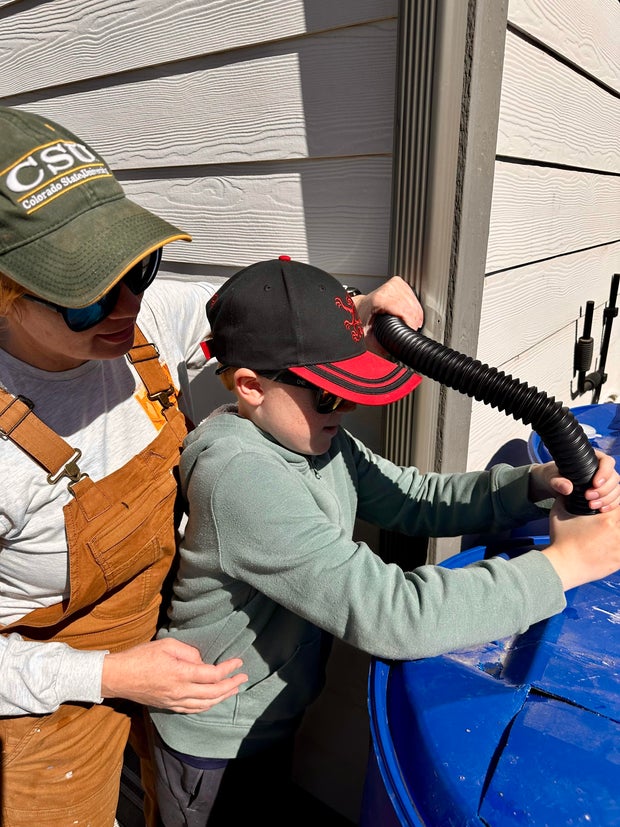
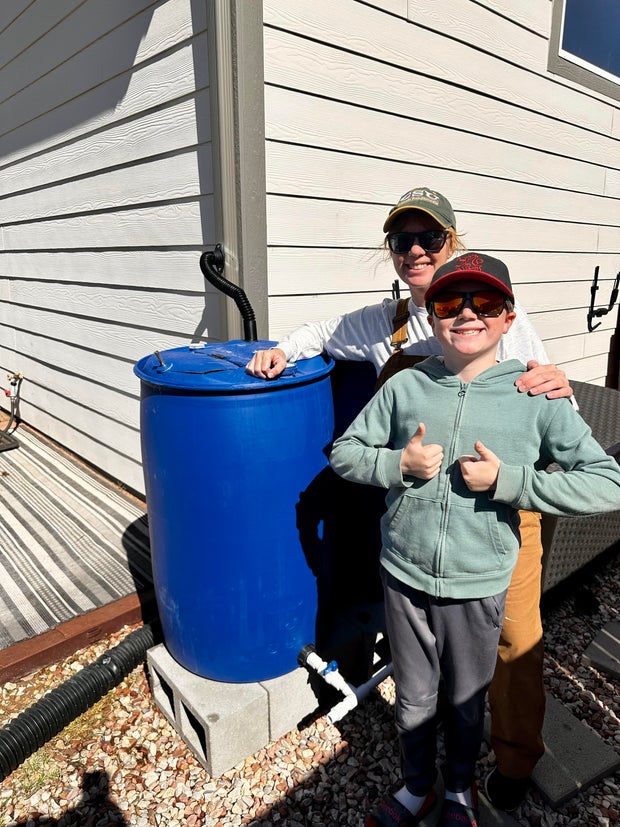
Using a simple kit attached to a downspout, the family now captures rainwater that would otherwise flow away.
"I use that water to water my native landscape," she said. "This year, with our drought situation, I'm focusing on flowers and food."
According to Millonig, when thousands of homeowners make small changes, the collective impact can be significant.
"I think it's important to point out that you no longer have to use potable water. That's going to reduce your water bill, and it's also going to use it at its source, which is always an environmental benefit," said Gaioni.
Unlike many research facilities, Water TAP's work is visible to the public.
Millonig says one of the unique aspects of CSU Spur is that visitors can see many of these technologies in action.
"Ultimately, Colorado's water future depends on all of us," Millonig said. "Everyone has a role to play in building a more resilient future."


