New Colorado law expands school zones to 1,000 feet after 13-year-old was killed in crash

There are new protections to make roads safer around schools and school zones. One law that went into effect on Wednesday is the Liam Stewart School Zone Act, which expands school zones to roads within 1,000 feet of a school. Liam was 13 years old when he was hit and killed by a car while riding his bike to school in Littleton back in 2023.
For nearly three years, Liam's father, Josh Stewart, has been advocating for safer streets and changes since his son's death.
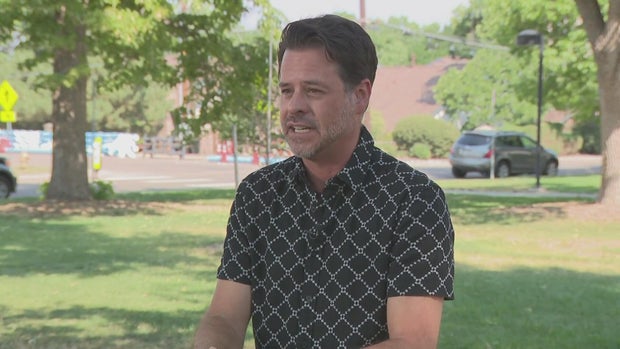
"After Liam's death, we made sure that the school route signs went up, showing kids where the safe ways to get to schools are," Josh told CBS Colorado. "We really are working with our city government, trying to make changes, not just for kids trying to get to school, but for anybody trying to get anywhere."
It wasn't until he was driving in the area, that Josh noticed the signage was moved, and the school zone changed at Euclid Middle School, where Liam was biking to when he was hit in a roundabout.
In a statement, the city of Littleton said, after research and an evaluation with consultants, in some cases, shortening school zones increases driver awareness and improves overall safety for drivers and students.

Josh argues that the changes made the area "considerably less safe."
"It felt very much the opposite of a change towards safety," Josh said. "The thing that hit the hardest is realizing that Liam had been killed in a school zone, and the changes to the school zone put his death just outside of the school zone."
Josh's priority then became ensuring children have safe avenues to get to school. He began visiting school zones in other districts and communities and learning more about them. He found that, in Colorado, cities, counties, municipalities and Colorado Department of Transportation manage school zones.
"There were a lot of inconsistencies I found across cities and across counties, and school zones aren't the same anywhere, which creates confusion, and we needed to fix that," Josh said. "This is the first statewide law that actually puts a standard around a school zone for Colorado."
Under the new law, school zones are now defined as roads within 1,000 feet of a school. School zones less than 200 feet must update their school zone to be compliant with the law. It also requires signs indicating there's a school zone, with traffic penalties doubled.
"That right there makes it enforceable. What I learned from police departments is that they have a hard time enforcing double penalties in school zones because most cities don't sign them correctly to be enforceable," said Josh, who added clear signage also gives prosecutors the ability to prosecute negligence in school zones if someone is injured, seriously hurt or killed.
Schools with existing zones between 200 and 1,000 feet can keep their current boundaries but must follow the legal process in order to modify them. To reduce the size of a school zone, a public hearing must be held ensuring the community can provide feedback.
"It still gives a city the opportunity to go less than 1,000 feet, but they have to hold public engagements, and they have to involve the school districts, and they have to involve the people that utilize these areas," Josh said.
Cities can also designate a "school street," and reduce the speed limit to as low as 10 mph. Governments can use automated vehicle identification systems to track traffic violations in a school zone. Districts and cities who also want to expand their school zone boundaries can raise funds for new signage.
Stewart hopes the changes in law improves driver behavior in and around school zones.
"What good is a school zone that doesn't start until you can see the school? You really need to know that you're in an area that there's going to be a lot of students well before you get to the school," Josh said. "I think it also puts a reset on the people that are designing these school zones to really think about the people that are using school zones."
Josh added that the law also sets a guideline on the changes communities can advocate for, a change he believes Liam would've supported.
"Liam would have been a sophomore in high school. He would have been driving this year," Josh said. "He cared for kids. He cared for his friends. He cared for others. And I think anything that he thought was going to make sure somebody was safer without asking for it would have been something that he would have wanted to have happen."
Josh said the work is just beginning. Next is educating parents, principals and school boards on the changes.
"I'm happy that school districts and parents will have a legal standing when it comes to a school zone. Right now, if you feel like the school zone your child's school has is too small or unsafe, there's no legal recourse for you to do anything about it," Josh said. "This law gives a standard where now you can hold a city accountable for something that they need to bring up to maintenance."
In the full statement from the city of Littleton, it told CBS Colorado, "Following the October 2023 death of Liam Stewart, the City Council established the Safer Streets initiative. As part of this program, city staff conducted a School Zone Safety Evaluation that involved 12 area schools. In that comprehensive third-party evaluation, consultants and staff considered national best practices and guidance as outlined by the U.S. Department of Transportation (USDOT) and Federal Highway Administration (FHWA), per the Manual on Uniform Traffic Control Devices (MUTCD). The MUTCD establishes national standards and research-backed guidance for the use of traffic control devices on streets, highways, and in school zones across the United States. It was determined that standardizing the distance of all school zones (to include, in some cases, shortening them in closer proximity to school properties) fosters increased driver awareness, thereby improving overall safety for drivers and students. The public can view the School Zone Safety Evaluation in its entirety at LittletonCo.Gov/SaferStreets under the 2024 tab. Since the completion of this study, city staff has been implementing the results."


