Moratorium? Tax break? Colorado cities face data center policy choices

As data centers continue to pop up across Colorado, municipalities are facing a difficult choice: weighing the economic benefits against growing concerns from the communities they serve.
While some municipalities are passing moratoriums on data centers, Douglas County leaders recently granted a $19 million tax break in business personal property taxes to a new Flexential data center that's under construction in Parker.
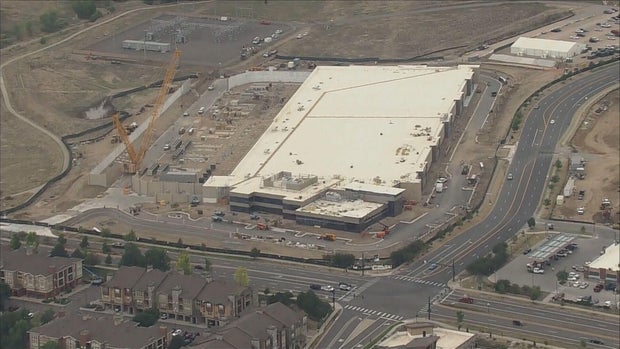
That data center is set to open next year.
Across Colorado, community members have been saying no to data centers.
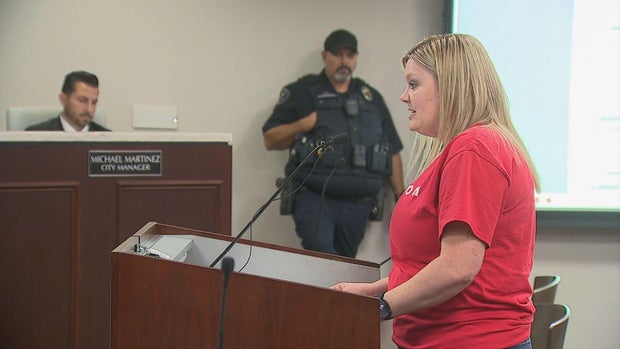
"A lot of people feel very blindsided about the data centers popping up, and so they don't feel heard, which I understand, and I understand their disappointment," one Douglas County resident said in a recent meeting.
"We needed this moratorium, and you all failed us, and you failed yourselves," an Aurora resident said in another meeting.
Residents have shared worries about water, electricity, noise and pollution.
"I'm scared for the water, scared for the pollution, scared for my air, my quality of life. The noise that this data center might create- that's why I'm so disappointed in this," one Colorado resident recently said.

But one CEO in the rapidly growing industry says data centers are a necessity in modern life. Flexential's CEO and a public policy expert weighed in on the heated debate surrounding them.
"Your connected life can't happen without a data center," said Ryan Mallory, CEO of Flexential. "All of the social media apps that you're using run through our sites, as well as a lot of the streaming services that everybody's using at home."
Headquartered in Denver, Flexential has data centers across the country. Its fifth Colorado center is in development in Parker.
"This is an industrial shell that has power and cooling that customers can then put their own IT infrastructure into," Mallory said.
While Mallory says AI-focused customers only make up 11% of Flexential's centers, he says AI data centers are fueling the U.S.'s economic growth right now.
"The GDP in the United States is growing about 3%, 3.5%. That's fueled primarily by AI infrastructure data centers," Mallory said.
But with communities mobilizing against them, how should local leaders respond?
"It's a lot of hard and fast feelings," said Billy Wynn, the lead author of a recent report on data centers, prepared by the Romer Institute of Evidence-Based Policy for the city of Colorado Springs.
"It's a very nascent and kind of burgeoning issue," Wynne said.
The report recommends municipalities handle data center applications with transparency, invite the public to participate and develop standard rules and processes.
"Do it in a transparent way, develop policies that are broadly applicable, not case by case, ad hoc negotiations. Give the public a bona fide opportunity to express their interests, concerns, questions," Wynne said. "[We] really want to be treating different facilities as similarly as much as possible."
It also recommends clarifying evidence-based standards around water and energy use.
Mallory says Flexential uses an efficient closed-loop system rather than evaporative cooling.
"Our site in Parker will use the same amount of water as about six homes," Mallory said.
He says data centers bring tax revenue that can be beneficial for communities.
Wynne says there are a lot of unknowns in the rapidly changing space, and evidence should guide communities weighing data centers.
"Let's do our best to look at the facts, and then have a more informed debate about it," Wynne said.
Flexential's CEO also spoke on the impact of the recent election on data center buildout after the stock market plummeted following the midterms. While Mallory attributes that to standard volatility, he does think that Democratic lawmakers could slow data center permitting and buildout.
"At the end of the day, the people that lose out isn't going to be Flexential. It's going to be the communities that we serve," Mallory said.