Death of a University of Colorado student prompts state lawmakers to take action

Joe Trussel and Vanessa Diaz went before Colorado state lawmakers and recalled their darkest day -- the day their daughter Megan Trussell disappeared from her dorm at the University of Colorado Boulder.
"We knew from that first moment that something was terribly wrong. She hadn't used her phone in three days. Yet nobody took us seriously," Trussel testified.
The 18 year old's body was found in Boulder Canyon.
"The students were not notified ever. There was no alert asking if anyone had seen her the night of Feb. 9. No request for people to check their cameras or share information," Diaz said.
The parents expected urgency. Instead, they say CU officials told them not to worry, that their daughter was probably couch surfing and she would turn up soon.
"Nobody could tell us what searches could our would be conducted or what thresholds could trigger broader notification," said Trussel.
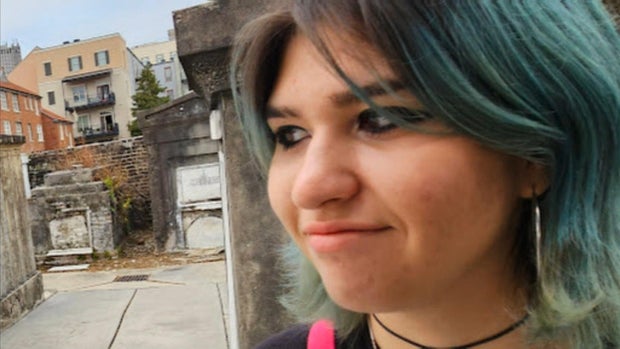
State Sen. Janice Marchman says police waited 48 hours to issue an alert for Megan and only after she got involved.
"When a family calls for help, there should be a system," Marchman said.
Marchman and state Sen. Katie Wallace introduced a bill that lays out a step-by-step, hour-by-hour protocol for what needs to happen when a student is reported missing at any public and private university or trade school in Colorado.
The measure gives the institutions six hours -- after receiving a report of a missing student -- to do an internal search that involves checking phone records and social media posts, going door to door in the student's dorm, and questioning faculty and emergency contacts.
After 6 hours, the institution must notify law enforcement which has 8 hours to enter the student's information in the state's criminal database. The bill also requires all law enforcement to be trained on the state's different missing person alerts.
"When someone goes missing, timing is everything," said Wallace.
CU's Vice Chancellor for Student Life, D'andra Mull, says 6 hours is too little time. She wants 24 hours before the university must notify police.
"Knowing that most students don't get back to us within 6 hours based upon their own cadence -- they're exploring campus, they're new to the environment, they've turned off their phones ... We would like to have time to work and make sure that in fact we can expedite this for those students who really would be in danger," Mull said.
Mull says last year alone the university conducted 318 formal welfare checks and more than 500 informal checks on students.
Marchman and Wallace amended the bill to provide immunity for institutions that can document they made a good faith effort to follow the law but, they say waiting 24 hours to notify police is too long.
Megan Trussel's parents agree. They hope the bill will spare other families their pain.
"We cannot change Megan's first 72 hours," Diaz says. "But we can make sure the next family sees urgency, coordination and a clear process from the beginning."