Next lunar terrain vehicle, being developed by a Colorado company, is "kind of like Ford, Caterpillar and Tesla mixed together"

A Colorado-based space technology company has secured a major NASA contract that could play a key role in future missions to the moon.
Lunar Outpost, headquartered in Golden, was awarded a $220 million contract to build a lunar terrain vehicle that will transport astronauts across the moon's surface, potentially as early as 2028.
The company's Pegasus rover is designed as part of a broader effort to establish a more permanent human presence on the moon.
For CEO Justin Cyrus, the project represents a lifelong ambition.
"I've had the domain name lunaroutpost.com since I was about 5 years old," Cyrus said. "I've been working toward this my whole life. This is a dream come true."
NASA informed the company of the contract award last month, sparking an immediate celebration inside its offices.
"They called to tell us we got the contract," Cyrus said. "I muted the phone, and we started celebrating. Then I unmuted and tried to play it cool and just thanked them. We couldn't be more honored."
The upcoming mission builds on the company's previous work. Last year, Lunar Outpost's MAPP rover survived a hard landing on the moon during an Intuitive Machines mission.
Cyrus said that rover -- about the size of a small dog -- reflected the limitations of earlier lunar landers.
"That was the maximum size we could put on those early landers," he said. "Now we're moving to Pegasus and the lunar terrain vehicle, which is about the size of a car."
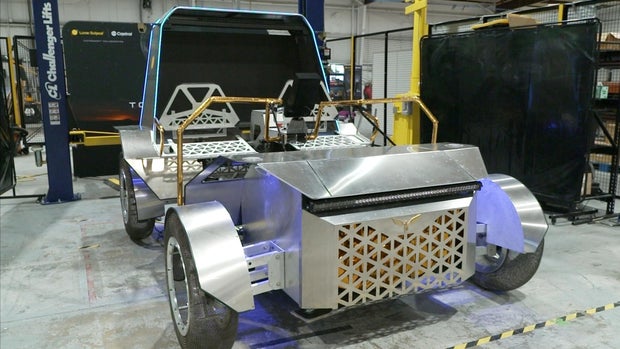
The Pegasus vehicle is designed to carry astronauts while also supporting construction of larger infrastructure on the moon.
"It's kind of like Ford, Caterpillar and Tesla all mixed together," Cyrus said. "It's not only driving astronauts around, but also helping build large-scale infrastructure, and we're doing that with teleoperation and autonomy."
Much of the vehicle's testing has taken place in Colorado, where engineers have worked to replicate harsh lunar terrain.
"We've built berms, dug craters and created slopes of about 20 degrees," Cyrus said.
Once deployed, Pegasus will be monitored from Earth, with teams in Colorado guiding operations in real time.
"We're going to be able to livestream from the moon, which is a historic first," Cyrus said.
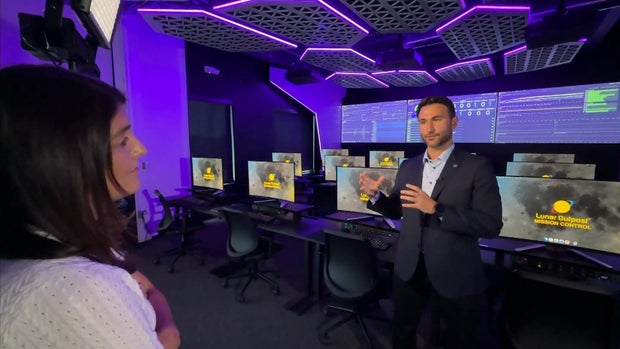
Inside mission control, the setup may look more like a gaming environment than a traditional aerospace operation.
"It almost feels like a video game sometimes," he said.
Engineers rely on high-performance displays to monitor terrain and ensure both safety and durability.
"It's important not just for astronaut safety but also for the longevity of the vehicle," Cyrus said. "You can see bumps, rocks and craters before you reach them, and the rover also has autonomous hazard detection."
Despite the significance of the contract, Cyrus said the work represents only the early stages of a much larger vision.
"The next 10 years are going to be quite exciting," he said. "We're going from having no infrastructure and no astronauts on the moon to potentially having an outpost within five years -- and even a small city by 2035."
He said Lunar Outpost's role will focus on developing the mobility and robotics needed to help make that vision possible.


