Class action lawsuit filed in Colorado alleges Epic and Ikon pass price structures violate antitrust laws
A federal class action lawsuit filed in Colorado this week says that the price structures of the two most popular ski passes artificially inflate prices, suppress competition, and violate state and federal antitrust laws.
The plaintiffs in the case, Landin Goloja, Tyler Maybee, Caitlan Reynolds, Daniel Sheiner, and "all others similarly situated," are suing Vail Resorts, Inc. — which sells the Epic Pass, granting access to Vail, Beaver Creek, Breckenridge, Keystone, Park City, Whistler, and more — and Alterra Mountain Company — which sells the Ikon Pass, which grants access to Aspen, Snowmass, Steamboat, Winter Park, Arapahoe Basin, Eldora, Jackson Hole, Banff, and more.
"For years, skiers have been told that soaring lift‑ticket prices, reduced choice, and overcrowding are simply the new reality," Greg Asciolla, chair of DiCello Levitt's antitrust and competition litigation practice, said in a statement. "Our complaint alleges that these outcomes are not the result of healthy competition, but of exclusionary conduct by two companies that dominate access to the most desirable destinations."
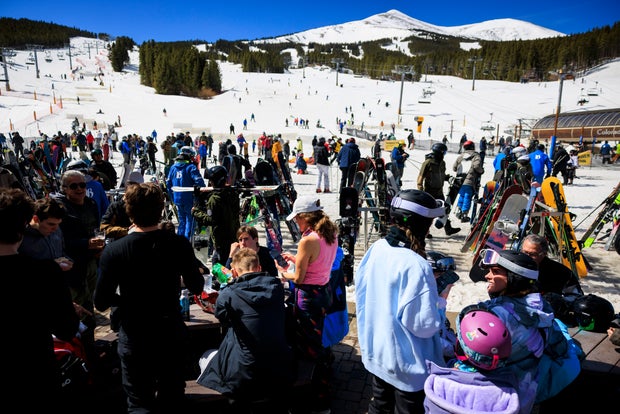
The plaintiffs argue that the Ikon and Epic passes constitute an "anticompetitive bundle," which results in "increased costs for lift access," "diminution of competition," "reduction of consumer choice," and "decreased quality of skiing," and violate both the Sherman Antitrust Act of 1890 and the Colorado Antitrust Act of 2023.
The Sherman Act refers to federal antitrust legislation aimed at preventing monopoly control. It has been cited in lawsuits and legislative efforts related to big tech, Ticketmaster, food corporations, hotel chains, rental properties, the home-buying industry, and other companies and industries.
According to the 74-page complaint, Vail owns and/or operates 42 ski areas, and contracts with several others to offer access to around 30 more resorts. And Alterra owns and/or operates 18 ski areas, and it contracts to provide access to around 70 more. Both companies own, operate, and/or contract with resorts around the world, including in Europe, Asia, and Australia.

The companies' ski pass pricing structures incentivize independent ski resorts and areas to join their network while threatening their ability to survive in the marketplace, while incentivizing skiers to purchase their yearly passes and "Mega Passes" to maximize their access to covered resorts, making skiing for a single day prohibitively expensive for most people, the lawsuit alleges.
"Vail Resorts and Alterra and their respective Mega Passes have fundamentally changed skiing and snowboarding in North America, to the detriment of Plaintiffs and members of the Class. In short, Defendants' schemes have made snow sports prohibitively expensive," the complaint reads, in part.
Season passes were the main source of access to resorts by skiers and riders in the 2024 to 2025 season, according to the National Ski Areas Association. Season pass holders comprised 49% of visits in the U.S., while day lift tickets made up 32% of visits. The rest were "frequency products," off-duty resort employees, complimentary tickets, or other categories of passes.
If the prices of day passes kept up with inflation, they would cost around $115 today, the plaintiffs argue. A sample of lift ticket prices in the complaint, however, shows a price tag of $356 for Vail Mountain and Beaver Creek, $321 for Breckenridge, $339 for Steamboat, and $279 for Winter Park.
The Epic Pass costs $1,089 for adults 31 and over, $869 for anyone between 13 and 30 years old, and $555 for children aged 5 to 12, according to its website.
The Ikon Pass starts at $1,399 for access to every mountain for adults 23 and older, with the "Base Pass" starting at $949 for access to "most" of the locations and "limited" blackout dates, and then a session pass, which is good for two, three, or four days total at "select" locations with blackout dates.
The plaintiffs say the price of the passes has gone up by about 40% since 2019.
Both companies offer discounts for things like bundle deals, friend or family referrals, students, military, and nurses, for example. And Vail Resorts announced a special discount for younger skiers and snowboarders, "especially Gen Z," Vail Resorts CEO Rob Katz said.
A spokesperson for Alterra said the company doesn't comment on active litigation. A spokesperson for Vail refuted the claims of the lawsuit, saying, "we believe these claims are without merit."
"We launched the Epic Pass in 2008 to make skiing and riding more accessible, reducing the price of a season pass by 60%," the statement continued. "We're proud that 18 years later, it's still one of the best values in the industry, especially following our further 20% price reduction in 2021."
Vail said that the Epic Pass has brought the price of skiing down, saying that the price of the pass today, which offers access to dozens of resorts and ski areas, is about 40% cheaper in 2026 than a pass to only Vail and Beaver Creek was in 2008, before the creation of the pass. The company also noted that as it acquired smaller resorts, it started offering cheaper passes for people who wanted to ski at resorts close to where they live, which the company said the lawsuit ignores.
"We will always give the best value to our pass holders who commit ahead of the season -- but that said, we have also been intentional to price our lift tickets, sold in season, on a resort-by-resort basis, including numerous new discount opportunities this past season," the company's spokesperson said.
It wasn't clear from court records on Wednesday when the companies would be required to respond to the allegations in court, but the plaintiffs want a jury trial in the case and want the existing price structures to be declared illegal.


