Colorado family prepares as funding to Pediatric Brain Tumor Consortium comes to an end

In a few days federal funding will be ending for pediatric brain tumor research, and doctors and families are wrapping up clinical trials and trying to transition the lifesaving work elsewhere.
Children's Hospital Colorado is a member of the Pediatric Brain Tumor Consortium, North America's oldest pediatric cancer research network. The alliance of 15 hospitals and research centers has helped develop new treatments and save children's lives. Last year it was decided that federal funding for the consortium would expire by March 2026.
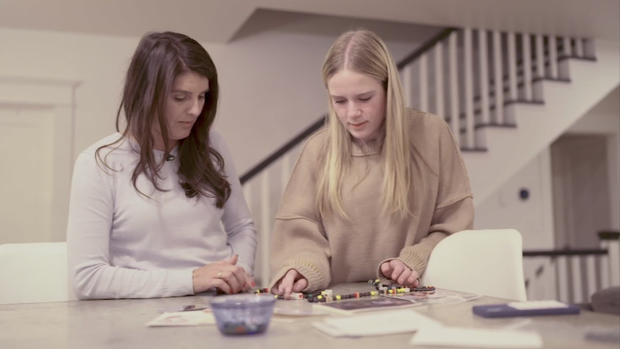
The PBTC has helped children like Marin Nemeth from Colorado, who has a very rare brain tumor. Her father Jeremy Nemeth says coping with the news that federal funding will be ending has been hard.
What it's like when a dad learns his daughter has a brain tumor
In those first moments, there is no road map.
"She came out with blonde hair and this golden skin. She looks like her mom," Nemeth said.
You don't steer; you just stay close.
"I've got you. I will protect you. I will throw myself in front of a car, whatever it takes," Nemeth said.
He knew early on that life would be different with his daughter, Marin.
"I wasn't supposed to get emotional. But they came into the room, and they said, 'I'm so sorry, but your daughter has a very large mass on her brain.' And I just remember the feeling I had, like the wind was knocked out of me. I just kept saying, no, no, no, this can't be. I wanted to believe it was a dream," he said.
At just 5 years old, before starting kindergarten in 2016, Marin underwent surgery to remove a massive brain tumor.
"I don't remember anything from being 5, but I know how much it affected my parents. I have this thing that no one else can relate to, and I think that's cool because I can share my story," Marin said.
Years passed with no sign of the tumor's regrowth, but then things changed.
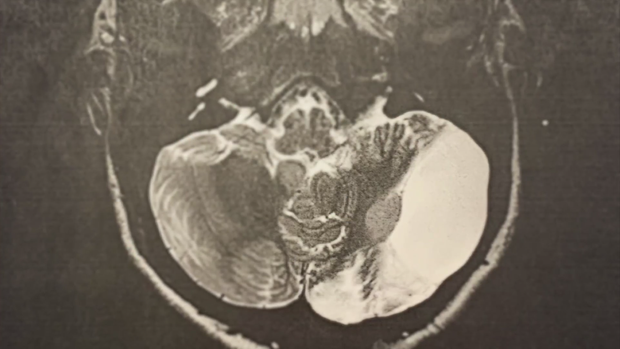
"Every scan it showed up, it was doubling in size and doubling in size," Nemeth said.
Marin's tumor came back in 2024, requiring a second brain surgery.
"The tumor -- if it grew back once, it could grow back again. This is something that she'll have to live with for the rest of her life. And just knowing that you sort of lose this control or this power to help your child - it's the worst feeling in the world," Nemeth said.
Children's Hospital Colorado doctor shares families' concerns
"Pediatric brain tumors are the second most common malignancy among children with cancer. They are the most deadly of childhood cancers," said Dr. Lia Gore, head of pediatric oncology at Children's Hospital Colorado.
Gore says the ending of the federal funds "feels like it is a direct insult to those who have invested their lives in doing this."
The PBTC operates on about $4 million a year.
"I think any family sitting in a hospital room anywhere around the country right now can't imagine the cruelty with which this adds insult to the injury their family is already facing. 'What does this mean for my child? We thought it was bad enough already. Now you're telling me it's worse because the government doesn't care,' which is a sentiment we hear a lot," Gore said.
That funding is being transitioned into a larger group called the Pediatric Early Phase Clinical Trials Network, or PEP CTN. The National Institutes of Health says this is not a cost cutting measure and that pediatric brain tumor research remains a high priority.
"(People wonder) 'How could you do this?' I don't think any of us has a good notion around that. I also don't balance the federal budget," Gore said.
Nemeth said he was "horrified" when he learned the PBTC was losing its funding.
"I was devastated. And more than anything, I was angry," he said. "The PBTC was always this sort of glimmer of hope, this last resort if she ever had to get on a clinical trial for an experimental drug."
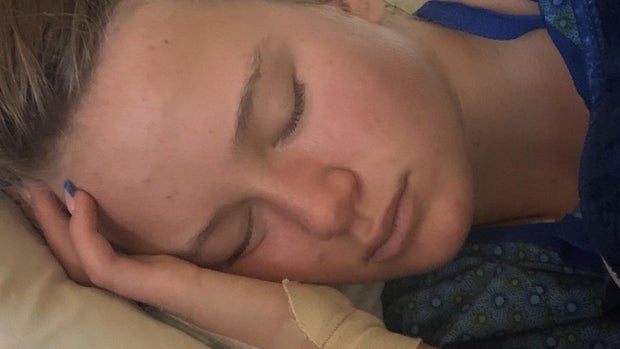
When pediatric brain tumors return, not every child survives. Marin is one of the lucky ones.
"What I really want -- and this is pretty dark -- is for the people who took away this funding to look a kid like Marin in the eyes. Marin has beautiful blue eyes, and I want them to tell her it is more important for them to find this waste of $4 million than to possibly allow her to live a full life. To live a life where she graduates from high school, where she might drive a car for the first time, maybe go on a date, have a partner, have kids of her own. The lives we've lived, the lives they've lived. And I don't think they'd be brave enough to do that," he said.


