Former Denver Broncos players react to new blood test to detect CTE in the living
A groundbreaking new study could be a game-changer for anyone who has played football or a contact-heavy sport. For the first time, a blood test could detect chronic traumatic encephalopathy, or CTE, in living people.
Researchers estimate nearly 75% of former NFL players who died between 2008 and 2013 had CTE.
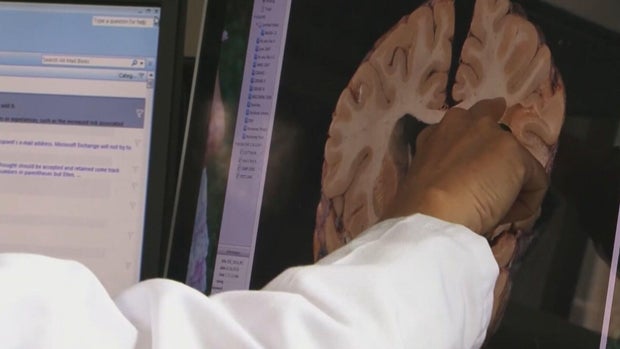
While this blood test research is still in its early phases, two different CTE studies published by researchers in Boston and St. Louis found the same biomarker that can help detect the disease.
It's a breakthrough that could bring some peace of mind to the players fans grew up watching.
"(It) seems like a death sentence," said former Denver Broncos player Nate Jackson. "It seems like we're counting down the days until we lose it all."
CTE causes severe cognitive decline. In many cases, players can sense that something is wrong.
"This is a postmortem thing. You can't discover it until you die," Jackson said. "Some guys were having such severe cognitive symptoms that they decided to commit suicide by shooting themselves in the chest to preserve their brain to be studied. That's because they thought they had a brain disease that could not be detected."
Until now, players have had to wait.

"We all know it's in our future anyway, you know. But how soon? Nobody knows," said former Broncos player Ron Egloff.
Right now, researchers can only diagnose CTE by performing an autopsy on the brain after death.
"You get a hold of me today and said, you know, they've come up with this deal where they can find it in your blood test in current players or while you're still living," Egloff said. "And I thought, 'Wow, well, this opens up a whole can of worms now.'"
The new blood test looks for an elevated level of a very specific kind of tau protein - a biomarker that builds up with repeated head trauma.
"I think when Junior Seau died, it made all of us take a step back and really assess our own brain health, but it didn't give us any answers," Jackson said.
While a blood test can't answer every question, determining whether a player has CTE while living could have far-reaching effects.
"As soon as I get the word, I'm going down and getting tested, for sure," Egloff said.
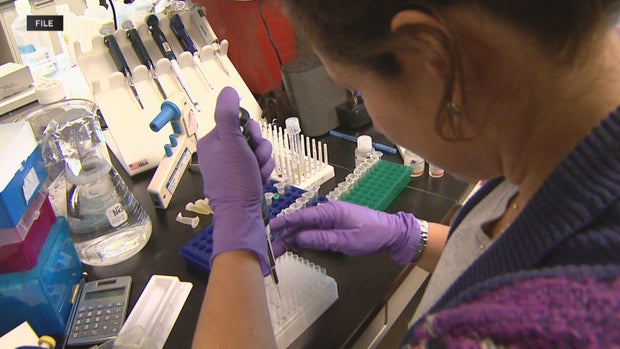
Egloff has already participated in other CTE studies across the country. He said he now plans to call the Boston labs to learn more about the test.