Forest management projects showcased as Colorado officials assess wildfire mitigation efforts

Colorado officials, lawmakers and forestry experts toured several forest management projects in Jefferson and Clear Creek counties this week to examine ongoing wildfire mitigation efforts, highlight successful treatments and discuss the challenges that remain.
The tour began at Lookout Mountain, where participants viewed a completed forest treatment project that demonstrates how proactive management can reduce wildfire risk. The work included thinning trees, removing hazardous fuels and restoring forest health.
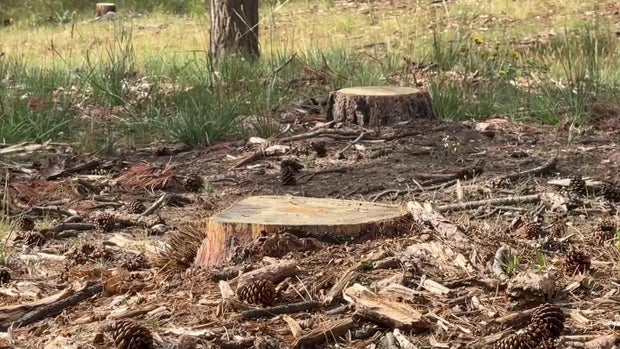
"Wildfire, like I mentioned, there unfortunately will be one here someday," officials told the group during the tour. "When that fire comes through, we will have trees remaining."
For Conifer resident Terry Haury, the benefits of mitigation efforts became clear during a wildfire near his neighborhood.
"It totally erupted. We probably had 10 to 15 trees on fire, pretty significant. It was growing rapidly," Haury said.
Years before the fire, residents had completed mitigation work that removed about 60% of the trees in the area. At the time, some homeowners questioned whether the work was necessary.
"It wasn't easy. From 2015 to last year, there were still homeowners who wondered, 'Was that really necessary?'" Haury said. "There was always that question. But then when we actually had the fire..."
He said the wildfire provided a clear answer.
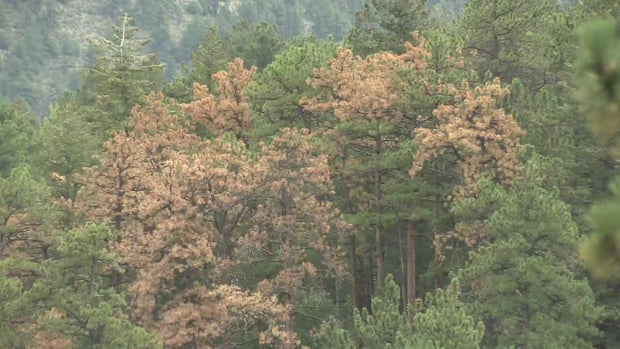
Tony Auciello, natural resources supervisor with Jefferson County Parks and Open Space, said forest treatment projects provide benefits beyond wildfire protection.
"Our forests are very, very sick," Auciello said.
He said removing some trees helps improve overall forest health and increases resilience to changing conditions.
"All of these stumps I'm standing by were trees that were all competing with these remaining trees for water and sunlight," Auciello said.
At Mount Vernon, discussions focused on the partnerships required to complete large-scale mitigation projects, including coordination among government agencies, landowners, contractors, and funding partners.
Kelby Woodard, forest and mitigation program manager for Jefferson County, said protecting forests also helps safeguard water resources.
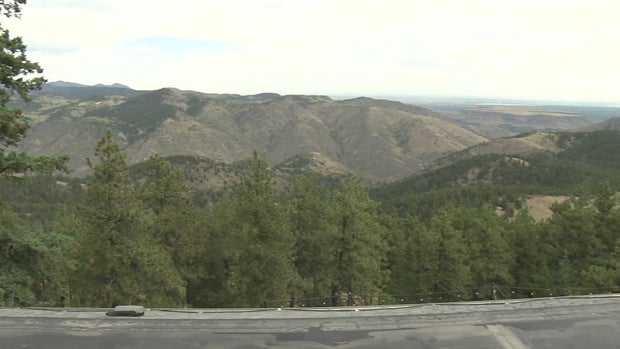
"If a fire were to burn up here, we would experience post-fire effects like debris flows, sedimentation, ash and runoff into Clear Creek," Woodard said. "Again, the main drinking water source for the city of Golden and downstream users."
The last stop for officials was a visit to Rainbow Hill, where they examined the scale of work still needed across the region. More than 3,200 acres involving 120 private landowners are seeking forest treatment, highlighting the time, resources and cooperation required to complete future projects.


