Farm Bill expires as Colorado families navigate SNAP changes

A major piece of legislation that sets policies for agriculture, conservation, and food assistance in America has expired. The clock ran out on the 2018 Farm Bill Wednesday. While the U.S. House of Representatives passed a new Farm Bill this year, it doesn't have approval from the U.S. Senate.
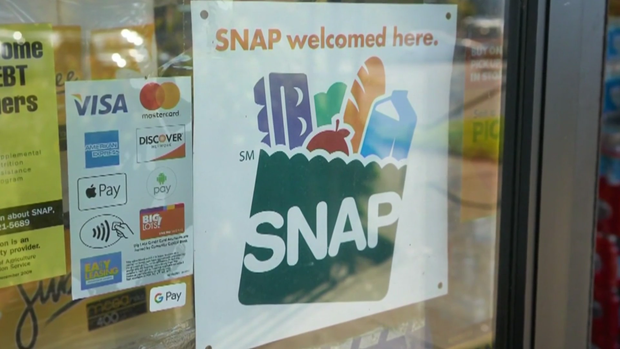
Colorado families who rely on the Supplemental Nutrition Assistance Program, funded through the Farm Bill, are now left uncertain.
The Farm Bill expiring doesn't create an immediate problem for Colorado SNAP recipients because Congress has already funded SNAP through Dec. 11. But lawmakers will need to extend funding somehow before then to avoid a freeze or shutdown.
While no one is losing SNAP benefits Thursday, and there are no new changes to SNAP eligibility, what is changing is where the money to run the program is coming from.
Colorado will now be responsible for the majority of administrative costs.
But many Coloradans are still grappling with the changes made to SNAP in the Big Beautiful Bill.
"They are in that position of stress. They don't understand why they haven't done anything different, and now they have lost it," said Yurima Crowley, volunteer coordinator at Village Exchange Center, a nonprofit serving the community in Aurora.
The state says 50,000 Coloradans have lost SNAP benefits as a result of changes to work and immigration status requirements.
"Some immigrant families have lost their benefits, and they don't have SNAP anymore. So we have had to help them, support them while they go through that," Crowley said.
Food banks are filling the gap.
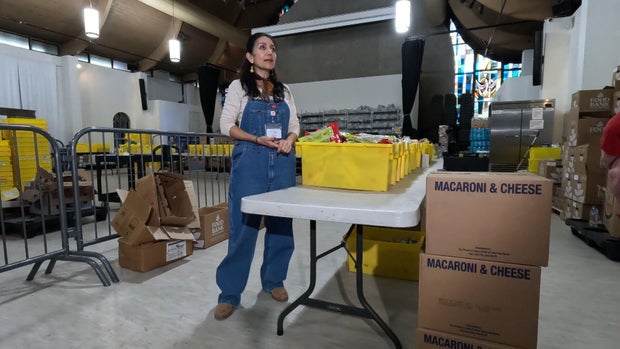
The Village Exchange Center in Aurora says need has more than doubled, forcing them to open a second day each week.
"Both days are always very busy, very crowded," Crowley said.
Behind the scenes, Colorado is also taking on more. Starting Thursday, states must pay 75% of SNAP's administrative costs.
For Colorado, that's nearly $37 million in the first year and nearly $47 million in future years.
"Through the General Assembly and the voters, we are able to backfill 100% of those administrative costs to make sure that we can keep the program functioning at the current level," said Abby McClelland, director of food and energy assistance for the Colorado Department of Human Services.
And in one year, states with SNAP error rates of more than 10% will have to pay 15% of SNAP benefits in their state.
"The error rate is not a measure of fraud, so this doesn't indicate that people in the state are using the program incorrectly. We think it's a symptom of that it's a very complicated program with very complicated rules," McClelland said.
Colorado's 2025 error rate was 10.09%.
McClelland says Colorado is piloting new technology to help fix errors and expects the error rate to drop below 10% this year.
"We're really dedicated to working on our payment error rate, partly because of the federal penalties associated with it, but also because we'd like to get every Coloradan who receives SNAP the correct benefit amount," McClelland said.
"When they see their benefits are reduced or canceled, they don't know where to go. It's a lot of fear. Am I going to lose it if I have it?" Crowley said.
Crowley says navigating the system is another roadblock.
"They have to go in a loop, and nobody answers, and nobody solves their problem, and it's very frustrating. It's very tough for them to navigate the system and get their problem solved," Crowley said.
With lawmakers yet to agree on the program's future, uncertainty and changing rules may force more Coloradans to turn to food pantries like this.
"We always have our doors open to everybody. Here is a safe place where they can come and get their food for their families," Crowley said.
The state wants to reiterate that SNAP benefits are not going anywhere in Colorado.
"I think there's a lot of confusion around the program right now, and what we want to assure people is that we're still here for people in times of need, and we encourage people to reach out and get the benefits they're entitled to," McClelland said.
She urges those curious about benefits to reach out to their county's SNAP administration office to help determine eligibility or navigate challenges in getting those benefits.


