Energy mandates are the latest flashpoint in the debate over affordable housing in Colorado

Over the last 10 years, Colorado has become one of the most energy efficient states in the country, and one of the most unaffordable as the cost of housing has soared.
Roger Lovell, Building Official at the Pikes Peak Regional Building Department, says it's no coincidence.
"The big driver from an affordability standpoint is the cost of compliance with the latest energy codes," Lovell said.
Lovell says Colorado's energy mandates have gone too far.
"Now when you're designing the home, you have to bring on an energy consultant," he said.

There's no national energy code, so most states adopt standards developed by the International Code Council. It assigns a point value for energy efficiency to everything from water heaters to kitchen appliances and Lovell says builders are required to accrue a certain number of points.
"An electric water heater gets you 4 points. A heat recovery system? That would get you 3 points," he said.
He says the points change depending on your climate zone among other factors.
"It's so complex."
Lovell says Colorado made it more complex with amendments to the latest international code that he says penalize the use of natural gas and add thousands of dollars to the cost of construction without any added efficiency. He points to requirements for roofs that can support solar panels which may never be installed and wiring for electric appliances and EV chargers that may never get used.
"If you choose a gas cooktop, you have to put in electrical service to the gas cooktop. Same for a gas water heater, same for a gas furnace," he said.
But Will Toor, Executive Director of the Colorado Energy Office, insists the state's new code saves energy and money.
"We agree with that and have tried to develop a code that works for both gas and for all electric homes," Toor said.
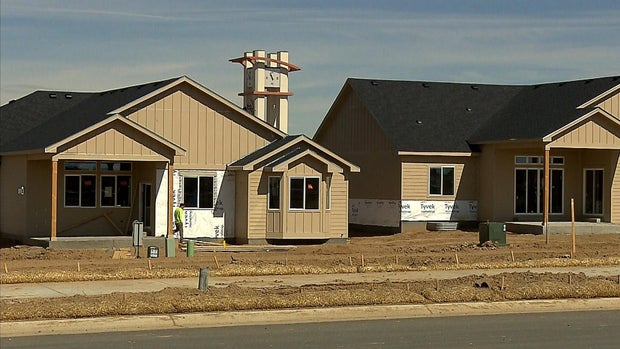
Toor says not only is it cheaper to build an electric and solar ready house at the outset than it is to retrofit it, he says, any increased construction costs are offset by lower energy bills.
"We see the state energy codes as very much a win for consumers, a win for healthy homes and a win for the environment," he said.
Rep. Jeff Crank, a Republican who represents Colorado's 5th Congressional District, says if the state wants more efficient homes, it should pay for them. He has introduced a bill titled the Freeing Residential Affordable Markets from Excess Regulation, or FRAMER Act. It requires states to reimburse builders for the added cost of state-specific energy mandates when construction happens on properties designated as federal opportunity zones.
"Homeownership is such an important part of the American Dream and we're literally taking it away from so many people right now because government is making bad decisions and trying to make the decision for the individual," Crank said. "And I think this bill is one way to allow the individual to take that back."
Toor says the bill will make homes less accessible.
"At a time when rising utility bills are a big affordability concern, taking action to increase the energy use and energy costs of new housing is a step in the wrong direction," Toor said.
Lovell says energy efficiency is important, but it needs to be balanced with affordability.
"A home may be energy efficient but if you can't get in the front door then energy efficiency doesn't matter," he said.
Under Crank's bill, the Department of Housing would determine the cost of state-specific regulations and states would reimburse builders for the cost. Builders would have to disclose the savings which Crank hopes they pass on to homeowners. But his bill doesn't require it. They could just pocket the money.
A new international code is set to take effect the end of the year but, the National Association of Home Builders has sued to stop it. New York and California have recently rolled back environmental regulations for builders, but Colorado is rolling out its new energy mandates in July.