One in three Denver adults report skipping meals amid rising food costs, community organizations work to help

A survey out of Denver found that one in three adults say they've skipped meals or cut back on food because they simply can't afford enough to eat. Now, city leaders and community organizations are working to help families and seniors fill the gap.
Every second Tuesday of the month, 72-year-old military veteran Christine Martin waits outside the Twin Parishes Food Bank in Denver's Cole Neighborhood for a food distribution.
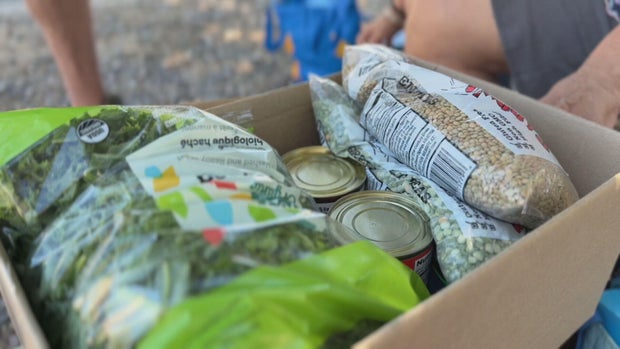
"We get a commodity box from the Rocky Mountain Food Bank, and so I come here twice," said Martin.
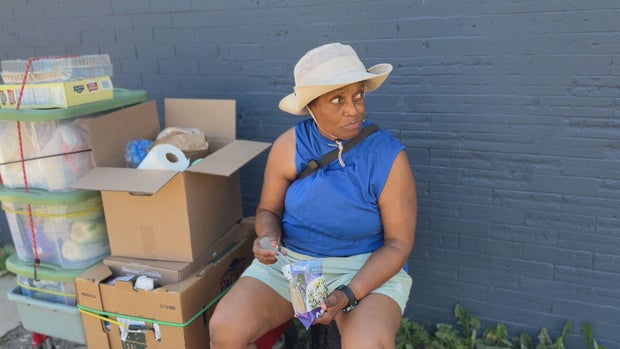
Martin is one of thousands of older Coloradans who rely on food banks to help stretch their budgets.
"Being a veteran and in Section 8 housing, this fills in places where I can't buy food because it is too expensive," said Martin.
Her story reflects a growing problem across the city. According to Denver's latest Food Insecurity Survey, 35% of adults say they've cut back on or skipped meals because they couldn't afford food, which is nearly double the rate reported in the 2024 survey.
Those on the front lines say they're seeing demand climb once again.
"It did calm down a little bit at the start of 2026, but we're back to seeing our peak, now around 900 to 1,000 boxes distributed per month, and that's about where we're at right now," said Kevin Holwerda-Hommes, director of the Twin Parishes Food Bank.
The survey also found that nearly half of those cutting or skipping meals say it happens every month. Community leaders say when people can't afford groceries, they're often forced to choose between food and other necessities like rent, utilities, or transportation.
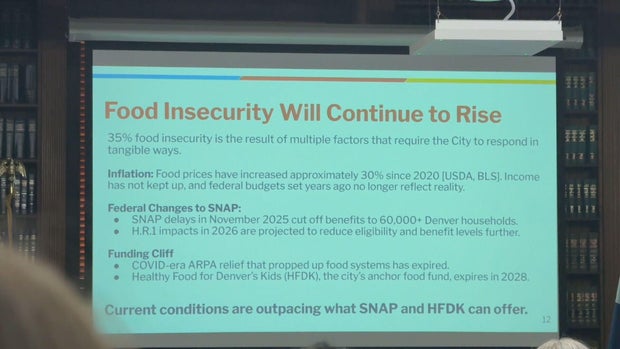
Holwerda-Hommes says inflation, combined with reduced SNAP benefits, has made the situation even more difficult.
"We ask if people are receiving benefits and if they get SNAP because we have to put that in our database. Often, they'll say, 'Yeah, but I get $9 or $16.' So, you might be getting SNAP, but it doesn't get you very far," said Holwerda-Hommes.
Federal changes to SNAP have affected tens of thousands of Coloradans by reducing eligibility and benefit levels. Advocates also worry about the future of local food assistance programs.
Denver's Healthy Food for Denver Kids Fund, a 0.08% sales tax that supports food access for children, is set to expire in 2028. District 3 Councilwoman Jamie Torres hopes to ask voters to renew the measure next year while expanding the program to include other vulnerable groups, including seniors.
Voters approved this in 2018; ideally, it's designed to provide kids with food.
"That does not allow for funding for seniors, for other vulnerable communities, so we are looking in the next phase of this fund for voters to be able to consider and make sure elders get healthy food and access throughout our city," said Councilwoman Torres.
For Martin, programs like these provide more than food; they provide flexibility.
"It's important to me because where I don't put my money into food, I can put it into things that need to be repaired, clothing, shoes, things that I need," she said.


