A once-thriving Black settlement on Colorado's plains prepares to welcome visitors again
Out on Colorado's Eastern Plains, a piece of Black history is getting a second life.
As part of a yearlong look at 150 years of Colorado statehood, CBS Colorado is working with Colorado Preservation, Inc. to raise awareness and funds to preserve the state's historic treasures. Dearfield is a once-thriving Black agricultural settlement in Weld County.
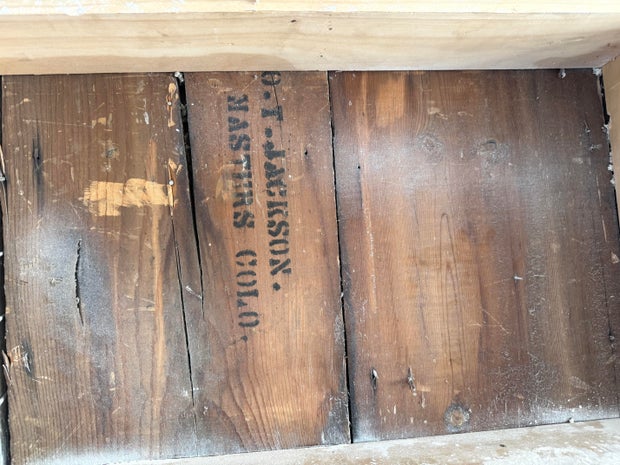
The name O.T. Jackson is still stamped into pinewood at the site, part of the original structure of the businessman's filling station, which opened more than a century ago. The building has been preserved and will soon reopen to educate visitors.
"There will be exhibits, there will be interpretation of the site," said Bob Brunswig, chair of the Dearfield Preservation Committee.
"This was a highly successful agricultural community," said George Junne, a University of Northern Colorado professor of Africana Studies. "A lot of people had no idea that this even existed, and this is one of a dozen Black communities that got started here in Colorado."
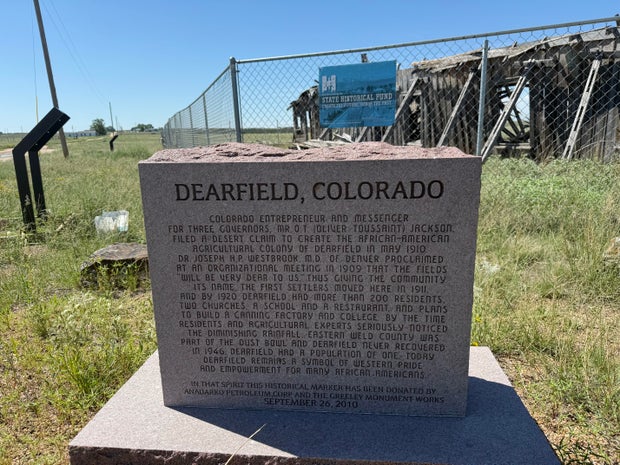
Jackson chose the stretch of Weld County and invited other African American families to homestead there, offering a path to build something of their own.
"You can use it to grow crops on. You can rent it out. You can put it up for loans," Junne said. "So land ownership was extremely important to people, and you can pass it down on to your children and grandchildren."
Timing initially worked in Dearfield's favor. Higher-than-normal rainfall in the early 1900s, followed by World War I, drove up demand and prices for farm goods. Dearfield thrived even as Denver's Ku Klux Klan chapter grew into one of the largest in the country.
"Out here at Dearfield, people are having the same dance on Saturday night, dancing on the same dance floor, loaning each other equipment, helping each other out," Junne said.
"This was an experiment that saw a lot of hope for the future for a lot of families, and it didn't last forever," Brunswig said. "It would be nice if it had."
By the early 1930s, drought turned the soil to dust, and Dearfield collapsed along with roughly 40 other small towns across the region.
"There wasn't enough moisture to be very successful at raising crops, and that was the end of Dearfield," Brunswig said.
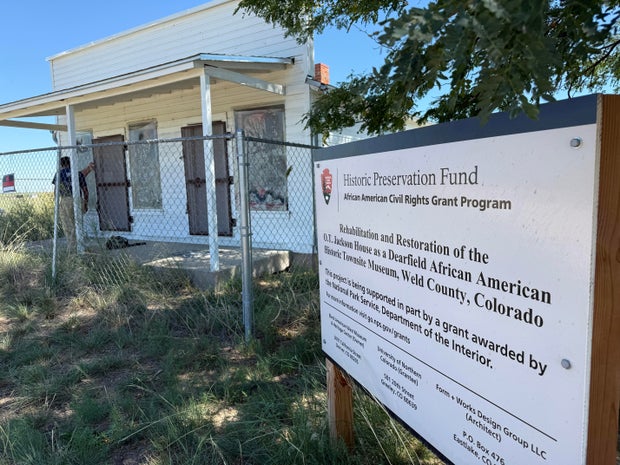
Only a couple of the original structures remain. Junne and Brunswig have spent years working to preserve the site, which is owned by the Black American West Museum.
"That was O.T. Jackson's office," Junne said. "So many times you'll see him sitting at a desk — photographs of him sitting at a desk — and that was in here."
Soon, visitors will be able to walk through Dearfield's history firsthand.
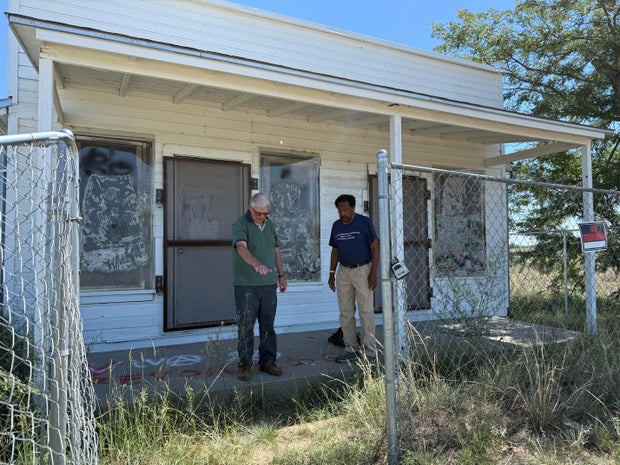
"It'll be an experience," Brunswig said. "You'll be able to walk through and look at what it looked like, with authentic objects around you."
For a community nearly lost to time, Coloradans are making sure Dearfield's story won't be.
"There's a lot of people who realize the importance of Dearfield," Junne said. The National Park Service has been evaluating Dearfield for potential inclusion in the National Park System.
Dearfield Day will take place on Saturday, Oct. 3. Volunteers will continue work to improve the site, and entertainers will celebrate the sounds and flavors of the community's heyday.
Donations can help raise awareness of, and preserve historic structures in communities across Colorado, such as Dearfield. More information is available at coloradopreservation.org.