Daylight saving time causes challenges for Coloradans diagnosed with Alzheimer's

About 5% of the Colorado population has either been diagnosed with Alzheimer's or is a caregiver for someone with the disease, and the time change is a challenge for all of them.
Saturday night and Sunday morning will be daylight saving time, and while for most of us that means an extra hour of sleep, for those affected by Alzheimer's disease it means much more.
"For people with Alzheimer's disease, it is that when it gets darker in the day, they become more disoriented," said Jim Herlihy with the Alzheimer's Association Southwest & Rocky Mountain Region.

He says it's thanks to a group of symptoms called sundowning that often occur in people with dementia. Those symptoms are trying for everyone involved.
"They can act out. You see it in their behavior; they can become agitated, disoriented, argumentative, over-energized," said Herlihy.
And he says more dark hours make it worse
"In the summer, if it's coming at 8:00, 9:00, you're getting close to bedtime anyway. When it happens at 4 p.m., 5 p.m., you might not have had the evening meal yet. There's still things that people are doing in the day," said Herlihy.
He says if you or your loved one does suffer from Alzheimer's-induced sundowning, there are things you can do to make life easier.
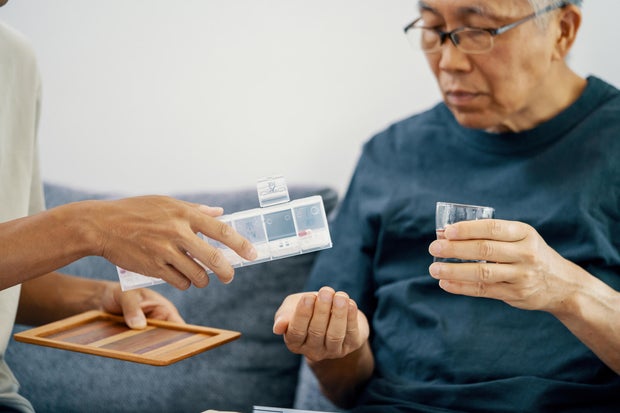
"A big part of it is shifting the activity of the day to the earlier part of the day. Keeping the house well-lit so that the change in the outside brightness is not as evident to those who are inside, and keeping activities a little bit less volatile, you know, a little bit less action. Don't watch action movies, don't play loud music, don't do certain things that are going to increase the energy level of the person with Alzheimer's," said Herlihy.
Caregivers or those diagnosed with Alzheimer's who are having a hard time can always call the Alzheimer's Association's helpline at 1-800-272-3900. It's free, staffed by trained professionals 24 hours a day, and can help talk you through your struggles.


