Could AI give Colorado more warning before damaging hailstorms?

Damaging hail can develop quickly inside severe thunderstorms, leaving homeowners, farmers and businesses with little time to prepare. Researchers at Colorado State University are working to improve hail forecasts using artificial intelligence, with the goal of giving people more time to protect their property and get to safety.
"Hail is a really big problem in Colorado," said Kristen Rasmussen, an associate professor at CSU. "It contributes from 25 to 55 percent of our homeowners insurance on a state basis, and our project is aimed at researching hail, how we can forecast hail and how we might better protect our communities from hail in the future." The CSU research team is combining two artificial intelligence models designed to forecast hail risk on different timescales.

One model, called Hail Storm Scope, uses radar data to forecast conditions up to two hours ahead. The other, the CSU Machine Learning Probabilities model, estimates the likelihood of severe storms and hail as far as eight days into the future.
Researchers are working to connect the two models and refine them with high-resolution weather data to make forecasts more specific to Colorado and the surrounding region.
The goal is to help forecasters better identify where hail could develop and provide more detailed information about the potential threat.
"The beauty of this model is we can look at combinations of environments that support hail. And it gives you a longer range prediction more than just the short term weather models." Rasmussen said.
Predicting hail remains challenging because thunderstorms can produce different types of weather hazards, and not every storm produces large or damaging hailstones. Researchers hope combining the models will help narrow the gap between forecasting a thunderstorm and identifying where damaging hail is most likely to fall.
More advance warning could help people make decisions before a storm arrives. Farmers could have more information about potential threats to crops, while businesses could have time to protect vehicles and solar panels. Event organizers could also use improved forecasts to move people to shelter before severe weather reaches outdoor venues.
The research could also have implications beyond day-to-day forecasting.
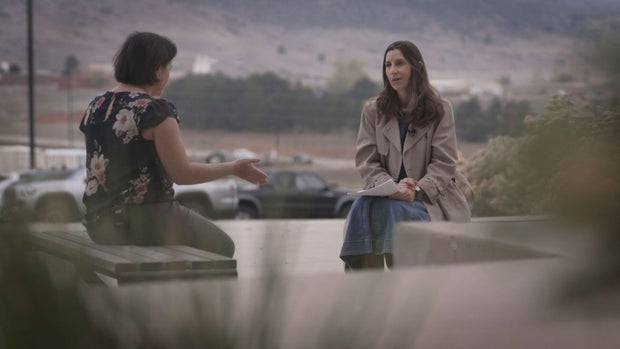
CSU researchers are examining how severe weather and hail risks could change as the climate warms. "Climatological hail in Colorado starts towards the end of March and goes through late August early September. We are seeing with our climate analysis the season for hail may shift to earlier in the spring to later in the fall," said Rasmussen.
Rasmussen said the team's climate analysis indicates severe weather could increase in parts of the region, particularly in heavily populated areas such as the Denver metro area, potentially increasing hail impacts.
That information could help inform long-term decisions about building codes and construction materials, including stronger roofing designed to withstand hail. Although artificial intelligence could provide another source of forecasting information, Rasmussen said human meteorologists remain essential to the process. "Human meteorologists are critical to the weather forecasting industry. The intuition they have, the experience they have in particular regions allows them to know what models to trust and which ones are doing well. AI models provide an additional layer of information to utilize, but ultimately the human forecasters are invaluable to our weather forecasting process" said Rasmussen.
The quality of the data used to train AI models is also critical to their performance, Rasmussen said. The CSU team is working to refine the models and determine how well their predictions match actual hail observations.
Researchers plan to conduct field experiments in the spring, using radar and additional instruments to verify whether the models accurately predict where hail reaches the ground.
The team hopes to deploy improved forecasting tools later next year. The ultimate goal is to give forecasters more detailed, locally relevant hail-risk information, helping Colorado communities better prepare for damaging storms.


