Colorado team uses sonar, underwater drone to recover drowning victims and evidence

A Colorado water recovery team is preparing for what they worry could be a busy summer season.
CBS Colorado tagged along with Colorado Parks and Wildlife's Marine Evidence Recovery Team for a training demonstration on Chatfield Reservoir, covering how the team recovers drowning victims and evidence.
From above, it's not possible to clearly see what's underwater. But a special drone equipped with sonar and a camera gives responders eyes below the surface.
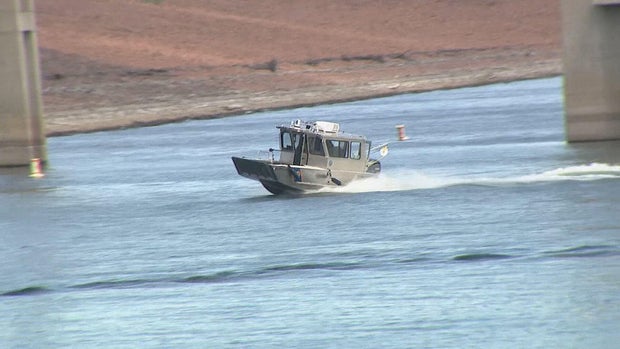
CPW's Grant Brown, Michael Haskins and Brian Phillips oversee boating safety in Colorado.
"Collectively, we're the boating safety program statewide," said Brown, Colorado Boating Safety Program manager.
They serve on the Marine Evidence Recovery Team (MERT), with 14 members based across the state who are ready to respond to tragedies on the water anywhere in Colorado within 24 hours. But they're not the rescuers. They're there to recover bodies, boats and other evidence.
"If someone has drowned in a lake, and we are requested, we will go out to assist with recovering that drowning victim. We can also just find any underwater evidence, so if a boat sinks, or if we're looking for something that is underwater that needs to be either detected or recovered," Brown said.
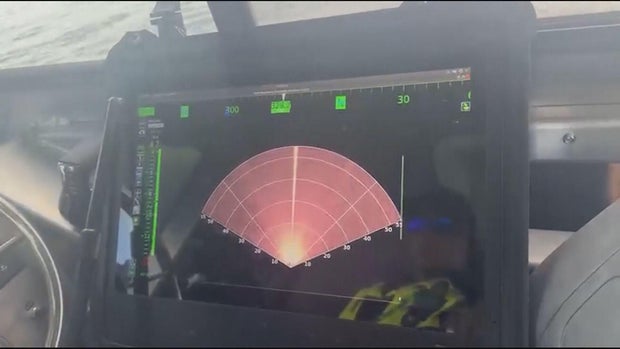
Their boats are equipped with a basic sonar transducer commonly used by anglers called a Humminbird, as well as a towable sonar torpedo that can be deployed.
"These bright white dots right there, those are probably fish," said Phillips, MERT team leader and flatwater investigator, reading the sonar image from the torpedo. "We can go down here, we can zoom in and look at it, see what it is."
And most importantly, they use a remote-operated vehicle, or ROV. It's an underwater robot and drone equipped not just with sonar but also with a camera.
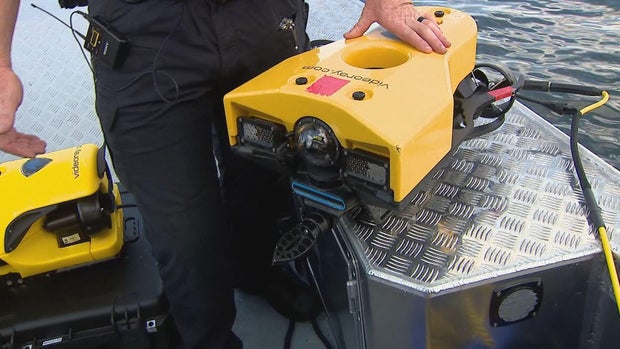
"We're gonna function test our robot before we throw it over. So Brian's gonna run through the propellers and run the claw, and I'm just gonna let him know it's working," said Haskins, a MERT team member and swift water investigator.
After the test was successful, the men threw the device into the water.
"You see, I've got a little bit of a shadow right there, so I know I'm close to an object. Well, now I'm just going to switch to the camera, and then I'm just going to move forward a little bit," Phillips said, reading the ROV's monitor. "So there it is, that's the boat, there's the bow eye, that's the bow, it's actually sitting, the rear end of it is down into the silt right there."
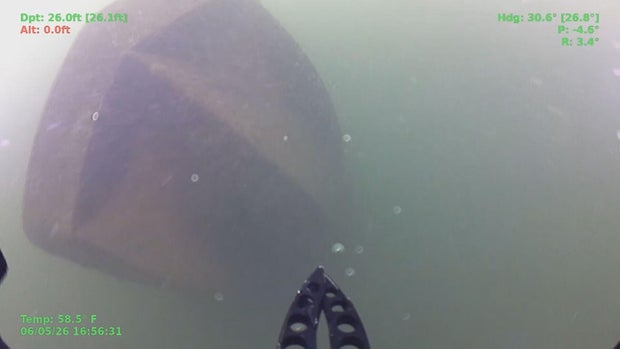
Earlier this year, the team discovered a boat that sank in 2016 and was never recovered after its occupants were rescued.
"This is where we kind of exposed that registration number," Phillips said. "That's how we figured out what boat it was."
Brown says it's still being decided whether this boat will be removed, and it may be recovered as part of a training exercise with South Metro Fire's dive team.
The ROV also has a grabber arm that largely replaces the need for a human diver.
"We can get right up to it. We can poke it, we can bump it," Phillips said.
"So we manipulate that, you can grab on to the person, ideally clothing, and we have that tether we're pulled into the surface and then recover them," Brown said.
He says the team got their first ROV in 2018, and while they still may work with dive teams in some cases, the robot has made their jobs easier.
"Tricky part with [before 2018] is, we're getting a diver ready to go and all geared up. If let's say we're looking for a drowning victim, though. Sometimes on sonar, we're like, 'That could be the person!' But sometimes it's not, it's going to be a tree, some other anomaly underwater," Brown said.
The team records and preserves everything as evidence.
"It is, until proven otherwise, a crime scene. So, [an] underwater crime scene, it is filming that bottom and everything around what we're looking for," Brown said.
A March drowning at Lake Pueblo was the first time the team was dispatched this year. They don't just respond to state-owned bodies of water; they will also come out at the request of any municipality or law enforcement agency, even assisting in criminal investigations where evidence or bodies may be underwater.
The team wants to do as few recoveries as possible this summer. So Brown wants everyone to remember important safety tips.
"Please wear a life jacket, even if you can swim, wear a jacket. Oftentimes, the drowning victims that we have recovered, they were great swimmers. So, I think that's a common misconception that people that drown just can't swim. So, wear a life jacket, take a boater safety class, don't drink and boat, and just know before you go," Brown said.
He adds that while it may feel hot on the boat, the cold water can shock your body if you get into or fall into it. Try to stay calm and catch your breath. He reiterates that the single best thing you can do to save your life is wear a life vest.


