Colorado store sees demand for bear spray as hungry bears come to Boulder backyards

As bears search for food across Colorado and move into urban areas, more residents are looking for ways to stay bear aware. Colorado Parks and Wildlife has received more than 6,000 bear reports so far this year, roughly double the number during the same period last year.
This summer, bears have been spotted on tables, in trees, and roaming through Colorado neighborhoods. This includes some reported attacks and incidents involving humans. In response, some hardware stores are also reporting a jump in sales of bear-related safety products.
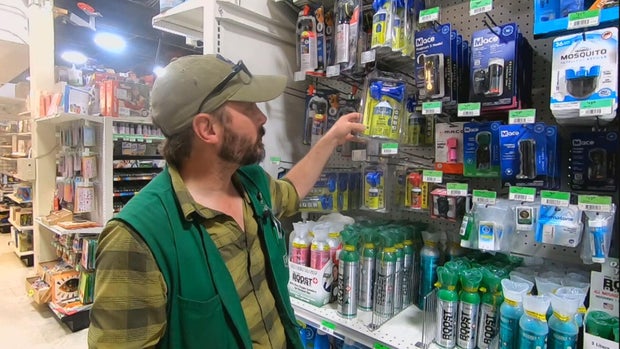
At Boulder's McGuckin Hardware, employees say bear spray and air horns are selling faster than they did last year. "We've already sold more this year than we have last year. Specifically, bear spray and air horns," said employee William Moore.
The products can give people options if they encounter a bear, but bear experts say the best way to avoid a dangerous encounter is to prevent bears from coming into neighborhoods in the first place. That means keeping potential food sources like trash away from bears and locking up trash.
"Bears that eat trash can have intestinal blockages, and it's really a painful death. And it's just not the food they need to be eating, so that's number one is to keep your trash stored," said Brenda Lee, who runs the Colorado Bear Coalition.
The nonprofit works to keep bears out of neighborhoods and is looking at possible solutions with Colorado Parks and Wildlife as bears continue searching for food during a dry summer.

"One group has suggested having a supplemental feed, a food drop, an aerial food drop, and while it has merit, and it's certainly something worth considering, if it was going to be done any year, this would be the year to do that. It also has potential risks to make it a lot worse for the bears, and that is something. So anything like that, if that was to be done, it really has to be well thought through, and wildlife experts need to be involved to really understand what the risks are, so that we don't end up causing a worse problem for the bears," Lee said.
For homeowners and people who encounter a bear, Lee says bear spray isn't the only option.
"Fear doesn't need to be exaggerated. But at the same time, they're large animals, and under stress and in close quarters, if they're coming up to people's homes, it's not a good situation for anybody," Lee said, "Hazing would look like, hey bear, get out of here, get pots and pans, blow whistles, just scare them, but make sure they have an exit and that you're not cornering them and that you're a safe distance from that bear."
Peak feeding season for Colorado bears lasts through the fall, and Lee expects to see more bears roaming into populated areas as they search for enough food to prepare for winter. She says communities can play a major role in preventing those encounters.

"We can do better as communities to reduce the reason that bears are here, so that we're not interacting with them. Because really, they're not doing anything wrong. They're just looking for food," Lee said.
Residents in the University Hill neighborhood can request free enclosures for their trash through the Boulder Bear Coalition.


