Former Colorado State University fraternity member accused of rape in frat house, woman sues Phi Delta Theta

A former Colorado State University student is suing the Phi Delta Theta fraternity, alleging the fraternity was negligent in maintaining a safe environment and is liable for an alleged sexual assault at its off-campus house in Fort Collins in October 2024.
The woman, whom CBS Colorado is not identifying due to the nature of the allegations, claims she was raped by a former fraternity member inside the house after attending a party on Oct. 5, 2024. The lawsuit accuses the fraternity of negligence and claims its actions or failures contributed to an unsafe environment.
The lawsuit does not name Colorado State University as a defendant.
According to Fort Collins police records obtained by CBS Colorado, the woman reported that she had been drinking at a house party southwest of campus when a man she did not know approached her and offered her a drink he claimed was water. She told police she drank it and quickly experienced tunnel vision. She also told police she felt her level of intoxication did not match the amount of alcohol she had consumed.
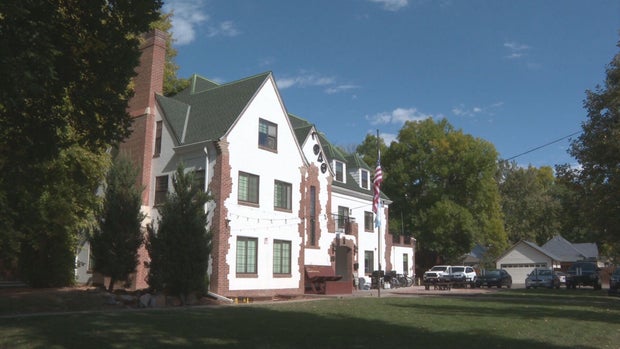
The woman alleged the man, later identified as a Phi Delta Theta member, arranged for the fraternity's designated driver to pick them up from the house party. She said she asked the driver to take her home, but claims she was instead taken to the fraternity house east of campus. It was there where she alleges the assault occurred.
Police records indicate video evidence showed the woman being walked into, and later out of, the house that night.
The woman told police the man removed her clothes and assaulted her, though she couldn't clearly remember much of what had happened.
Police reports say the woman was then taken out of the house and pointed in which direction to leave. The records say she contacted friends to pick her up and told them she had difficulty remembering what had happened and believed she had been sexually assaulted.
She went to a hospital the following day, according to the report.
Alison Jones-Lockwood, CEO of the Sexual Assault Victim Advocate Center, said reporting sexual assault to law enforcement can be difficult for survivors.
"Most survivors of sexual assault never report to law enforcement," Jones-Lockwood said.
In this case, police were contacted within 24 hours, according to the provided records.
Fort Collins police collected video and physical evidence as part of their investigation, including clothing from both individuals, and conducted a toxicology test on the woman, according to internal police logs.
The logs say the toxicology report detected traces of THC and Zoloft in the woman's system that night. Police also documented that the suspect hired an attorney and that the designated driver disputed the woman's claim that he took her to the fraternity house against her will.
Police closed the case without forwarding it to the Larimer County District Attorney's Office for consideration of criminal charges.
Jones-Lockwood said the lack of criminal charges does not establish that an assault did not occur.
"Unfortunately, there are times when law enforcement opts not to move forward with a case," Jones-Lockwood said, speaking in general terms and not of this specific case. "That does not in any way mean that that person was not sexually assaulted. It simply means that there was not enough evidence to move forward."
The Larimer County District Attorney's Office said Fort Collins police consulted with prosecutors during the investigation but never formally presented the case or requested criminal charges.
"Often during investigations, law enforcement will reach out to the District Attorney's Office to discuss additional investigative avenues they could pursue to further the case," the office said in a statement. "Fort Collins Police Services did that with regard to this investigation, but the case was never presented to our office, nor did they request that criminal charges be filed."
The DA's office encouraged anyone with new information about the case to contact Fort Collins police.
Although the case did not result in criminal charges, Colorado State University's Title IX process reached a separate conclusion. The university confirmed that, following an investigation and hearing, the student named in the lawsuit was found responsible for violating CSU's policy prohibiting sexual assault and was suspended for one year. The university said the student cannot seek readmission until completing all assigned sanctions, including a required behavioral health assessment and any recommended clinical treatment.
CSU said its student conduct process is separate from a criminal investigation and uses a different standard of proof. Because the alleged incident occurred off campus, the criminal investigation fell under the jurisdiction of FCPS, the university said.
"We recognize the courage it takes to come forward, and our thoughts are with the student who reported this assault and her family," CSU said in a statement. "Colorado State University takes every report of sexual misconduct seriously."
The university also reiterated that it is not a party to the lawsuit and declined to comment further on the litigation.
Phi Delta Theta said it removed the member accused of rape, after which he moved out of the chapter house. The fraternity said CSU's Title IX investigation did not result in referrals for disciplinary action against the chapter or any other member.
"Sexual assault is abhorrent and has no place on college campuses or in Phi Delta Theta," the fraternity said in a statement. "It violates everything our fraternity stands for, and anyone who commits it forfeits the privilege of membership."
The fraternity said it holds its members accountable to its standards.
Fort Collins police declined to comment on the specific investigation but said the department takes reports of sexual assault seriously.


