Colorado Congresswoman Lauren Boebert says "Big Brother" should have probable cause and warrant to surveil citizens

From Flock cameras to facial recognition, mass surveillance is advancing; at the same time, privacy protections are eroding.
The government can access, or buy access to, vast troves of data on Americans' emails, texts, bank records, even cloud data and justify it in the name of national security.
Congresswoman Lauren Boebert, a Republican who represents Colorado's 4th Congressional District, knows that firsthand. The Coloradan had just taken the oath of office in 2021 when Jan. 6 happened, and she became the subject of an FBI investigation dubbed Operation Rampart 12.
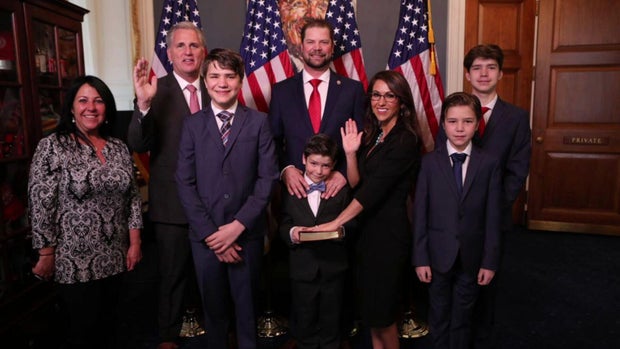
"And this was all because I brought my family to the Capitol and had a tour," she said.
Democrats accused her and at least three other Republicans of leading reconnaissance tours in advance of the attack on the Capitol.
Based on whistleblower documents released recently by Senate Judiciary Chair Chuck Grassley at the end of April, prosecutors at the Department of Justice were skeptical of the allegations, with one prosecutor saying video of Boebert's tour showed "a MAGA hat group about a minute behind her. But it's a family—with kids... does not look suspicious."
Another prosecutor replied, "Well, that's too bad."
Despite the apparent lack of evidence, the documents show the FBI opened an investigation two days after President Joe Biden took office and secretly surveilled Boebert, including accessing her phone logs and bank records, for a year before quietly closing the case.
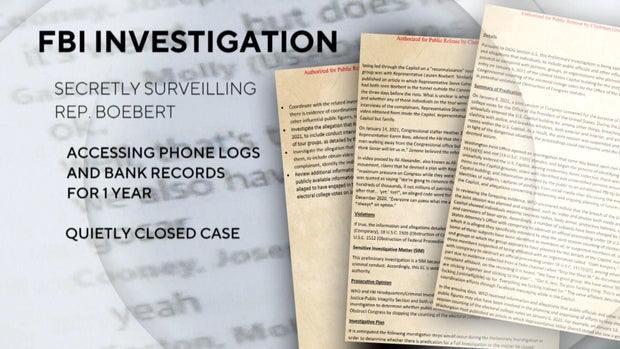
"To have all this just exposed to me 5 years later by a whistleblower, not even by the DOJ or the FBI, is very concerning," said Boebert. "Certainly, if it's going to happen to a sitting member of Congress, it can happen to any of one of your viewers, any one of my constituents, and unfortunately it does."
Boebert is now sponsoring a bill with Republican Rep. Thomas Massie of Kentucky to prevent the government from spying on Americans except in certain cases.
"They're creating a digital footprint of your entire life without a single warrant or even probable cause," she said in a news conference recently.
The Surveillance Accountability Act bars federal agencies from conducting searches or using biometric tracking like facial recognition without probable cause and a warrant signed by a judge. It also prohibits the government from buying data from third parties to circumvent warrants, and from using automated license plate readers like Flock cameras to develop individual profiles and travel patterns. Federal employees who violate the law could be individually sued.

"This is about protecting our constitutional rights, and to forsake our constitutional rights that so many men and women fought, bled, and died for, convenience is inexcusable," says Boebert.
The Fourth Amendment was meant to protect against unreasonable searches and seizures, but Boebert says Congress and the courts have created loopholes. The Third Party Doctrine, for example, strips privacy protections for data shared with entities like banks, phone companies and internet providers, while the Foreign Intelligence Surveillance Act, or FISA, allows government officials not only to spy on foreigners without a warrant but to search the overseas calls, emails and texts of Americans.
While the Trump administration says changes to the program would threaten national security, Boebert says spying on U.S. citizens without a warrant threatens the Constitution.
"President Trump in previous years has demanded a warrant. Chairman Jim Jordan in previous years has demanded a warrant, and many others, and now unfortunately we are to the point of, 'Oh well, it's working just fine, just go ahead and pass the bill,' and that is not okay with me. They want to keep the ability to spy on American citizens and use the excuse of a national security threat without a warrant. I say you need to get a warrant."
Last month, 19 Republicans, including Boebert and Massie, along with most Democrats in the U.S. House, refused to reauthorize FISA without changes. The program expires in March of next year.
Boebert says she and Massie are considering using a discharge petition to bypass leadership and force a vote on the Surveillance Accountability Act. It is the same procedure they used to pass the bill releasing the Epstein files.
They say that as more data becomes vulnerable to warrantless searches, it will have a chilling effect on everyone from whistleblowers and protestors to investigative journalists.


