Colorado lawmaker, advocacy groups host artificial intelligence town hall

At a coffee shop in Aurora, a group of people gathered Sunday evening to talk about artificial intelligence and the potential dangers the technology poses.
These types of conversations have become common, if not nonstop, for Juan Sebastián Pinto, a Denver resident who worked in the AI space for years.
"I used to market these technologies," Pinto said. "I used to market AI. And I feel like people are enormously misled as to what the real concerns are."
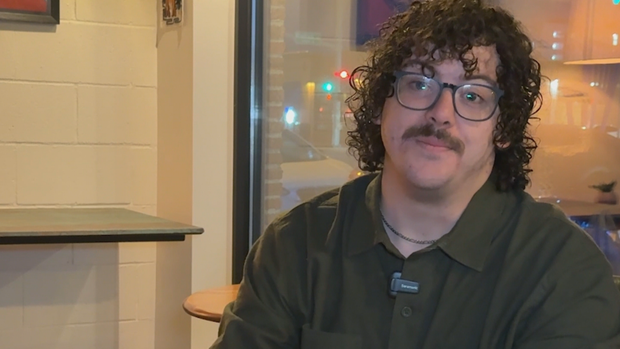
Now, he says he spends his time educating the public about these concerns.
"Nothing's more important than education right now, because the nature of these evolving technologies is that they're moving so fast that we're all struggling to catch up with it," Pinto said.
Among the speakers was state Rep. Brianna Titone.
"It's not about what AI can do, it's about how you use it," said Titone, a Democrat representing Jefferson County.
For her, the issue of understanding and regulating the use of artificial intelligence is nonpartisan.
"When we look at other countries where this has been going on for a while, and we kind of say, 'Well, I'm glad I don't live there,' we live there now," said Titone. "It's our own country, and everybody is being watched and everybody's being spied on, and all the information is being kept and used, and that is something that people should be concerned about."
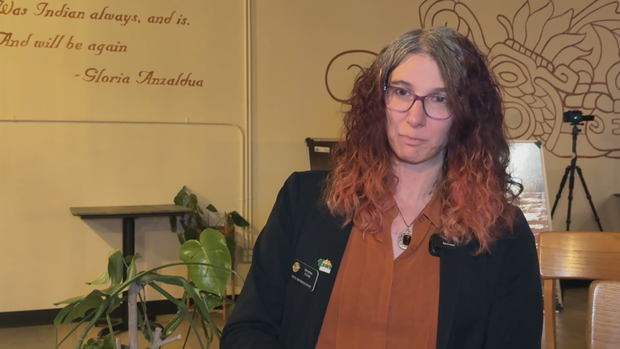
She supports multiple AI bills currently making their way through the state legislature.
"One of them is about the Fourth Amendment, specifically saying that if you're a law enforcement agency- that you can't just buy data on a data broker market," Titone said.
The other bill deals with Flock cameras.
"Kind of similar angle (...) they should be only using the Flock cameras for specific solving of crimes," Titone added. " I don't have a problem with using cameras and things to solve a crime, but that should be the extent of it."
They plan to continue to have these types of conversations so that more people are educated, and more people will support regulation.
"By regulating AI, we could become world leaders in how to adapt to these technologies, how to work with these technologies in ways that help everyone," Pinto said.