Colorado backcountry search and rescue organization shake-up has some veteran volunteers concerned
There is a major shift underway in how backcountry rescues are coordinated across Colorado, and not everyone involved is convinced it will go smoothly.
For decades, the Colorado Search and Rescue Association has helped connect local teams with critical resources during emergencies. That includes things such as helicopters, specialized crews and technical support when situations escalate beyond what a single county can handle. Now, that coordination role is moving under a new structure involving state agencies.
A letter from the Colorado Division of Homeland Security and Emergency Management confirms the long-standing agreement with the Colorado Search and Rescue Association will officially end Aug. 1, 2026, aligning with a new interagency agreement. State leaders have said the change is meant to improve reliability in structure as well as funding.
In the initial press release announcing the change, Colorado Parks and Wildlife said, "Shifting coordination into a formal state agreement ensures clearer accountability and more consistent oversight in life or death situations."
The agency also emphasized that local sheriff's offices will remain in charge of search and rescue operations, and that CPW's role is largely focused on funding and coordination through the state's emergency system.
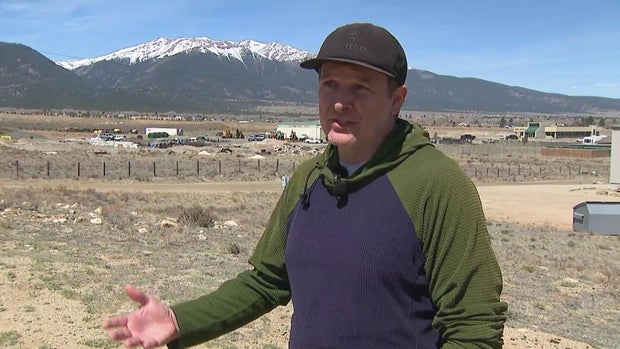
That transition and the lack of a heads up for CSAR after it was booted from the system in lieu of state agencies has raised serious concerns for longtime volunteers. Erik Rasmussen, a longtime search and rescue volunteer who has responded to more than 230 incidents, says the biggest issue is uncertainty. Rasmussen made clear that he is speaking only for himself, not on behalf of his team or the association.
CSAR currently works as a safety net for search and rescue teams (which operate under the umbrella of local sheriff's offices) as a way to coordinate support and back up. One of the most obvious examples are when Black Hawk helicopters are called in to pluck trapped hikers from mountaintops when rescue crews can't get there in time to help.
"When they need more resources, we're getting those resources for them," Rasmussen said.
Now that that responsibility goes to the state and it's agencies, Rasmussen worries there may not sufficient plans in place to continue that important work successfully.
"If now it takes me six hours to get that Black Hawk helicopter instead of one hour, that's a big deal," Rasmussen said. "That could be life or death for that person."
Kevin Klein, director of Colorado's Division of Homeland Security and Emergency Management acknowledged there was an initial mistake in how the transition timeline was communicated, one of Rasmussen's big concerns. An earlier version of the termination notice did not include a clear effective date, which has since been corrected to align with the new agreement starting in August.
Even with that fix, Rasmussen said the process has left him feeling like there's a potential things could fall through the cracks.
"They were touting accountability and transparency," Rasmussen said. "And I feel like, if you are having a process behind closed doors where you don't bring either the local search and rescue teams or the organization that's been providing these services forever to the table, that's not transparency in my mind."
State officials said the broader system itself is not going away. CPW sent in a statement, "CPW is not taking over the program. The Colorado BSAR program will remain unchanged, except that CPW will hold the IAA with DHSEM and assume a new role in the Colorado State Emergency Operations Plan. CPW's role in BSAR is to provide a funding mechanism to help SAR groups through the sheriff's offices (which hold statutory authority for SAR), and to coordinate, through the Emergency Operations Center, the new agreement."
"CPW does provide some training, funding and services for members of the SAR community through some of this funding as well and provides millions of dollars of BSAR funds to rescue groups throughout the state through sheriff's offices," the CPS statement continued. "CPW will not be taking a significantly greater role in the operations of search and rescue efforts across the state, that is the expertise of SAR groups and under the authority of the sheriffs. CPW does assist with major disasters and some SAR operations and has for decades."
CPW also says a public bidding process will determine which entity handles coordination services under the new agreement, and that the current organization (CSAR) will be allowed to apply.
Rasmussen said he's worried about replacing decades of experience with something unproven.
"Do I think that they can replace 53 years of institutional knowledge overnight? No. Absolutely not," Rasmussen said.


