Nearly all of US experiencing warmer summers, but a small part of California isn't
June is officially the start of summer. Although many consider the summer solstice, or the longest day of the year, to be the first day of summer, meteorological summer starts on June 1. What's the difference?
Astronomical summer focuses on the position of the Earth in relation to the sun. Sometimes the summer solstice, or the longest day of the year, is on June 20, sometimes the 21st, or sometimes the 22nd. That is because the 365-day calendar year doesn't perfectly align with the Earth's solar orbit, which takes about 365.25 days, so leap years shift the dates slightly.
Meteorological summer is just the months of June, July, and August. Dealing with whole months makes it much easier for scientists to calculate and compare annual statistics. Also, the hottest days of the year occur after the longest day of the year. Using June through August captures peak heat much more accurately.
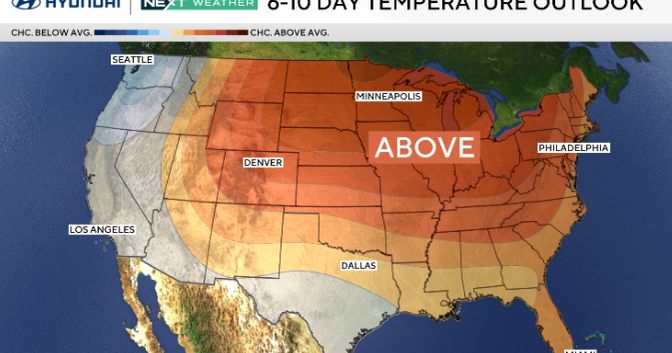
So, a group of scientists at Climate Central analyzed historical temperature data from June, July, and August (meteorological summer) from 243 cities across the country to find that summers have warmed in 97% of those cities. From 1970-2025, summer has warmed by an average of 2.6° across the country, and cities are seeing 22 more hotter-than-normal summer days since 1970.
In the Bay, San Francisco's average summer temperature has warmed up by 2.1 degrees since 1970, with an average of 47 days per summer with hotter-than-normal high temperatures compared to only 21 back in 1970 — That's 26 more hot summer days compared to the 70s. San Jose is not as extreme, with summer warming 1.3 degrees since 1970 and an additional 12 hot summer days.
But now to Los Angeles, summers are cooling slightly, with three fewer above-normal summer days per year since 1970. This is the same trend for Monterey, but with a bit of missing data. Either way, the marine layer is so important, acting as Mother Nature's natural air conditioner to keep the California coast cool during the summer.
So yes, technically meteorological summer begins tomorrow, but for coastal California, the real heat doesn't start until September rolls around. Climate change impacts different parts of the country differently, so even though coastal California residents might not be feeling hot this summer, there's a lot of the country that wishes they were where you are.