Colorado family farm is ground zero in a looming battle over carbon dioxide pipelines

A classic David versus Goliath battle is building on Colorado's Eastern Plains, where a Logan County couple says they had to empty their kids' college savings accounts to sue a company that they say is forcing them to choose between their health and safety and the home they love.
Brady and Kari Hume put down roots on 156 acres in Logan County two decades ago. She homeschools their seven kids and he farms and runs a small fabrication business.
They say life was good until they got a new neighbor. In 2024, Tallgrass Energy built two natural gas-powered compressors just 950 feet from the couple's home.
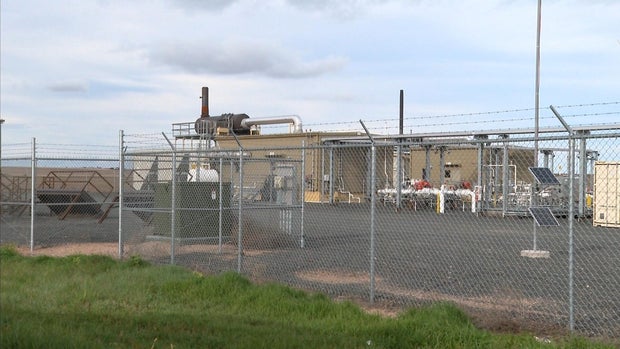
"It sounded like a freight train across the road. It just constantly ran," said Brady. "You can just feel it in your whole body."
The couple claims the smell of crude oil, methane and sulfur made it hard to breathe and sudden releases of pressurized gas made it dangerous for Brady to weld due to the open flame.
"I think we both knew everything changed at that moment," said Kari.
It is a change that they say came with no warning. Tallgrass Energy told Logan County it was expanding a small compressor -- not building two new ones -- so the county didn't require a building permit or public input.
"There was nothing that indicated that it was going to go from a singular small building to a major, functioning compressor station," Kari said.
They say it got worse when the company decided to convert a natural gas pipeline -- 800 feet from their home -- to compressed carbon dioxide.
A right-of-way agreement signed in 1981 by the previous property owners allowed for the natural gas pipeline but specifically barred other substances.
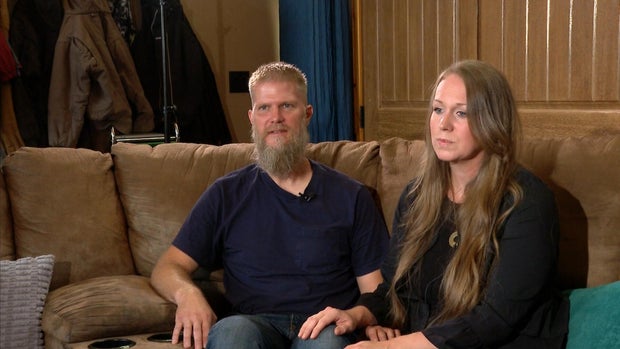
"We had not been informed," said Kari. "Our emergency management still has not been informed. Our fire department has not been trained."
The Centers for Disease Control says carbon dioxide, which is colorless and odorless, can cause suffocation at a concentration of 70,000 parts per million, or 7%. The concentration of carbon dioxide in pipelines is typically over 90%.
Yet, the federal government doesn't regulate pipelines that carry gaseous CO2, like the one on the Humes' property.
The Department of Transportation released what it called the "first-ever" rules for carbon dioxide gas pipelines last year, just before President Biden left office. They were never implemented.
"There are no clear emergency plans," said Kari. "There's no plan for inspection of contents to make sure that it's pure, to make sure that it's not corroding the pipeline, I mean none of that is occurring. It has been hard for us to even figure out how did we get here, who do we go to, and who can help us."
The Department of Transportation says there are about 5,000 miles of CO2 pipelines and projects a tenfold increase over the next 20 years due to billions of dollars in federal tax credits for carbon sequestration, a process aimed at reducing greenhouse gases by capturing carbon dioxide at industrial sites, compressing it, and pumping it to underground wells.
"There needs to be oversight that matches the zeal to go after these tax credits," said Kari.
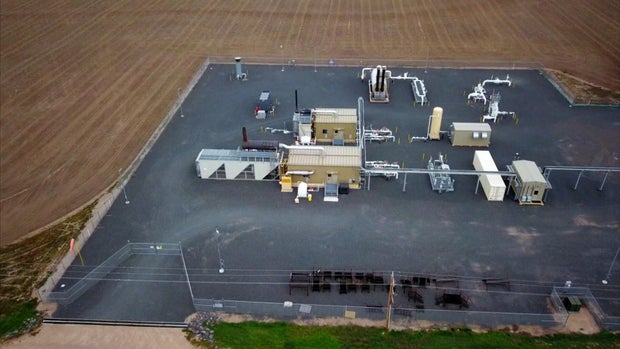
The Humes say they've spent thousands of dollars on air purifiers, bought an old mobile home in the event of an emergency evacuation, and this summer they used their kids' college savings to sue Tallgrass Energy. The company stopped running its compressors but continues to run CO2 through a pipeline that the Humes say is 40 years old and was never designed for carbon dioxide.
"It's become a place that's not safe to live in. We don't have another choice but to go somewhere else," said Brady.
Tallgrass Energy released a statement saying its system is "monitored 24 hours a day, 365 days a year by highly trained technicians" who have "an extensive network of pressure sensors and automatic and remotely operated shutoff valves. By repurposing existing infrastructure, Trailblazer demonstrates how legacy fossil energy infrastructure can play a critical role in our shared efforts to combat global climate change."
Last month, Logan County passed a moratorium on new carbon sequestration activity and at the state level, state Sen. Byron Pelton says he's looking into regulations.
Meanwhile, the U.S. Senate just passed a bill to fast track CO2 pipelines. Sen. Michael Bennet, who voted against it, says the public deserves more input.
While CO2 pipeline ruptures are rare, 45 people were hospitalized in 2020 due to a failed pipeline in Mississippi. The Humes are asking for $14.5 million to relocate and cover any long-term health impacts.