Pope Leo XIV's Far South Side church, Chicago Stock Exchange Trading room at Art Institute on Chicago endangered list

The Far South Side Chicago church that was once Pope Leo XIV's home parish has made the 2026 Chicago 7 Most Endangered list from Preservation Chicago.
The annual Chicago 7 Most Endangered list sounds the alarm on buildings and structures that Preservation Chicago says are imminently threatened.
Pope Leo XIV's church
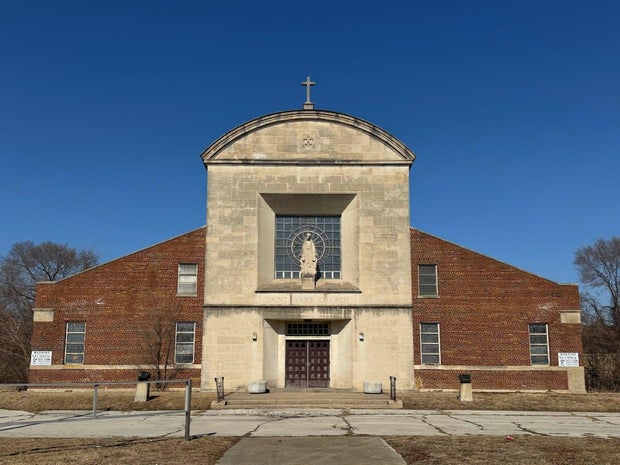
On the list this year are St. Mary of the Assumption Roman Catholic Church and School, at 13764 S. Leyden Ave., and 307 E. 137th St., respectively, in Chicago's Riverdale neighborhood.
The church and school are located right at the very southernmost border of the city and adjacent to south suburban Riverdale and Dolton. Pope Leo XIV grew up in Dolton, and was an altar boy at the church.
The parish dates back to 1886, and the seven current buildings on the parish campus date from between 1917 and 1957, Preservation Chicago said. German-born Chicago architect Hermann J. Gaul designed a one-story combination church and school building that still stands on 137th Street, while a new modern brick church was designed by Chicago architect George Stanislaus Smith in 1957, Preservation Chicago said.
The parish grew to more than 1,500 families with 863 children in the school by 1961, Preservation Chicago said. By 1978, the parish had more than 2,000 families, though only 324 children in the school.
In 2011, the parish was combined with Queen of Apostles Parish in suburban Riverdale, according to Chiago Catholic. The church, the school, and the rest of the campus — which published reports say also included a rectory, a convent, and an annex — were left vacant.
Preservation Chicago says extensive renovation is needed to restore the damaged and deteriorating buildings. Funds for such a restoration must be secured, with the risk of the parish structures deteriorating further and perhaps ultimately having to be torn down, Preservation Chicago said.
"This is particularly important today given the significance of the site as the childhood church and school of the first American Pope in history," Preservation Chicago said.
Given its connection to Pope Leo XIV, the St. Mary of the Assumption parish could be a pilgrimage site for Catholics from all over the world — a prospect that would be beneficial for the disinvested Far South Side and south suburbs, and for Chicago as a whole, Preservation Chicago said.
One possible step would be to consider Chicago Landmark Designation for the parish campus buildings with a plan to restore them, Preservation Chicago said.
Chicago Stock Exchange Trading Room and McKinlock Court at Art Institute
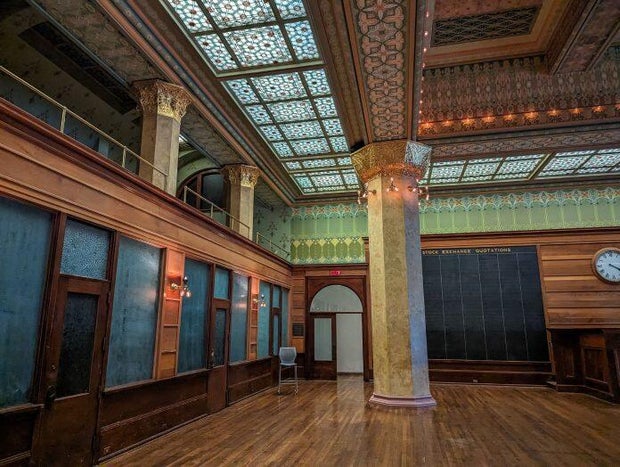
The Chicago Stock Exchange Building was completed in 1893 at 30 N. LaSalle St., kitty-corner from where City Hall would be completed in 1911. You will not find the Chicago Stock Exchange Building there anymore — a modern high-rise office building completed in 1975 and now suggested for a residential conversion stands on the site.
The Chicago Stock Exchange Building was infamously torn down in 1971 and 1972 despite passionate protests from preservationists. Some of those preservationists led efforts at least to rescue parts of the building — including John Vinci and Richard Nickel, who saved the whole interior of the trading room and other ornamentation. Nickel returned to salvage more while the building while it was under demolition, and in the process, he was crushed to death.
The trading floor, as well as the arch that graced the entryway to the Chicago Stock Exchange building, both went to the Art Institute. With Vinci managing the effort along with architectural partner Lawrence Kenney, the trading floor was reconstructed within the Art Institute in 1976 and 1977 with Sullivan's stenciled decorations, molded plaster column capitals, and art glass, the Art Institute noted.
The room is now used as a rentable space for such events as wedding receptions and corporate gatherings. And Preservation Chicago expressed worry that it might be torn down all over again.
Preservation Chicago said the demolition of the Chicago Stock Exchange Building amounted to "cultural vandalism," and museums around the world picked up artifacts. The staircase from the Chicago Stock Exchange Building ended up in the American Wing of the Metropolitan Museum of Art in New York. The Museum of Modern Art in New York, the Victoria & Albert Museum in London, and the Musée d'Orsay in Paris also each have pieces from the building.
But Preservation Chicago says nothing compares to the trading room. Nevertheless, Preservation Chicago said it is now threatened by a proposed gallery expansion at the Art Institute.
The Art Institute is quoted in published reports as saying it would work with partners to find a new location for the trading room if they decide to repurpose that part of the campus.
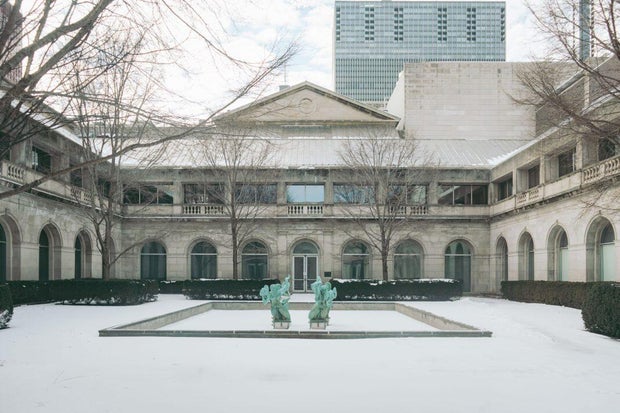
Preservation Chicago also expressed concern about the McKinlock Memorial Building and Garden at the Art Institute, designed in 1924 as an addition to the museum's original Allerton Building. The limestone-clad McKinlock Court features semicircular arches and a garden graced with The Fountain of the Tritons by Swedish artist Carl Milles.
McKinlock Court was also expanded in the 1970s with an addition by the firm Skidmore, Owings and Merrill, led by famed architect Walter Netsch.
The garden is known as an al fresco dining space during warmer weather, in past years sometimes to the accompaniment of live harpists and other music.
"McKinlock Court is one of Chicago's finest enclosed outdoor spaces and a much beloved courtyard, despite an unfortunate reduction in programming and cuisine over the past decade," Preservation Chicago said.
But Preservation Chicago said the courtyard could be "significantly altered or even destroyed" by the plans for a gallery addition. Preservation Chicago said the "full extent and details regarding the alterations and demolition are not clear as they have not yet been shared with the general public and citizens of Chicago," but said plans that could take away the beloved trading room and McKinlock Court have been under way for "many years."
Preservation Chicago called for the sharing of all plans with the general public, particularly since the Art Institute sits on public property in Grant Park. Preservation Chicago also said the most important spaces and features of the museums should be considered for Chicago Landmark designation, which the front façade of the Art Institute already has.
Chicago River bridges and tender houses
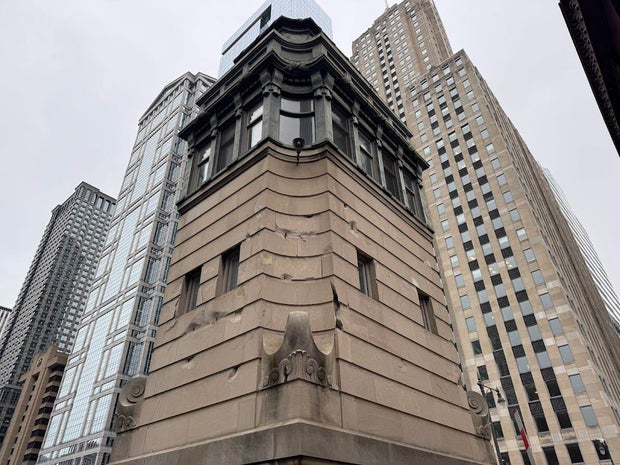
Chicago boasts the world's largest collection of movable bascule bridges, Preservation Chicago noted. The bridges along the Main, North, and South branches of the Chicago River are paired with tender houses that in many cases are architecturally ornate.
Many of the bridge and tender houses are now in need of repair, and in some case replacement of their full metal spans, Preservation Chicago said. The organization called for their restoration and the maintenance of their historic appearance, rather than having them replaced with "nondescript highway standard bridges."
There are several specific bridges with which Preservation Chicago raised concerns.
The Ashland Avenue Bridge over the North Branch near Webster Avenue, which was completed in 1936, rehabilitated in 1993, and converted from a drawbridge to a fixed span two years later. The bridge notably features bas-relief carvings on its bridge houses. The Chicago Art Deco Society has recommended the Ashland Avenue Bridge for Chicago Landmark status, but because it is far from downtown, it is less well-known and thus more threatened, Preservation Chicago said.
The LaSalle Street Bridge over the Main Branch of the river, which dates back to 1928. A restoration plan for the bridge to address deterioration such as cracked limestone on the tender houses was announced in 2015, with work now expected finally to begin this year. Preservation Chicago expressed concerns about what the city will be doing with the bridge, because while rehabilitation and restoration being part of the plan 11 years ago, but conditions likely having worsened since.
The Chicago Avenue Bridge over the North Branch, which has already torn down. The old bridge, dating back to 1914, was a Pratt pony truss bridge, with a web of vertical and diagonal beams. The new bridge that will eventually replace it is a fixed concrete tied-arch bridge that will look nothing like it, according to Preservation Chicago. The bridge closed in late September 2025, along with the riverwalk below and the adjacent Halsted Street viaduct, all while construction is also under way on the permanent Bally's riverfront casino site at 777 W. Chicago Ave. Preservation Chicago said there is no record of what the city did with the historic materials from the old bridge, and it appears no interested parties rescued anything during the demolition.
The Michigan Avenue DuSable Bridge over the Main Branch, completed in 1920. While this bridge is iconic, Preservation Chicago noted that it has not undergone a major rehabilitation since 2009, and the limestone on the bridge is showing signs of strain and cracking.
The Washington Boulevard Bridge over the South Branch, which dates back to 1913. Preservation Chicago said the ability or raise and lower the bridge must be assessed by engineers due to its age.
The Wabash Avenue Irv Kupcinet Bridge over the Main Branch, completed in 1930. This bridge is a subject of concern because of a 2010 proposal approved by the city to sell advertising rights on it, Preservation Chicago said. The bridge also faces maintenance challenges, the group said.
Preservation Chicago said many of the bridge and tender houses in addition to the specified ones need repair — with some not having been painted in years, and some showing rusty and deteriorating metalwork and missing components.
Labor union halls
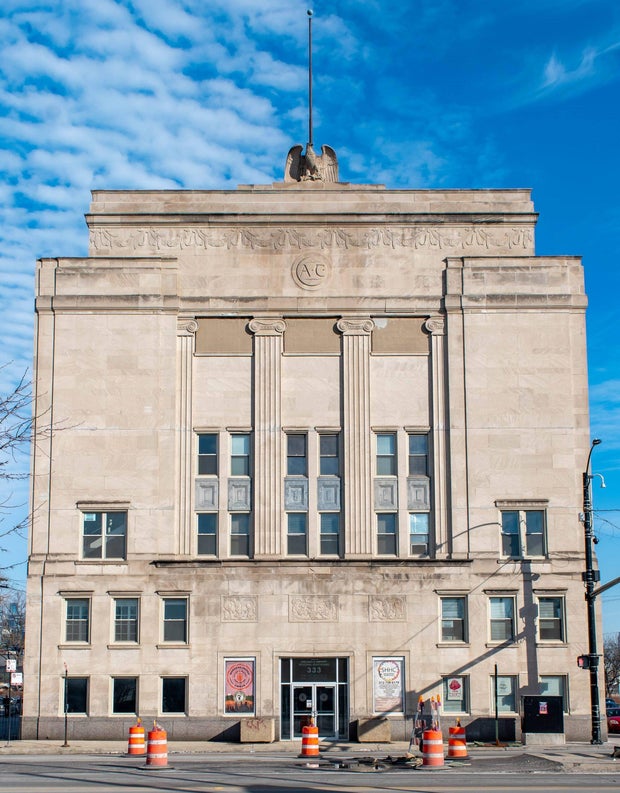
Preservation Chicago noted the prominence of Chicago in the history of organized labor and pivotal strikes that improved workers' rights, from the 1886 Haymarket Affair to the Memorial Day Massacre of 1937 in which police clashed with protesters at Republic Steel. Many labor unions constructed union halls in Chicago, in particular on the Near West Side.
Some union halls were purpose-built, including the Painters Council District 14, 1456 W. Adams St., and the Workers United Hall, formerly the headquarters of the Chicago Joint Board of the Amalgamated Clothing Workers of America, at 333 S. Ashland Ave. Others were converted from other uses — for one, the Chicago Fraternal Order of Police Lodge 7 at 1412 W. Washington Blvd., for one, used to be the R.C. Wieboldt & Co. office building.
Preservation Chicago said several union halls need repairs and have in some cases have been sold and slated for demolition. For one, a plan calls for the Stone Medical Center at 2800 N. Sheridan Rd. — which opened in 1951 as the headquarters for the Amalgamated Meat Cutters and Butcher Workmen of North America and was sold to St. Joseph Hospital in 1979 — to be demolished and replaced with a 24-story high-rise building with 303 residential units and retail space below.
Meanwhile, the United Electrical Workers Union Building, 37 S. Ashland Ave., was recently sold and repurposed as residences. There was concern that the murals inside the building could be destroyed, but organizations ensured they were removed to be used elsewhere.
Given the history of organized labor in Chicago, Preservation Chicago called for protections for union halls, and possibly a Chicago Landmark designation — perhaps as a themed landmark district.
Chicago Loop Synagogue
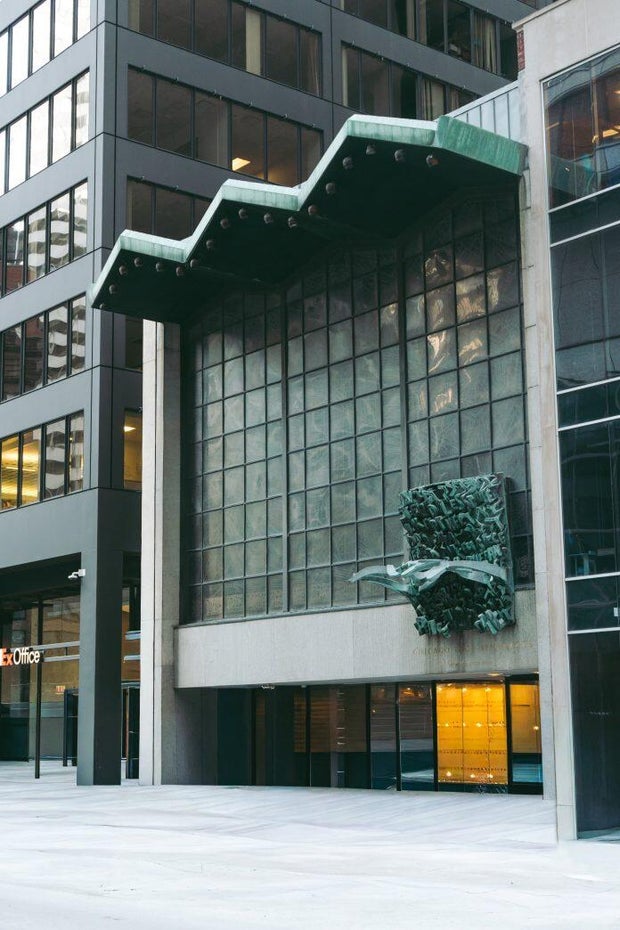
The Chicago Loop Synagogue is located at 16 S. Clark St., right across the street from Chase Tower. The synagogue was founded in 1929, and used various rented spaces downtown before the current building was designed by architectural firm Loebl, Schlossman and Bennet and was completed in 1958, according to Landmarks Illinois.
It is the largest synagogue in the downtown area and is known for its architectural design, in particular its stained-glass windows designed by artist Abraham Rattner, Landmarks Illinois said. One stained-glass window titled "Let There Be Light," is considered one of the most exceptional works of Jewish art from the 20th century, according to Preservation Chicago.
The front entrance of the synagogue also features the bronze sculpture Hands of Peace by Henry Azaz, which quotes a blessing in the Book of Numbers. There are also Rattner lithographs in the entry to the social hall and in the Beit Midrash, or study hall, according to the synagogue website.
For many years now, attendance at the synagogue has been falling — particularly with remote work meaning fewer people attending while working downtown, according to Preservation Chicago. Membership is now under 400, the group said.
This winter, severe cold busted booker pipes ant the synagogue, the group said.
Last month, Landmarks Illinois issued an emergency grant of $5,000 to help replace the broken boiler. Chicago Loop Synagogue said in February that it is also planning to launch a capital fundraising campaign to support the boiler replacement and other repairs.
However, Preservation Chicago expressed concern about the long-term future of the synagogue, and suggested adaptive reuse and development plans. These included the use of adjacent buildings, and the raising funds for repairs and improvements for the sale of air rights — though adding more floors would require a setback from the façade to preserve its historic character, Preservation Chicago said.
South Park Terrace Apartments
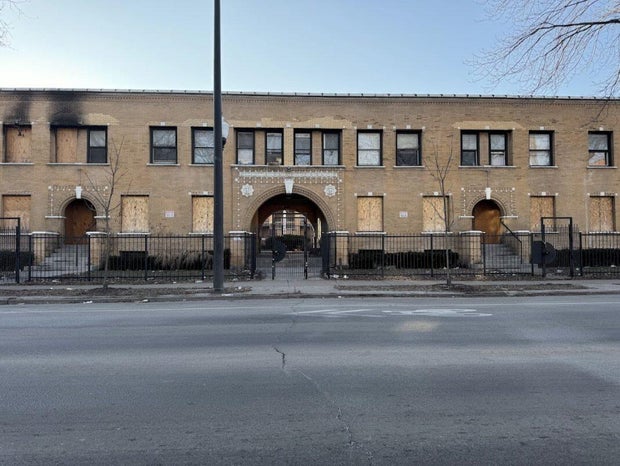
Located at 6116-6134 S. Dr. Martin Luther King Jr. Dr. in the Washington Park neighborhood, the Prairie-style South Park Terrace apartments were designed by Frank Lloyd Wright associate Harry Hale Waterman and completed in 1905. The courtyard apartment development was constructed near the horse track at Washington Park, with 52 apartments geared toward middle-class residents, according to Preservation Chicago.
The development changed hands a couple of times during the 1920s, and during the late 1920s and the 1930s, the building deteriorated to the point of being unlivable as white flight and disinvestment hit the area, Preservation Chicago said.
The building was restored and reoccupied as the Great Migration brought numerous new Black residents to the South Side, and by the 1940s, South Park Terrace was considered "the pride of the community," Preservation Chicago said.
But today, the building is in horrible shape. A photo shared by Preservation Chicago showed it with what appeared to be all its first-floor windows boarded up, and fire damage and more boarded-up windows on the second floor from a fire in March 2025. Residents have been suffering with structural issues, water leaks, and rotten floors, and the residents of the middle tier of the building were ordered to vacate with two days' notice in June of last year, Preservation Chicago said.
Preservation Chicago said the city should take steps to reserve the building, which is now owned by a Brooklyn-based firm. The organization said the city could bring in the Chicago Housing Authority, the Cook County Land Bank Authority, or a development partner for the purpose.
The Yukon Building/Bock Building
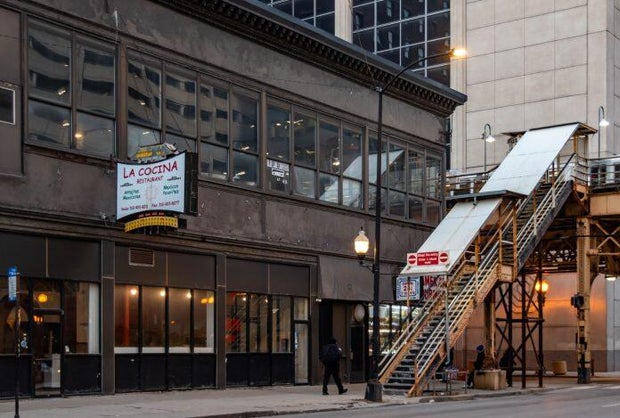
The two-story Yukon Building at 400 S. Clark St./105-111 W. Van Buren St., later renamed the Bock Building, dates back to 1898. The building was designed by the famed architectural firm Holabird & Roche, and features an iron and glass façade and bands of windows on the second floor, Preservation Chicago said.
On its ground floor on the Van Buren Street side, the Yukon Building notably houses the Sky-Ride Tap, owned for more than 50 years by Kyriakos "Carl" Damianides and revered as a no-frills bar with loyal regulars and commuters headed for nearby Metra trains.
The building also the Vivian Ellen Salon, and the 24-hour America Submarine sandwich shop and convenience store. But next to Sky-Ride, Boni Vino Ristorante & Pizzeria has gone out of business. Online reports say on the Clark Street side, La Cocina Mexican restaurant with its Chinese pagoda sign, and its neighbor, Micky's Chicken & Fish, have closed too.
The Yukon/Bock Building is one of the oldest "taxpayer buildings" downtown. A "taxpayer building" is a modest structure that earns enough money to cover the yearly property tax bill with a small profit, Preservation Chicago said. Many such buildings have been slated for redevelopment and torn down.
Preservation Chicago noted that the building is also one of the few remaining examples of Old Chinatown, before the Chinese community moved south to Wentworth Avenue near Cermak Road in in the 1920s.
Since its Van Buren Street frontage is located under the Loop 'L' tracks, the Yukon Building has been protected from redevelopment proposals that have resulted in the demolition of other buildings like it, according to Preservation Chicago. But the building is now for sale, and Preservation Chicago is worried.
Preservation Chicago said it hopes inclusion on the Chicago 7 Most Endangered list results in a purchase by a buyer interested in restoration.
St. Mark Roman Catholic Church Campus
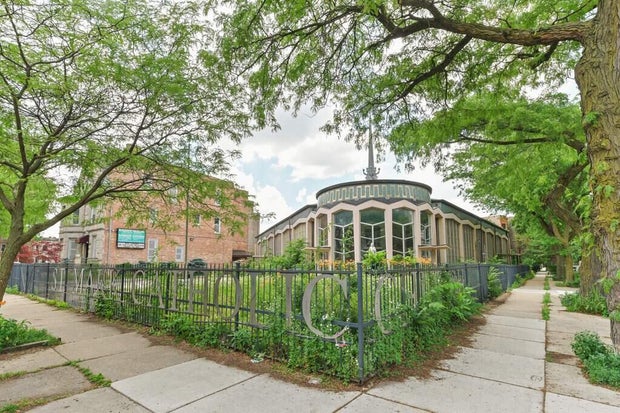
St. Mark Roman Catholic Church campus is located at 2516 W. Cortez St. in the Humboldt Park/West Town area. Its campus is composed of a graystone rectory dating from 1896, a red-brick school building dating from 1906, and a midcentury modern church built in 1963.
Preservation Chicago touted the tapering concrete and steel shafts and multi-textured and patterned walls of the church. The stained-glass windows are designed by French artist Gabriel Loire.
The parish initially served an Irish immigrant community, then a Polish community, and then a Puerto Rican and Mexican community.
The church closed in 2022, and has been vacant since, according to published reports. The Archdiocese of Chicago has since listed the campus for sale, with the exception of the school, which was excluded from the sale at the request of Ald. Gilbert Villegas (36th), Preservation Chicago said.
Preservation Chicago advised there are numerous options for adaptive reuse of the buildings, including turning the church into a community center or Chicago Public Library branch, turning the rectory into affordable apartments, and turning the school into a charter school serving local students.