Midway Plaisance holds some of Chicago's most storied history and striking public art

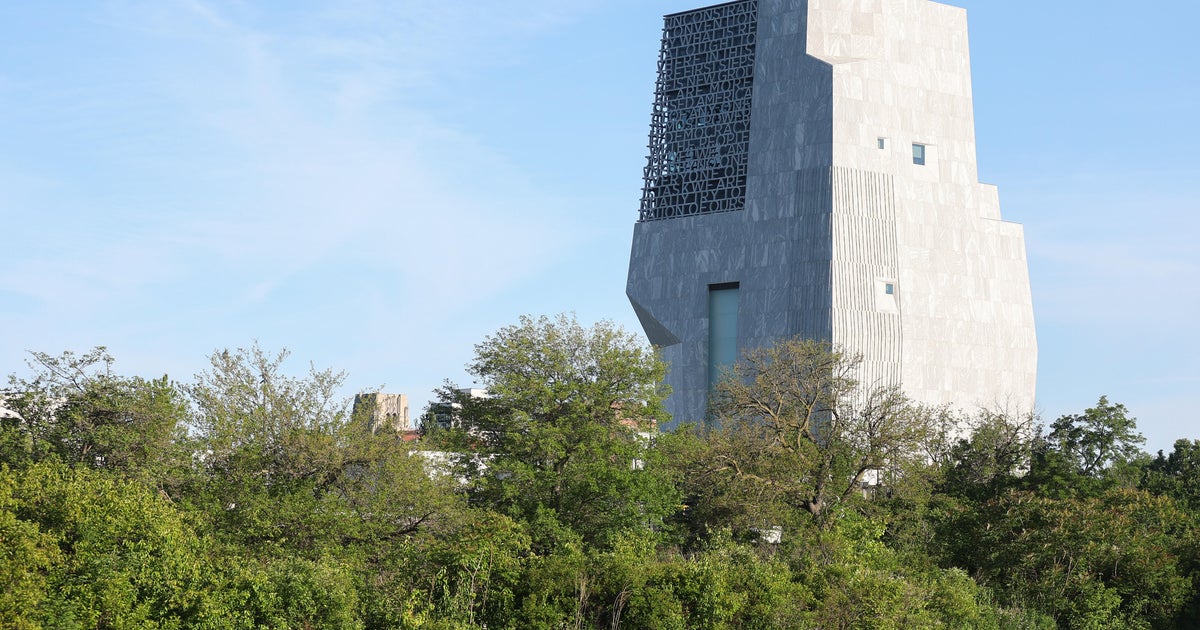
Midway Plaisance is much more than a long strip of lawn on Chicago's South Side where, at the east end, the Obama Presidential Center now sits. Connecting Washington and Jackson parks, it began as one of the city's most ambitious unrealized architectural projects and remains the site of some of the city's most storied history and public art.
What modern Chicagoans know as Jackson Park and Washington Park were once envisioned as a single green entity called South Park, explained historian and preservation planner Julia Bachrach, who worked for the Chicago Park District for more than 25 years.
Designed by famed landscape architect duo Frederick Olmsted and Calvert Vaux – best known for designing Central Park in New York City – it was meant to be 1,055 acres with a western division, an eastern division and a connector: Midway Plaisance, named by Olmsted.
Midway Plaisance was initially conceived of as a canal, Bachrach said. While it was never completed, Olmsted's plans still exist and are part of the Chicago History Museum's collection.
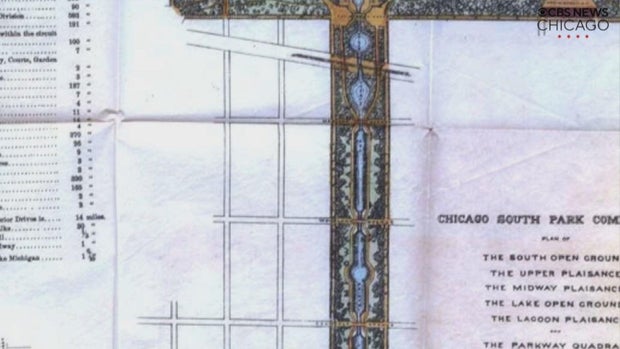
The canal would have linked the Washington Park lagoon with Lake Michigan. Boaters would have been able to go from Lake Michigan to the lagoons of Jackson Park, up to the Midway Plaisance canal, and then into the Washington Park lagoon, Bachrach said.
The city began digging for the project – that's why the Plaisance is a little bit lower than street level to this day – but the money ran out and the project was halted. While Olmsted hoped it would pick up the following year, it never did and the Plaisance was turned into a park instead.
You can still see circular areas along the long park that were originally meant to be basins in which boaters could turn around. One of them is now a garden dedicated to W. Allison Davis, a sociologist and anthropologist who was the first Black tenured faculty member at the University of Chicago and one of the most important scholars in the university's history.
Another turnaround basin that was partially constructed was actually on what is now the Obama Presidential Center campus, Bachrach said. It had been turned into a perennial garden in the 1930s using funding from the Works Progress Administration, but was torn down when construction began on the Obama Center. Bachrach said the Obama Foundation has turned that space into a new park on their campus, and uses some of the same plants, but said she has not yet seen it.
Midway Plaisance never became a canal, but for decades it was the premiere ice skating spot in Chicago. Every winter the city would flood the lower ground, and it would freeze over, allowing for crowds of skaters to take to the Plaisance.
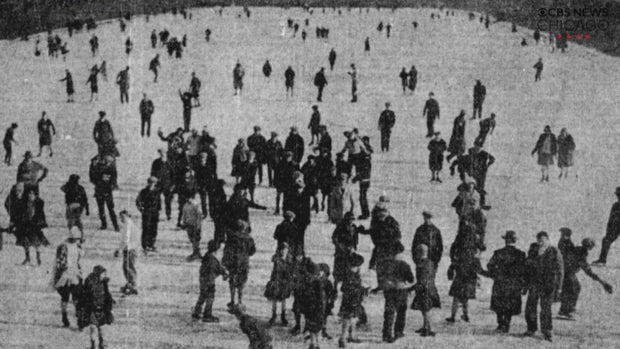
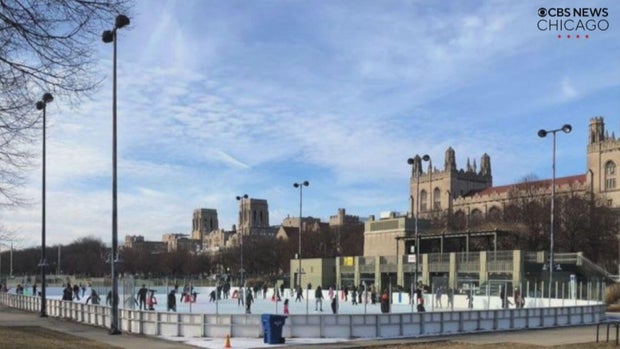
While the Plaisance no longer floods from end to end, you can still ice skate there; the city built a public ice rink there in the early 2000s. And when they did, they discovered a surprise leftover from another of Midway Plaisance's most storied historic roles: the foundation of the original Ferris wheel from the 1893 World's Fair.
During the 1893 World's Columbian Exhibition, Midway Plaisance was a linear experience that housed many of the rides and attractions for the public, Bachrach explained. In fact, the term "midway" used in carnivals to this day to describe the area where games, rides, entertainment, food and other booths are set up between the entrance and the big top comes from Midway Plaisance, not the other way around, Bachrach said.
The Ferris wheel was the icon of the World's Fair, designed by George Washington Gale Ferris Jr. for the exhibition to one-up the Eiffel Tower, which was built as the grand entrance arch for the 1889 World's Fair in Paris.
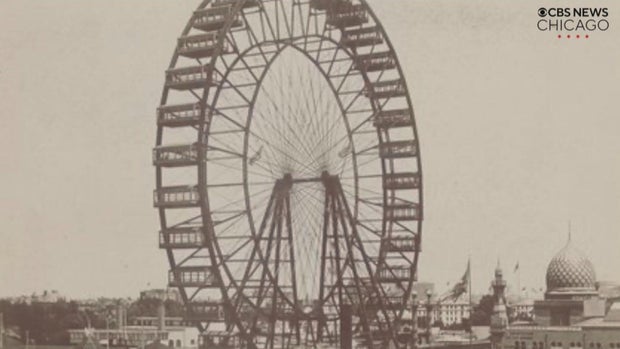
And it did, Bachrach said. Standing about 260 feet tall – slightly taller than the Obama Presidential Center Museum, Bachrach estimated – the wheel had 36 open-air cars which could accommodate 60 people each. It was like nothing anyone had ever seen before, and visitors flocked to ride it for panoramic views of the city.
On the west end of Midway Plaisance is one of Chicago's most striking public art installations: the Fountain of Time. It was designed by Lorado Taft, a sculptor affiliated with the University of Chicago and University of Illinois who lived, raised his family and worked in the Woodlawn neighborhood, Bachrach said.
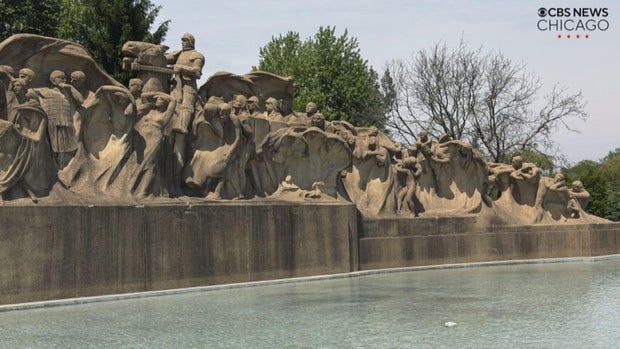
Made of exposed aggregate concrete, the Fountain of Time is comprised of 100 human figures connected in a curved work on one side of a reflecting pool, with the imposing figure of Father Time staring at them from the other side. The figures roughly follow the life cycle, with youths at one end and the elderly at the other.
It was a challenging project, Bachrach said; aggregate concrete was a new material in 1922 when the work was installed. But Taft determined marble was too expensive and vulnerable to Chicago's climate and bronze would be too harsh. So he experimented with the new material, pouring the fountain in pieces; it is hollow, Bachrach said.
There are also hidden gems in figures themselves: Taft's students, his three daughters (who are all under one cloak near the horseback rider), and in the back is a portrait of the artist himself. He's not hard to find – he's the only one clad in an artist's smock instead of a toga. Behind him is a man carrying a giant bag, his right-hand-man assistant who helped him find the choicest stones at the quarries.