A big snowstorm is headed to Boston. Here are 4 things you should do now to prepare.
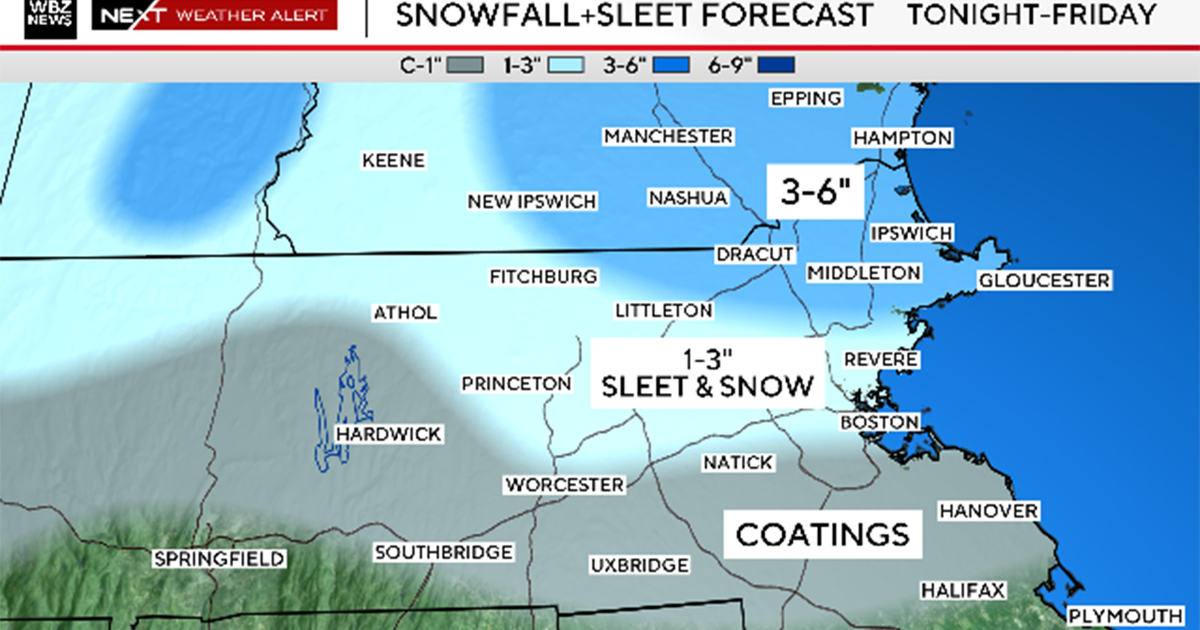
There's a major winter snowstorm coming to Boston and the rest of Massachusetts and there are plenty of questions to answer besides "How much snow are we getting?"
When the weather forecast for the Boston area changes you need to be ready. Here are some basic things to prepare for before a big snowstorm hits, according to the Massachusetts Emergency Management Agency (MEMA) and the National Weather Service (NWS).
Receive emergency weather alerts
There are several ways to receive emergency weather alerts. In addition to the CBS News Boston app, there are wireless emergency alerts (WEAs). Most mobile phones are set up to automatically receive them. Check here for troubleshooting tips.
The NWS will also issue watches, warnings and advisories before, during and after the storm. You can find them for the Boston area here.
Have these things on hand
In addition to having at least one shovel and some ice melt at your home, your winter storm emergency kit should have bottled water, medications, first aid items, non-perishable food, extra batteries, basic tools, warm clothes and sturdy shoes.
You should also fully charge your phone, laptop and electronic devices in case the power goes out. If you lose electricity frequently in your neighborhood, you might need to look into getting a generator.
Getting a roof rake might also be a good idea, in case the storm leaves several inches of snow on your roof. If that's not cleared properly the melting snow could lead to ice dams.
Prepare your home for a snowstorm
Sprinkle snow melt on stairs and walkways outside before the snow starts. This will help keep the bottom layer from icing.
Clear away any trees or branches near your house that could fall if there's heavy, wet snow.
Clear out your gutters and drains to prevent melting snow and ice from building up and causing damage.
Make sure your smoke and carbon monoxide detectors are working and have fresh batteries in case you lose power.
If you have a snowblower, get it ready. Make sure it's serviced and full of gas.
Once the snow starts falling, keep all outside vents clear of snow.
If you rely on well water, fill a bathtub with water in advance. In the event power goes out, your pump won't pull water from your well.
Prepare your vehicle for a snowstorm
If you absolutely must drive in the storm, here are a few things to do before the snow arrives.
Make sure you have a full tank of gas in your car or truck, so ice doesn't build up in the tank or fuel lines.
You should also have good windshield wiper blades and make sure the wiper fluid is topped off.
Have a survival kit in your vehicle that includes blankets, a flashlight, batteries, a phone charger, a first aid kit and extra clothes to keep you warm and dry. You should also bring a shovel, a scraper and brush, jumper cables, water and non-perishable food if you end up stuck in the snow.
If you get stuck in your car or truck and can't leave, stay in your vehicle. Make sure your exhaust pipe is clear of snow so you can run for car for about 10 minutes each hour to stay warm. Also open the window for fresh air to prevent carbon monoxide build up.