Fall foliage season may be longer in New England this year, expert says

Fall may be the biggest postcard season in New England, and no one reads the tea leaves of the region's dazzling forests like Jim Salge at Yankee Magazine.
Each August, WBZ-TV chats with Salge about the state of the region's canopy and what may affect the upcoming show, which draws hundreds of thousands to gaze upon the brilliant hues of autumn.
Fortunately, he's extremely optimistic about how things are shaping up, and that's a shift from last year where extreme drought produced a muted and fast-dropping foliage season. Though conditions do vary a bit across the area.
"The coast of Maine, the coast of Massachusetts, and then right around Cape Cod is still in moderate to even severe drought and that is a lot of that is groundwater drought," Salge said. "Those real eastern areas haven't recovered as well."
The bad news is that there will likely be pockets of dead trees and quick-falling leaves in the driest zones. The good news is that these are not typically the most famous spots for people to seek fall color, and those popular road trip zones from the Berkshires to Vermont and New Hampshire to Maine are all seeing very healthy forests.
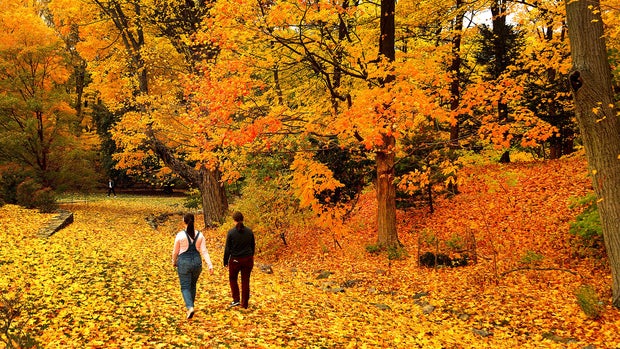
There is very little damage from spongy moth caterpillars or tent caterpillars this year, and it's also not a big "mast year" where trees spend a lot of their energy on producing seeds instead of leaves. Salge also notes no big issues with tar spot or fungus – things which can damage maple leaves.
El Niño impact
That's all we know about the current state of things, but what will the weather bring in autumn?
What leaf-seekers want are sunny, crisp days and cool, dry nights that really allow the process to shine (leafmaxxing?). The biggest player on the weather field is a record-strong El Niño event, which could hold that cooler dry air off for quite a while.
"With El Niño being the headliner this year, it's going to be harder to dislodge the humidity and the warm weather in southern New England," said Salge. "Northern New England always gets those shots of cold air along the Canadian border, and we're pretty confident in the forecast up there."
Longer fall foliage season?
With milder and muggier air lingering, we may also expect a longer show that gradually comes down from the northern New England mountains to the southern New England coastlines.
"We're calling it a long season because it may take a while to cool off in Boston and points south," Salge said.
With that sort of setup, Salge recommends following the foliage week by week instead of just trying to focus on one weekend to do it all. A quick "everyone turns at once and drops" season is not what's in the cards. So, there should be plenty of time to spread it out.
There is just one negative Salge sees in his crystal ball, and that is the ongoing beech leaf disease that's been rapidly spreading through our forests.
"Beech leaf disease is devastating. We are losing the beech across the region just like we're going to lose the ash trees," said Salge. "It's a big foliage player. It's the one we really look for in late fall to keep the golden hues alive, so, it's definitely going to be a big loss."
Even still, we seem to be set for an excellent season overall. So, enjoy the rest of summer and then plan out that autumn road trip.
The changes usually get going by mid-September way up north and then peak in southern New England in mid-to-late October, with the city of Boston's peak typically occurring near or just after Halloween.


