Massachusetts ballot Question 7 could change zoning for single-family homes. Here's what to know.

In November's midterm elections, Massachusetts voters will consider Question 7, a ballot initiative that could change how cities and towns zone lot sizes.
Election Day in Massachusetts is Tuesday, Nov. 3, and polls open at 7 a.m.
There are nine ballot questions this year, which ties the greatest number in state history for one election.
What is Massachusetts ballot Question 7?
Question 7 is titled "Single Family Homes."
The measure would "allow single-family homes to be built in a residentially zoned area as long as the land on which it is to be constructed is at least 5,000 square feet, has at least 50 feet of land bordering the street, road, or public way that it faces, and has access to public sewer and water services."
Question 7 support
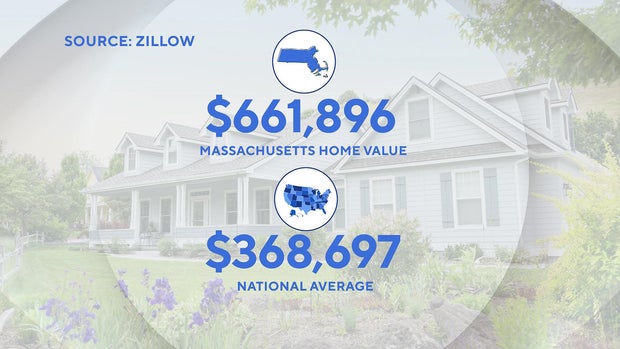
According to Andrew Mikula, a housing policy researcher and founder of the group Legalize Starter Homes, Question 7 is one tool to tackle Massachusetts' housing crisis.
"We've heard people reach out, say they can't afford a home even with a dual income. Down payments are a challenge," Mikula said.
He argues smaller lots will lead to smaller homes and lower costs. The measure would also allow landowners to subdivide.
The initiative would apply to the whole state except for Boston, which has its own zoning law.
Currently, minimum lot sizes in the Greater Boston area can range from 10,000 square feet to 2 acres.
Mikula believes the measure is widely popular.
"Sixty-three percent of Massachusetts voters support it overall," he said. "We call ourselves the Dolly Parton of ballot questions."
Opposition to Question 7
Opponents of the measure say this one-size-fits-all approach to zoning could negatively impact some local municipalities.
"We always support local leaders and local decision-making," said Adam Chapdelaine, the executive director of the Massachusetts Municipal Association.
"There's many communities that are questioning whether or not they have enough water to service their existing community, never mind an expansion. And even more so, there's a number of communities struggling with sewer capacity," he said.
Chapdelaine notes that the measure does not address the affordability of the homes built on smaller lots.
Estimates of how many new homes could be created if the measure passes vary.
Legalize Starter Homes estimates the ballot measure could lead to the creation of up to 666,890 new buildable lots under the maximum subdivision scenario. A report by the Tufts University Center for State Policy Analysis estimates the measure could lead to 350 to 1,200 new homes being built annually.


