What does history and the Constitution say about a president's powers to go to war?

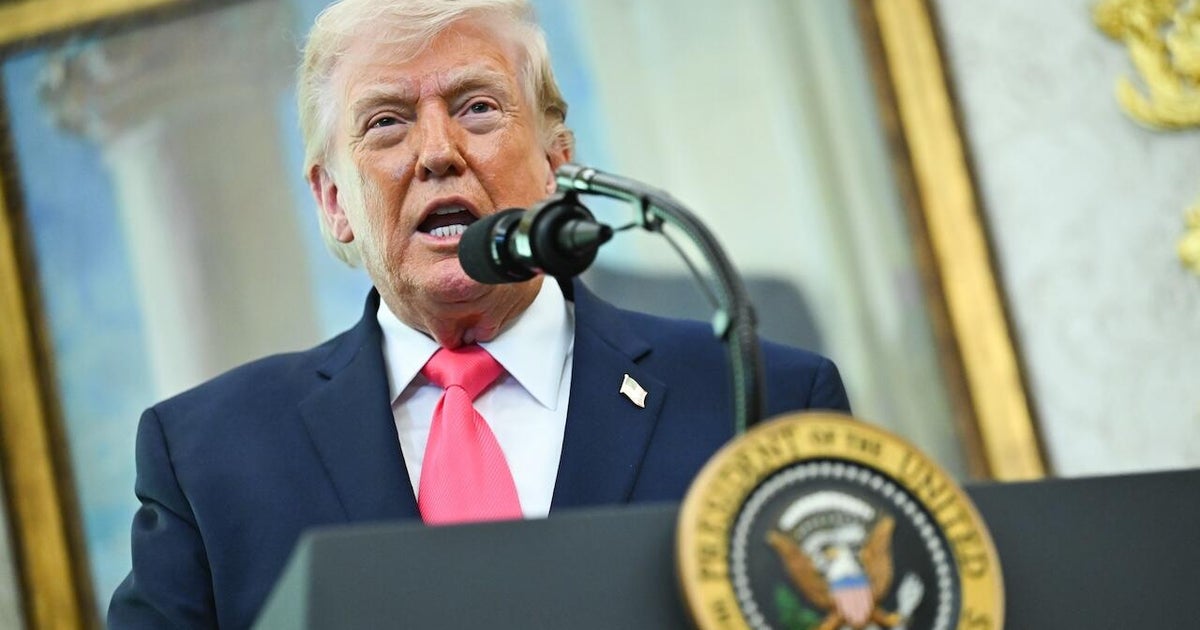
From the moment he announced a military strike in Iran, President Trump has called it a "war." Watching missiles fly through the sky and explosions rocking Tehran, it certainly looks like a war.
But top Republican leaders call it a "mission." House Speaker Mike Johnson said on Wednesday, "We are not at war right now."
When WBZ-TV's David Wade asked people on the streets of Boston if the country was at war, they all said yes. It may seem like a battle over semantics, but the word and who says it matters.
After the Revolutionary War, the framers of the U.S. Constitution said the president, "shall be the Commander in Chief of the Army and Navy" but it also decided "the Congress shall have power ... To declare war."
That was a big deal, says Thomas Whalen, a presidential historian and professor at Boston University.
"That was Jefferson's, Adam's, Washington's - all of the founding fathers- biggest fear. That you can't give the president too much power because then you would have tyranny and we just fought a revolution not to have a king," said Whalen.
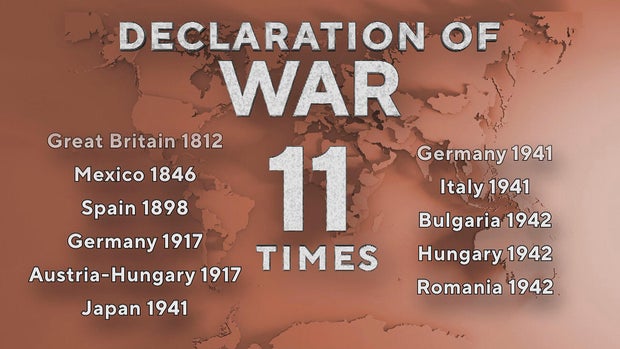
Congress has declared war 11 times
Congress has declared war 11 times in our history. The last time it was declared was during WWII in 1942.
That's right, Congress did not declare war after 9/11 and it didn't happen for the Vietnam War.
"The Korean War was really the turning point in 1950. That's why everything changed," said Whalen.
When North Korea invaded South Korea, President Harry Truman didn't wait for Congress. He sent troops and called it "police action" instead of war.
"President Truman felt, if I go to Congress and ask for a formal declaration of war, the debate that would follow, the war would be over, the north would have conquered the south and the north was communist as it is today," Whalen said. "Ever since then, presidents have more or less followed suit. You know, basically done a go around to the Congress."
War Powers Act of 1973
As the Vietnam War dragged on, Congress decided it wanted to reign things back in and it passed the War Powers Act of 1973.
Basically, it says the president must notify Congress within 48 hours of deploying troops and they have to be withdrawn within 60 days unless Congress declares war or authorizes force.
After 9/11, President George W. Bush did get authorization for military action. Presidents Clinton and Obama both ordered military strikes without Congress during their administrations. Now President Trump is doing the same.
This week both the Senate and House voted to try to reign in the scope of what President Trump can do in Iran. Both resolutions failed. So, the powers of the Oval Office seemingly continue to grow despite what the Constitution says.
If you have a question you'd like us to look into, please email questioneverything@cbsboston.com.