Invasive spotted lanternfly threatens trees, plants in Massachusetts

An invasive species has begun to cover trees in the MetroWest area of Massachusetts. It's called the spotted lanternfly, and its presence could spell doom for some vegetation while creating a sticky mess in the woods near people's homes.
The insect arrived in the United States around 2014. It first showed up in Philadelphia by way of Asia.
"These actually cannot fly. So the spotted lanternflies are hitchhikers or hoppers," said Quentin Nowland, president of Lynch Landscaping. "They are bark and sap feeders, so you will see them excrete what is called honeydew."
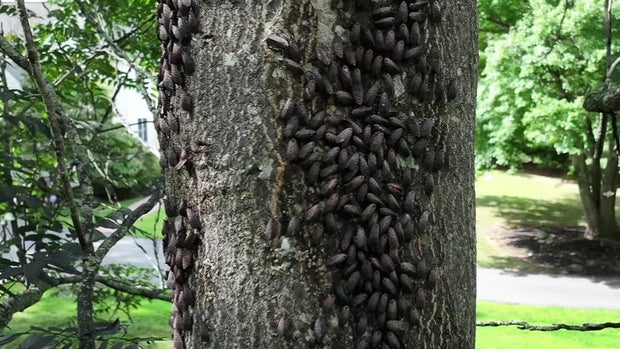
The excretion will rain down from the trees covering the base in a black, sweet, sticky substance. This can attract bees, ants, and other insects to the base of the tree. It can also land on smaller vegetation causing potentially fatal issues from sooty mold.
"It will damage the growth of the plant, the health of the plant, and also have issues preventing photosynthesis," explained Nowland.
Tim Abrahmsen spotted one on the patio of his Sudbury property. "Out of the side crawled what I thought was a wasp. It was big and black. At least that's what it looked like. I swatted it and jumped up," said Abrahmsen. "Lying dead on the ground was the lanternfly, an unmistakable giant red dot on its back. Giant and menacing."
Tim went down a rabbit hole, researching how to protect his large property that abuts the woods.
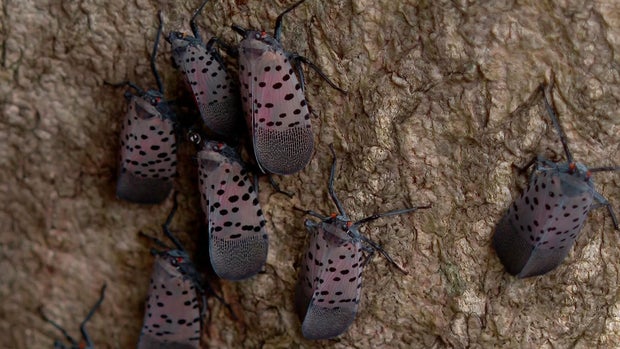
"Once people understand how to kill them, or get rid of them, we can do our part," said Abrahmsen.
He began killing the insects he saw, while also searching for their eggs.
"As for the eggs, that's where you want to stop it before they hatch. They have a distinctive look like a smear of mud. They lay them on flat or horizontal smooth surfaces," said Abrahmsen. "Best way to get rid of them is to get a plastic, sealable bag with soapy water, or straight alcohol, and scrape them into the bag."
Lynch Landscaping is also helping people to combat the clusters of them that can form on trees. They apply a chemical to the base of the tree. It is absorbed into the sap inside the tree and then eaten by the flies. In a few days, the insects will begin to die.


