GLP-1 use for weight loss significantly impacted by Massachusetts insurance changes, data shows
Last year, insurance companies in Massachusetts said they would stop covering GLP-1s when used specifically for weight loss. A new report is showing the significant impact of that decision on the state's healthcare system.
The Massachusetts Health Policy Commission said 112,000 fewer people are getting their GLP-1 drugs for weight loss covered through insurance in 2026. That's a 52% drop-off from 2025, when nearly 300,000 insured people in the state were using them.
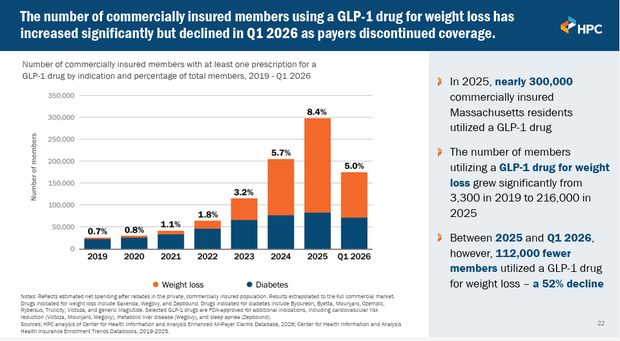
The popular weight-loss drugs sold under names like Ozempic and Wegovy have been blamed for inflating budgets in the public and private sector. The commission said spending on GLP-1 drugs for weight loss doubled almost every year between 2019 and 2025.
Blue Cross Blue Shield said last year that five GLP-1 drug companies made up 20% of its total pharmacy spending.
"The surge in spending is putting a heavy and unsustainable burden on our employer customers and members who are struggling to keep up with rising costs," CFO Ruby Kam said at the time.
Spending on GLP-1 drugs for Massachusetts residents with private insurance was nearly $1 billion in 2025 but is expected to drop to $662 million this year as insurers ended coverage. Insurance companies are still covering GLP-1s when they are used to treat diabetes.
Health and Human Services Sec. Kiame Mahaniah told the State House News Service in March that he expects a "major price crash" to come for GLP-1s, which would allow insurance coverage to return in the next few years.
Prices for GLP-1s have declined as new drugs enter the market, Thursday's report said. The commission says GLP-1s could play an important role in improving the long-term health of people who use them.
The report did not say how many people are still paying for weight-loss drugs out of pocket, which can cost hundreds of dollars a month.
"In just a short amount of time, GLP-1 drugs have had an enormous impact on the Massachusetts health care system," Health Policy Commission Chair Deborah Devaux said in a statement. "The HPC will continue to monitor the rapidly evolving GLP-1 market to better understand broader impacts on the health care market, and on residents' ability to access the medication that they need."


