Maryland college student shares journey back to health after near-fatal car crash

A Maryland college student is sharing his story after a traumatic crash that nearly cost him his life.
Owen Bell, a 20-year-old Bucknell University wrestler, is now back in school following a long recovery. Months ago, his future was uncertain.
"It was only me in the car. I was about a mile away from my house. I was going to a wrestling clinic," Bell said.
Near-fatal car crash
On July 28, 2024, Bell lost control of his car while driving above the speed limit.
"I was going 65 in a 40, and I ended up losing control a little bit, and I actually got impacted with a fence post that was on the side of the road," Bell said.
A fence post crashed through his windshield and struck the frontal lobe of his brain.
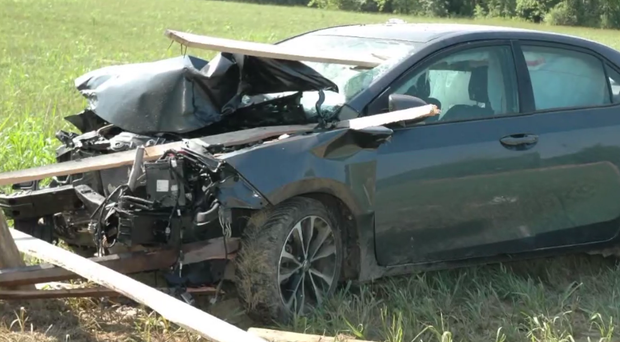
"One of the posts went through the windshield and impacted me right on the frontal lobe," Bell explained.
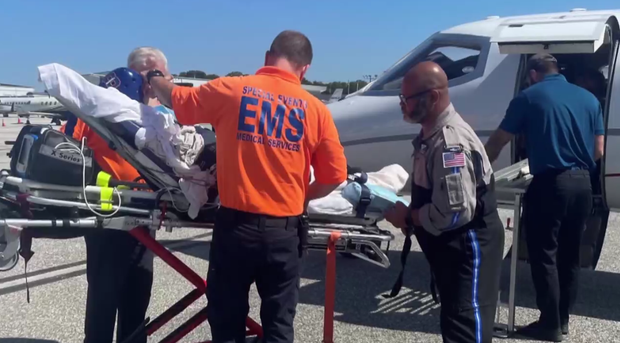
He was airlifted to the University of Maryland Medical Center, where he underwent hours of surgery to save his life after he suffered skull and facial fractures.
"They did surgeries on me, they pretty much saved my life here," he said.
Recovering from a brain injury
What followed was a long and difficult recovery that included physical, occupational and speech therapy.
"Pretty much any therapy you can think of," Bell said.
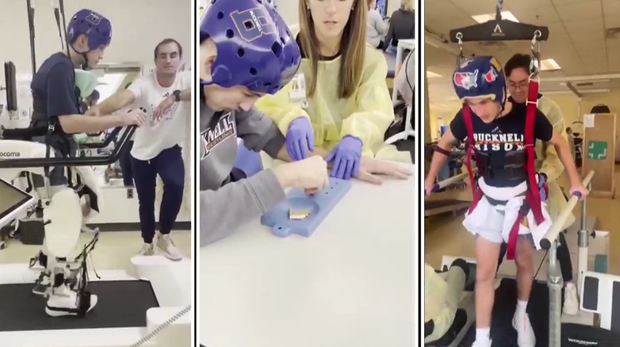
In the early stages of Bell's recovery, basic questions were hard to answer.
"Some therapists would ask me what day it was, what the date was. I couldn't remember any of that," he said.
Bell said he still cannot fully remember the crash.
"I remember a lot before the accident, that day is a little hard to remember, a lot of that memory is kind of wiped out," he said.
Lasting impacts
Over time, Bell has made steady progress, though his recovery is ongoing.
"With my brain injury, with the frontal lobe and everything, definitely more impulsive, so there are problems with that," he said. "I know my family let me know about that; I'm still recovering from that."
Experts say this is common.
"Brain injuries are as unique as a fingerprint. Where your brain was affected, which lobe, and how that manifests is just as unique as your own personality," said Samantha Adams, President of the Brain Injury Association of Maryland and a neurotrauma critical care nurse.
Adams said recovery timelines vary and may continue over time.
"Individuals can continue to improve or deteriorate as time goes on," Adams said.
She also noted that many lasting symptoms of brain injuries are not visible.
"It's difficult with brain injury because a lot of the symptoms that do last are not necessarily outward," Adams said. "When it's difficult to see, it's difficult to understand by the public."
Now back at school, Bell said his experience has inspired a new path. He is pursuing a biology degree with the goal of becoming a physical therapist.
"When I went through all that rehab and therapy, I got a passion into physical therapy," he said. "I recognized that I could be a biology major, and at the end of my schooling, I could have a job as a physical therapist, and I really love that."
Bell is now using his story to raise awareness by speaking to teens and advocating for brain injury education.
His message is simple: Recovery can take time, and for many survivors, the journey lasts a lifetime.