Bringing Hawaiian heritage to Maryland through hula dancing: "connecting through cultural values"

For many people, hula is just a dance. But at Hula Maryland in Crofton, women like Joanna Capezzuto say hula is something much deeper, steeped in culture, storytelling and sisterhood.
The dance represents history, identity, and for many in Maryland, thousands of miles from Hawaii, it represents family.
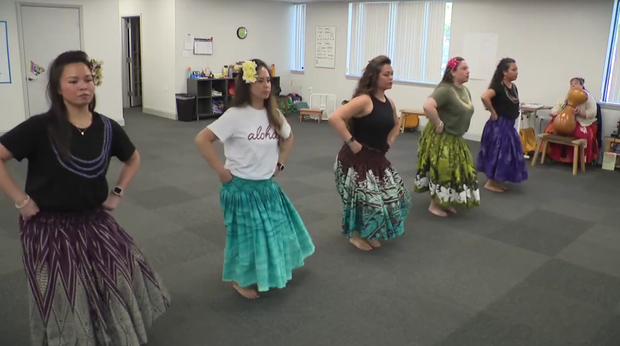
Connecting to Hawaiian culture
Capezzuto, a teacher at Hula Maryland, said the dance is a way of life and a part of her heart and soul.
"It's a way to connect with my culture that I feel very deeply inside," she said.
Brittany Kalahiki, another teacher, said joining the studio has been transformative in connecting and grounding her in her Hawaiian heritage.
"Despite growing up in Hawaii, I didn't always feel super connected with that side," she said.
Dancing with intention
The dancers shared the deeper meaning behind the art form in celebration of Asian American and Pacific Islander Heritage Month (AAPI).
"Learning about the culture and the locations and places and the symbolism behind everything we dance has allowed me to really ground myself, develop my identity and obtain a better understanding of who I am," said Kalahiki. "It really has allowed me to connect with hula sisters and take part in connecting through cultural values."
Kalahiki moved from Hawaii to Maryland seven years ago. She says every movement in hula carries intention and every gesture tells a story.
Along with teaching, Capezzuto also sings and plays the Ukelele. She said she loves watching someone immerse themselves in the dance and make the cultural experience their own.
"It sometimes brings me to tears when I see all my hula dancing," she said. "You can tell that they love it. You can tell that they're there in mind, body and spirit, perpetuating a language that almost died. An activity or a dance that was almost...that was actually driven underground for a time."
Forming a deeper connection
Many members come to the studio for the dancing, but stay for the deeper connection.
"I like to tell people, once you get up there in that line, you become a hula sister," said Capezzuto. "And that means I'm here for you to laugh with, to cry with, whatever you need. We are very much a sisterhood here."
Kalahiki said the studio fosters a sense of sisterhood with so many members who have been born on the islands or have a family connection.
Owner Mary Nelson opened Hula Maryland in 2011 with the hopes of creating a space where people can learn a tradition and build a community.
"Hulu was almost lost. It was driven underground when the Protestant missionaries came into Hawaii," Nelson said. "That is something that just eats away at my heart. It's like, how can you lose anything? The loss of any culture would be devastating."
Learning hula
While the movements may look effortless, hula takes patience, discipline and heart. Though the women at Hula Maryland say that's the beauty of it.
Kellilynn Kanoelani Cockett Smith has been dancing hula since she could talk. She's held many titles over the years, including Miss Aloha Hula and first runner-up of the Merrie Monarch Festival.
"Growing up within hula and then finding a competitive side to it, I think the camaraderie and the family that you build in the Hawaiian community, your hula sisters, I think that has been the biggest part of my life," Cockett Smith said.
Beyond the movements and the sisterhood, hula has also ignited a deep sense of pride.
"With hula and with the music and with the language and the dance, you get to perpetuate that history and carry that on," Nelson said. "I take that very, very seriously. It's become very important to me."
"Being so far away from home, I think, is where we find that connection, right? I think I was just telling some of the girls outside that I would not wear all of this, or wear Mahina Made or plug in Aloha Collection if I was even living back home," said Crockett Smith. "But I think that we are proud to be Hawaiian and that we're proud to be here in the States."


