How Baltimore is working to prevent underground fires, explosions after series of downtown incidents
Underground fires have plagued downtown Baltimore for decades.
Now, for the first time, a professional engineering firm the city hired has provided recommendations on how to stop them.
The report includes an extensive look at a September 2024 underground fire and explosion on North Charles Street that took more than four hours to bring under control.
The forensic report
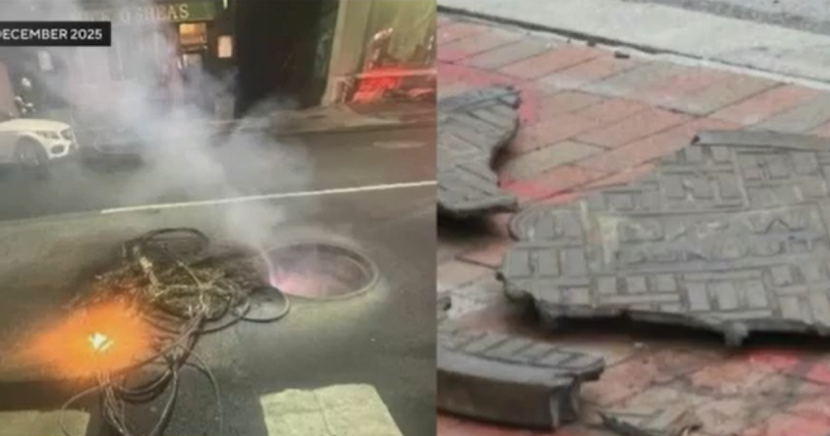
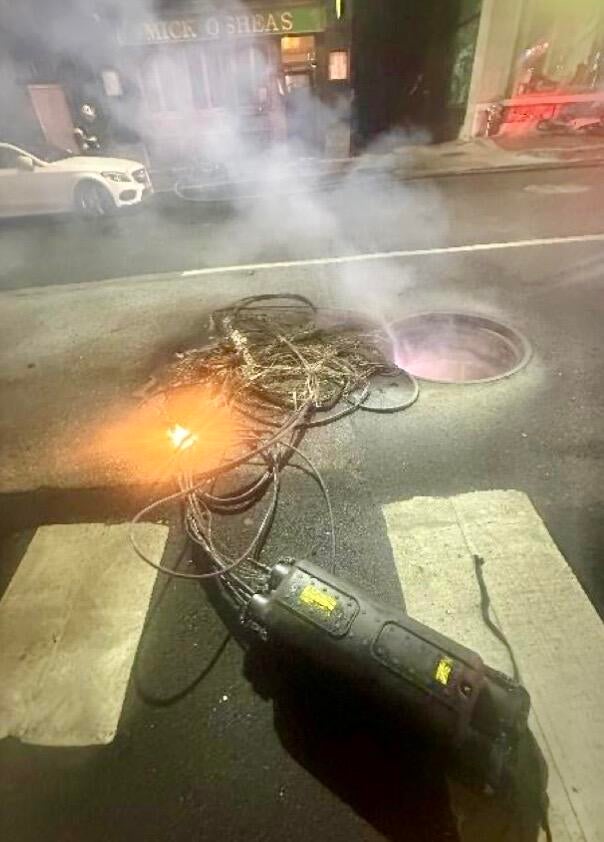
Pictures from the forensic investigative report by RTI Group show fiber optic cables thrown out of a manhole.
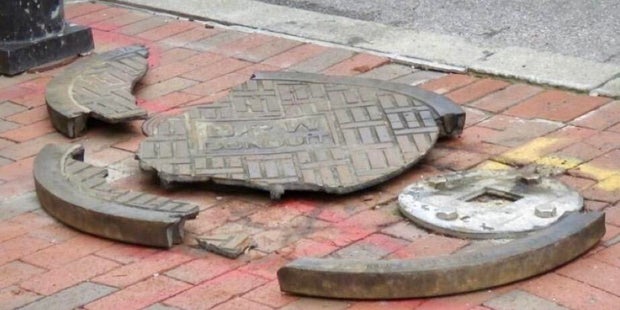
The explosion shattered the heavy manhole cover into five pieces.
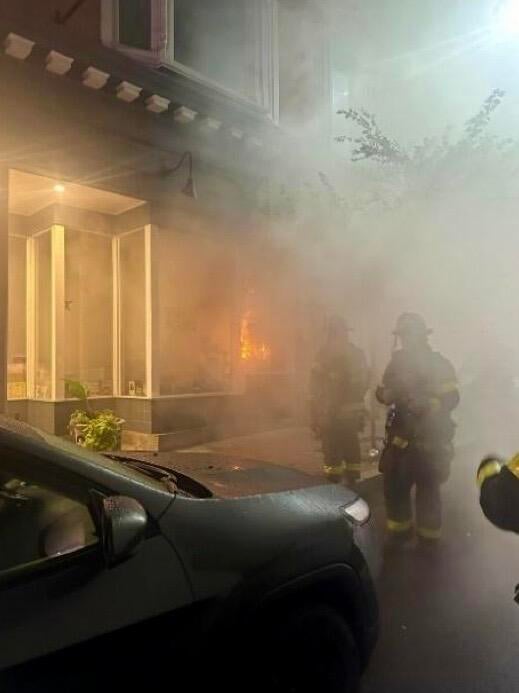
The fire and explosion on North Charles Street and between West Mulberry and West Saratoga street spread through the conduit system underground causing extensive damage to a bookstore.
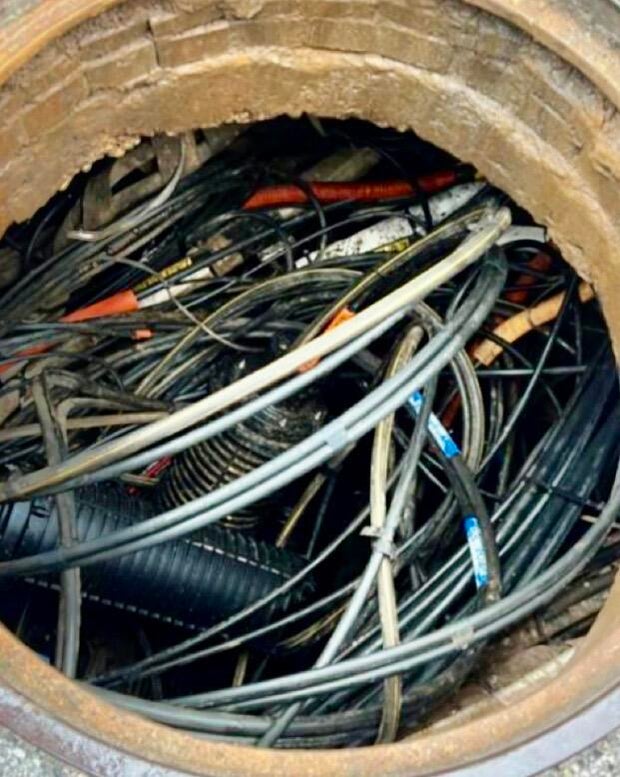
The RTI Group's report said the underground conduit space was overcrowded with cables and volatile gasses built up, leading to a dangerous situation.
Here are the investigative findings from RTI:
- The Charles Street September 29, 2024, event was caused by a combination of combustible gases that had been generating in a manhole and connecting ductwork for some time before their detonation at 4:10 am.
- Underground infrastructure is overcrowded with multiple utilities (fiber optics, steam, potable water, electric, natural gas, sewer, and storm water piping).
- The need for underground utility maintenance on Charles Street presents the opportunity for inadvertent contact with neighboring systems, where such contact with cables could damage their insulation.
- The recent addition of fiber optic cables in the existing manholes exceeds the original design for their intended use.
- There was little to no separation of fiber optic cables from power cables inside of the manhole. While inspecting a nearby vault, it was observed that there was one case where fiber optic cable as well as power cables were sharing the same conduit duct.
- The overlapping location and time since repairs of manhole 087 after the January 25, 2024, event qualify these circumstances to be considered a contributing factor in the September 29, 2024, event.
- The physical evidence salvaged from the manhole by BGE contains equipment spanning approximately 100 years. Laboratory testing will enable a determination of the individual power and fiber cable components' potential for failure.
- It is well documented that aging utilities are demanding more frequent inspections and increased maintenance to prevent failures. Modernization and or replacement programs are critical to establish a base for conditional assessments.
- The lack of fire stop plugs in entering duct work allowed the manhole fire to enter the basement of the bookstore, that set fire to its interior.
- The physical evidence of cable connectors contained a variety of installation techniques, some may present serious risks.
Repeated fires
The fire in September 2024 was one of more than a dozen underground fires in downtown Baltimore in the past five years.
At a July 22 hearing, Rebecca McAfee expressed her alarm at the council hearing.
"Something needs to be done, and there should be a resolution as quickly as possible because this is a crisis," McAfee said. "God forbid one Baltimorean gets killed the next time this happens. We're lucky there have been no casualties up until this point."
City leaders also expressed an urgent need for solutions at that hearing.
"We need to figure out how to resolve this issue," public safety chair Mark Conway said at the time. "A lot of people are counting on us. Our downtown is counting on us."
Recommendations to stop future fires
The RTI Group engineering report recommended separating fiber optic cables from power cables, mapping out vulnerable spots in the conduit system and improving monitoring underground.
Here is a list of their findings to stop future fires:
- Ensure that all fiber cable coils and splice boxes are separated from all power cables in the manhole by at least 12 inches. Congestion of fiber optic cables in the manhole should be avoided.
- Develop a priority enlargement program for the most congested manholes to achieve proper space for maintenance and inspection.
- Enhance monitoring practices beyond periodic thermal inspections, for example, temperature and smoke detectors, combustible gas sensors, water level sensors, and potential electric discharge sensors.
- Develop a city-wide conduit system utility risk map to determine the most critical and vulnerable cable services for loss prevention and the most effective emergency response.
- Create a city-wide utility-scaled drawing database to enable all underground utility installations to be accurately located for inspection and or excavation, as well as isolation controls.
- First responders to manhole fires, in particular BCFD and BGE, should devise an emergency plan and training for prompt extinguishment of manhole events, including timely isolation of power and best means of suppression.
- Provide access to a Carbon Dioxide Tank Truck (CARDOX) for the BCFD to share with adjacent Counties to aid in control electrical fires.
- Establish an ad-hoc safety committee for all city utilities, to meet on a regular basis to reduce the risk of undesirable conditions in the conduit system and surrounding underground utility installations.
- Explore established manhole cover tethering and venting options.
- Baltimore Housing Community Development (BHCD) should inspect and enforce fire stop installations at all street ducts into housing.
- Obtain CitiWatch relevant footage of entire event and other security camera footage available from nearby structures within 24 hours of an event.
- Continue to preserve all physical evidence from manhole fires based on the guidelines utilized in forensic engineering investigations.
Pilot program
Baltimore's Department of Transportation said it has already increased manhole inspections and is piloting a program to detect gas and high temperatures in the conduit system under Charles Street.
BGE is also continuing work on the conduit system there and is under a contract with the city to invest $120 million over four years, although city leaders were told at the July hearing that it will take "far more" than that to replace the conduit system.
The conduit system is competing with other major infrastructure needs in an aging city, something the mayor addressed in an interview with WJZ this week.
"That's why you have to prioritize—and that is the process we've been going through, prioritizing what we need to invest in, what kind of investments that we need. It's also helping to shape our legislative priorities," Mayor Brandon Scott said regarding overall infrastructure priorities.
You can read the full RTI Group forensic report on the underground fire here.