Georgia lawmakers approve rounding rules after end of penny production
Paying with cash in Georgia? It may end up costing you a little bit more if a recently passed bill becomes law.
On Wednesday, the Georgia Senate voted 50-0 to approve House Bill 1112. The bill is now headed to Gov. Brian Kemp's desk, where he can choose to sign it into law or veto it.
Under the bill, businesses would be required to round down all cash transactions that end in one, two, six, or seven cents. Transactions that end with three, four, eight, or nine cents will be rounded up.
The rounding does not apply to payments using electronic fund transfers, money orders, credit or debit cards, gift cards, electronic payments, or other means of mixed tender. It also does not apply to any transaction where the total is merely one or two cents.
No taxes will apply to a business's losses or gains caused by the rounding.
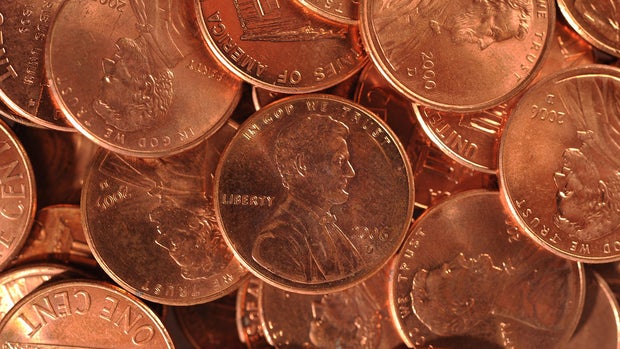
Dropping the penny leaves states pondering payments
Last November, the U.S. ended production of the penny, abandoning the 1-cent coins that were embedded in American culture for more than 230 years but had become nearly worthless.
The Treasury Department has said it will continue circulating the roughly 114 billion pennies that exist for "as long as possible." Pennies must still be accepted as payment.
Georgia is just one of many states where lawmakers are attempting to deal with penniless transactions. According to an analysis by the Associated Press, about two dozen states have introduced rounding bills since late last year.
Outside of lawmaking bodies, some state agencies have published guidelines to advise that rounding should happen after tax, and that businesses must make sure the full taxed amount still goes to the state.
Cash isn't used as ubiquitously since the rise in electronic payment methods. Still, about 8 in 10 U.S. adults said they recently used cash in a 2024 survey conducted by the Federal Reserve. Cash was more often used by older adults and those in lower-income households.
The Treasury wrote online that prices would be "rounded down just as often as they will be rounded up, so there should be no overall effect on consumer prices."
But researchers at the Federal Reserve Bank of Richmond used a 2023 survey to show prices that didn't end in zero or five were especially likely to end in eight or nine. Payment amounts could be different when multiple items are purchased or depending on the tax rate, but overall, prices more often being rounded up would lead to millions of dollars gained by businesses and lost by consumers collectively, amounting to a few pennies lost per person.
The Associated Press contributed to this report.